Tuesday, March 06, 2007

James Reasoner's private eye stories


James Reasoner has been reminiscing his career from the seventies on and written two lengthy posts about his private eye heroes. It's an interesting piece of history of hardboiled literature and fictionmag publishing - the story goes from the last of the hardboiled fictionmags to small press magazines and to theme-edited anthologies.
It's sad, though, that I've never seen any of these stories and I've never seen a single issue of the Mike Shayne Mystery Magazine James wrote for! I've read his sole private eye novel, Texas Wind (1980), and it's a very good piece of writing.

Bill Crider's blog project story

Here's Bill Crider's great blog project story that's meant for the Quertermous-White blog project. Bill didn't just want to write a crime story about blogging, but instead he put up a blog to tell the story in the form of blog posts. It works, even though I have my doubts about whether anyone would really post something starting with "Frank was killed today". (The same problem is with all the letter and diary novels. "Oh, here he comes, he bangs on the door, now he opens it, now he grabs my hand, oh, what cruel fate this is!")

A music video by my pals of Kompleksi

Well, actually I know only one of the guys of the duo... Nevertheless, here's the first music video by pHinn and Mike Not, also known as Kompleksi. The video was made with the artistic cooperation with Australian experimental filmmaker Tina Ulavik, and there's sure nice artistic touches. The track is great too, check it out - if you're at all into electronica.

Films seen recently


I've been forgetting to write about films I've seen lately:

Akira Kurosawa's Yojimbo from 1961 is one of the most hardboiled films I've ever seen. Toshiro Mifune in the lead (not "as the hero", since he's quite far from a regular hero) could beat the shit out of any other hardboiled hero. I mean, anybody. The film is effectively edited and photographed and the fight scenes are expertly staged. I seem to remember that the sequel (it was called The Samurai Sword in Finnish, was it so in the English-speaking countries as well?) is even more hardboiled and Mifune cooler than ever before or later. (Well, he doesn't exactly look cool in that picture.)

Marx Brothers' Animal Crackers: one of my all-time favourites. I said to Elina watching this: "You need to remember that when I die you print these words in my obit: "I'm dead today, shutting out all beautiful tomorrows"." That's what Groucho says when he mimicks Eugene O'Neill ("Why, you couple of baboons, do you think I would marry either one of you? How strange the wind howls tonight. It reminds me of poor old Marsden.") The film itself is very, very poor, poorly staged and photographed and clumsily edited. Yet, one of the very best. I haven't been as fond of Duck Soup as many others and I should nominate Monkey Business the best of the Marx films. "If a nightingale could sing like you..."

Aleksandr Dovzhenko's Zvenigora from 1927 was a very pleasant surprise after his abysmal last fiction film, Under the Red Flag (1939), a disjointed narrative that was filled with Bolshevik propaganda. Zvenigora was cryptic, poetic, delightfully and surrealistically stupid, with some great dream sequences. I detected that many people in the audience didn't understand all of what was going on - especially the scenes with Russian emigrées in Paris (or in Prague?) were a puzzle. I'd like to know whether the contemporary audiences knew what was happening.

Monday, March 05, 2007

My newest book


I think I mentioned this earlier. I wrote once, some ten years ago, a series of articles about little known Finnish poets to the Kulttuurivihkot magazine. Now, the editor at the time, Tuomas Kilpi, was recently nominated editor-in-chief of the BTJ publishing house. He e-mailed me and asked whether the articles could be reprinted as a book. What do you say to an offer like that? "Umm, yeah, I'll have to think about that, let me get back to you next year, I'm a bit busy at the moment..."

I received my author's copies today and it seems to be up on the publisher's website. Check out the contents here.

And, um, yes, it's in Finnish.

Sunday, March 04, 2007

What we've got

Haven't done a meme in ages. Well, I may have taken part in three memes altogether, but this seems fun. Via Urpo, who's an old friend reblogging. Sooooorry, this is in Finnish. I was first thinking I could translate the terms, but then I said to myself: is this really what I want to do with the rest of my life? It's a list of things we've got. I'm sorry it didn't ask how many ties I've got - it seems I've got some sixty or seventy of them. 90 % of them came from flea markets and other such places.

[ ] akvaario
[x] arabian astioita
[ ] arkkupakastin
[ ] astianpesukone
[ ] autotalli
[ ] digiboxi
[x] digikamera
[ ] digitaalivaaka
[x] dvd-soitin
[ ] epilaattori
[ ] farmariauto
[ ] henkilöauto
[x] hiirimatto
[x] hiustenkuivain
[ ] höyrysauna
[x] iittalan astioita
[ ] ilmakiharrin
[x] ilmakitara (soittelen useammin kyllä mitä tahansa käteen osuvaa, kuten peffaliukuria)
[ ] ilmankostutin
[x] jenkkisänky
[x] kahvinkeitin
[x ] kahvipannu
[ ] kannettava dvd
[x] kannettava tietokone
[ ] keittiövaaka
[x] kenkäteline
[ ] kerrossänky
[ ] keskuspölynimuri
[ ] kirkasvalolaite
[ ] kopiokone
[ ] kotiparturi
[ ] kotiteatteri
[x] kottikärryt (lasten muoviset!)
[ ] kuisti
[ ] kuivausrumpu
[x] kultaisia koruja
[x] kuntolaitteita
[x] kylpytakki
[x] laajakaista
[x] lankapuhelin
[x] langaton hiiri
[ ] leipäkone
[x] leivänpaahdin
[ ] lemmikkieläin
[ ] litteä tietokonenäyttö
[x] luistimet
[ ] maasturi
[x] matkapuhelin
[x] mikroaaltouuni
[ ] moottorikelkka
[ ] moottoripyörä
[x] mp3-soitin (mää en oo vaan kertaakaan käyttänyt sitä!)
[x] musiikkisoitin (vinyylisoitin, cd-soitin, kasettimankka)
[ ] navigaattori
[ ] oma ranta
[ ] omakotitalo
[x] ompelukone
[ ] pakettiauto
[x] partakone
[x] parisänky
[ ] parveke
[ ] pelikone
[x] polkupyörä
[x] polttava cd-asema (ei toimi kannettavassa)
[x] porakone
[ ] poreallas
[x] pyykinpesukone
[x] pölynimuri
[x] pöytätietokone
[ ] rappuset
[x] rikkaimuri
[ ] rullaluistimet
[ ] salarakas
[ ] sauna
[x] sauvasekoitin
[x] silitysrauta
[x] skanneri
[ ] suihkulähde
[ ] sukset
[ ] suoristusrauta hiuksille
[ ] sykemittari
[ ] sähköhammasharja
[x] sähkövatkain
[ ] sälekaihtimet
[ ] takka
[ ] taulutelevisio
[ ] tauti (ellei neurooseja lasketa)
[x] teepannu
[ ] tekohampaat
[ ] tietokonepöytä
[ ] traktori
[x] tulostin
[ ] uima-allas
[ ] ulkorakennus
[ ] ulkosauna
[ ] useampi televisio käytössä
[ ] vapaa-ajan asunto
[x] vedenkeitin
[ ] vene
[ ] verenpainemittari
[x] vhs-videonauhuri
[ ] videokamera
[x] viinaa
[x] villamatto
[ ] vohvelirauta
[ ] voileipägrilli
[x] vuodesohva
[ ] web-kamera
[ ] wokkipannu
[x] yleiskone
[x] yläkerta (siellä on metelöiviä naapureita)

Friday, March 02, 2007

Everything's settled

I wrote once here about trying to acquire rights for a reprint from a writer's heirs who seemed to be in constant fight. Now, a grandson of the said writer phoned me and told that it's been settled and I can move on with the reprint! Yii-haa!

A healthy break from Ridley Pearson and Sidney Sheldon

I decided to let my own entries in the thriller reference book rest and took Lawrence Block's Tanner's Twelve Swingers (1967, a No Exit reprint from the nineties) from the shelf. It is indeed much better than anything I've read by the said writers. I'm no big fan of Block, but I've liked his early work.

Nothing much else here, except work. I was yesterday at the university library studying old Finnish pulp and other fiction mags and came up with quite a bunch of photocopies of old stories for possible reprints. It seems nowadays that typing is my most recent profession. I said to Elina that if someone asks about my hobbies, say, in an interview, I say: "I collect photocopies of stories from old fictionmags." (Now, what label should I have for this post? I say nothing substantial about Block and I don't really know what category the latter paragraph should belong to. I'll put up here a new ephemera label. My life is just a big piece of ephemera, so it's fitting.)

Wednesday, February 28, 2007

My political career

(As the elections are approaching, I thought I'd revise my short political career. In Finnish.)

Urani poliittisten järjestöjen luottamustoimissa:

SDNL:n Porin osaston puheenjohtaja, 1988-1990 (?). Osasto on aina ollut vireä, mutta jostain syystä noina vuosina tarvittiin jotakuta bulvaania heiluttamaan nuijaa kokouksissa. Piirisihteerihän kuitenkin hoiti käytännön työt.

Porin sosialistiset koululaiset, puheenjohtaja, 1988-1990 (?); jäsenmäärä oli muistaakseni kolme, jolloin se käsitti minut, sihteerin ja tilinhoitajan. Tilinhoitaja ei ollut porilainen koululainen, vaan aikuinen ihminen (hän oli Tiedonantajan Porin-konttorin hoitajan vaimo). En tiedä enää, kuinka tosissaan sihteeri oli mukana toiminnassa. Järjestö oli siis käytännössä olemassa vain paperilla. En tiedä, onko sitä enää edes paperilla.

Osallistuin vuonna 1997 SDNL:n liittokokoukseen, jossa vahvistettiin - jos nyt oikein muistan - SDNL:n nimenmuutos Vasemmistonuoriksi. Jälkeenpäin minulle sanottiin, että kokouksessa jyräsivät "enemmistöläiset" - todistus siitä, miten vanhat rintamalinjat elävät vasemmistossa edelleen. Demokratiassa tietty enemmistö jyllää, vaikka ei aina olisi syytäkään. Näiden kytkösten takia minulle tulee edelleen Libero, ja luenkin sen aina mielelläni.

Äänestänyt olen Vasemmistoliittoa, SKP:tä ja vihreitä. Olen aina pyrkinyt äänestämään naista, mutta kaksi kertaa olen äänestänyt miestä. Tampereen kunnallisvaaleissa äänestin vihreitten Kai Ovaskaista, joka nyt on ehdolla eduskuntaan - jos luette tämän ja uskotte minua, niin äänestäkää häntä, hän on erittäin fiksu mies. Ylioppilaskunnan vaaleissa äänestin aina naista, puoluelinjathan siellä ovat usein merkityksettömät. Kummatkin ehdokkaani seitsemän vuoden aikana pääsivät läpi ja olivat erittäin asiallisia ja fiksuja.

Oman poliittisen urani fiksuin teko oli kieltäytyä kahdesti pyynnöstä lähteä ehdokkaaksi ylioppilaskunnan vaaleihin. En kuitenkaan olisi ollut riittävän kiinnostunut asioista, vaikka uskon, että silloisella näkyvyydelläni esimerkiksi Aviisissa olisin varmasti päässyt läpi. Minua pyytänyt ihminen on sittemmin ollut tärkeä Tampereen vihreiden taustavaikuttaja - en koe vihreitä niin omaksi porukaksi, että olisin tuntenut olevani järkevästi mukana heidän poliittisissa päätöksissään. Voi tietysti olla, että ko. ihminen pyysi kaikkia vastaantulijoita ehdokkaaksi.

Oikeastaan pyyntöjä lähteä Tamyyn oli kolme - Olli Löytty, joka nykyään tekee kirjallisuudentutkijan uraa, sanoi minulle joskus -91, että hän tekee minulle niin hyvän kampanjan, etten voi olla menemättä läpi. Annoin ymmärtää, etten ole kovin kiinnostunut. Ollista tuli sittemmin Ilkka U. Pesämaan kanssa Tamyn kulttuurisihteeri.

Huumoriehdokkaista on tosin Tamyn vaaleista noussut esiin kiehtovia ilmiöitä, kuten Pasi Heikura ja Simo Frangén, jotka eivät tainneet käydä yhdessäkään edustajiston kokouksessa. Sympaattisin vaalikampanja oli Tero Alangon ja Markku Makkosen johtamalla poppariryhmittymällä - heidän vaalilauseensa oli "Hyvä biisi on tärkein". Tero ja Markku olisivat myös olleet fiksuja kavereita edustajistoon - on mahdollista, että Tero pääsi läpikin, en enää muista.

Tampereella oli Tamyssa enemmän aatteen paloa ja vaihtoehtojen tuntua kuin sittemmin Turun yliopiston ylioppilaskunnassa, jota tarkkailin muutaman vuoden ajan Turun Ylioppilaslehden toimittajan ja päätoimittajan paikalta. Nyt jälkeenpäin hiukan hävettää, että suhtauduin Tyyhyn niin ylimielisesti kuin suhtauduin, mutta kokemus kertoi, että sinne oli pesiytynyt enemmän ns. poliittisia broilereita. Ville Niinistöä tosin kunnioitan enkä pane vastaan, että meillä perheessä häntä äänestetään. Saatan äänestää häntä itsekin, mutta en haluaisi antaa enää periksi naisperiaatteestani.

Edelläolevasta voi päätellä, että minulla ei ole poliittista kotia. Onko ihme? Miten tällaisessa poliittisessa ilmastossa (tai ylipäätään kulttuurissa) voisi olla jokin asiallisesti muotoiltu johdonmukainen poliittinen mielipide? En ihmettele, että juuri nyt on noussut esille puheenvuoroja, joiden keskeinen sisältö on "ihmiset ovat tyhmiä" (viittaan esim. Jyrki Kiiskisen hienoon kirjoitukseen Hesarin sunnuntaisivuilla, mutta myös Ilkka Halavan kommentteihin ihmisten poliittisesta mielipiteenmuodostuksesta, joka parhaimmillaankin on sattumanvaraista).

En keksi asialle mitään ratkaisua, paitsi vallankumouksen. Mietin aiemmin tänään, että lehdet ja muut mediat voisivat tehdä päätöksen olla uutisoimatta mitään politiikkaan liittyvää vaalien alla - silloin ihmisten pitäisi oikeasti ottaa asioista selvää ja muodostaa mielipiteensä. Mutta se on yhtä mahdoton ajatus kuin vallankumouskin.

The history of thriller

I posted the history of thriller I mentioned earlier to this blog. It's in Finnish.

Tuesday, February 27, 2007

Congrats to Tapani

By the way, I forgot to mention that Tapani Bagge (whose novel Puhaltaja I'm translating) recently won the Clue of the Year award of the Finnish Whodunit Society.

Gordon Young's Everhard stories

Here's a short post I posted to the Rara-Avis e-mail group earlier today, about who was the first hardboiled crime writer:

Stephen Mertz writes in this article:

"It is recorded fact that Carroll John Daly, in the pages of Black Mask in 1923, produced the first hardboiled private eye story, predating Hammett's first Continental Op tale by a number of months."

Isn't it always a bit dangerous to claim someone or something was the first one? There certainly were hardboiled stories before that and there certainly were private eye stories before that. I've read Gordon Young's story about Everhard, who was a private-eyeish hero who likes to shoot and doesn't even shake hands with anyone. I seem to remember that he was more hardboiled than Daly's Race Williams, who likes to show off, which Everhard never did.

Gordon Young had lots of Everhard stories in the Adventure pulp magazine from 1917 to 1921 - so they stopped a year before Daly wrote his first story in Black Mask!

My other activities at the moment

Mentioned being busy. Well, today I submitted a new book to the publisher. It's a collection of old and new crime and adventure stories by writers of the Turku region. The oldest story is from 1939, by Harry Etelä (Aimo Viherluoto), who was also known as a songwriter, mainly specializing in schlagers. I may have to write more about him. There's a good adventure story by Olavi Tuomola, taking place in Shanghai just before the WWII.

The book, called Viides testamentti/The Fifth Testament, according to M.G. Soikkeli's story in the book, is a good collection and hope it gathers some attention. It's just no one seems to be buying short story collections anymore. So it's a bit of an experiment to the publisher. We will be doing more of this sort with the same publisher, for example a collection of Harry Etelä's horror stories that are quite spectacular given that almost no one else wrote horror stories in the late thirties here in Finland.

I'm also doing a rough translation of Tapani Bagge's Puhaltaja. Tapani, as some of you may remember, made a deal with the American Point Blank Press about his first crime novel and it was going to come out under the title The Jack. It seemed, though, that the head of Point Blank didn't have time to do the translation himself (JT Lindroos hails originally from Finland), so I suggested both to JT and Tapani that I could do the first rough version and JT could polish it.

I've done some four or five pages so far, and let me tell you that it's no small feat to translate in a language that's not your own. Especially when Tapani uses lots of slang expressions that even I don't know what they mean. There's also lots of talk about cars and stealing them, and I've been at odds with all the words. However, Tapani okayed my efforts and so I'm continuing at the pace of a page a day.

But once The Jack is out in the US, it will be a hardboiled delight: Tapani writes very sparsely and tightly and he knows his milieu of lowdown petty criminals and car thieves. There's lots of black humor and violence. (I may even up put a new blog to post the translations one day at the time, but I'll have to ask what JT and Tapani think about that.)

And before that, I have a book coming out. It was a small, but very pleasant surprise: an old friend of mine was elected a while back director of a non-fiction publishing house and the first thing he said to me was: "What if we put out your old articles as a book?" It's already in printers. The book collects nine longish articles I wrote some ten years ago about unknown Finnish poets. If it sells enough copies, there should be a sequel. Well, that won't be as easy, since I'd have to do some research for it and read the books.

Dan Brown's earlier thrillers

I've mentioned in passing one or two times that I'm editing a reference book on thriller writers for a Finnish non-fiction publisher. I've been reading Sidney Sheldon lately and let me tell you, it's no pleasure. I had to take a break and start Brian Garfield's The Paladin - it's the last one I haven't read yet. Garfield is God compared to some other writers I've been tackling with, even though The Paladin is not Garfield at his best.

I've been writing also the history of the thriller genre to act as a foreword to the whole book, and it is more difficult than it seems at first, since the boundaries of the genre are so flexible. I think I'm now finished with the article (I'd post it here, but it's understandably in Finnish only; well, that hasn't stopped me before) and just now I got to thinking: what kind of reviews did Dan Brown's early novels receive before he wrote The Da Vinci Code (which, in case you don't remember or even know, I thought was the worst book ever given its popularity and media attention)? It would be interesting to read them, since the reviews now are quite predictable. (I'm pretty ashamed of Nelson De Mille giving a blurb to Brown saying something like "Brown is pure genius". If this guy is pure genius, then I'm Jesus Christ.)

By the way, someone here claims that Garfield's novel The Paladin is stated being based "on fact". I'm pretty certain that Garfield himself says on his short preface that the novel is based only on what "Christopher Creighton" has told to be true. Garfield says that he can't know the truth himself. I'd believe Garfield only wanted to write a thrilling story.

Monday, February 26, 2007

Busy, busy world, pt. 2

Been busy and will be busy. And I slept pretty badly last night. For no apparent reason, except that Leland Palmer singing "come on, get happy, get ready for the judgment day!" kept ringing in my head all through the night. The final count was something like four hours of sleep.

Lots and lots of pulp and other stuff on eBay

Check out this seller. A huge amount of almost everything from original artwork and old fanzines to Disney-related stuff.

Tuesday, February 20, 2007

Duane Swierczynski about Goodis

As I said earlier, I was writing an article about David Goodis, the quintessential noir writer of the fourties and fifties. For a side article, I asked Duane Swierczynski why he likes Goodis. I'll post his questions here as well:

>What makes Goodis so important?

Well, I'm not sure about important--I mean, reading a David Goodis novel has not been known to cure impotence and/or mild skin conditions. But he is special, because his novels are the blackest comedies you'll ever read. So black, in fact, you can barely detect the comedy.

>What made you pick up Goodis in the first place?

I sought him out because he was writing books set in the Philly neighborhoods I knew; that was a mindblower for me. And he was writing about Phialdelphia about 20 years before I was born; reading his novels are kind of like stepping into a local time machine.

>What's your favourite amongst Goodis's books?

It's a toss-up between BLACK FRIDAY and DOWN THERE (SHOOT THE PIANO PLAYER), the ultimate in little-guy-get-screwed noir novels.

RSP RIP

The death of classic paperback writer Richard S. Prather didn't go unnoticed by me - it's just I haven't had much time to blog lately. A great writer at times, some of his best work is found in Strip for Murder (1955) and Slab Happy (1958). His non-Scott work has evaded me so far, I'll read The Peddler reprint soon. (Actually I don't know when I have time.)

Moomins and Lost

Here's some thoughts about what Moomins may have to do with outlining the TV series Lost.

Friday, February 16, 2007

My Goodis collection


I'm writing an article about David Goodis, one of the seminal hardboiled writers of the fourties and fifties, and thought I'd scan some books from my own collection...

Naaaah, just kiddin'. I looked these up on Abebooks. I wouldn't mind owning a book on the left: it's the first hardcover edition of Goodis's most famous mystery novel, Dark Passage (1946). Neither would I have any trouble having the photoplay edition below.

Goodis's first


Here's Goodis's first novel, from 1938. It belongs to the social realist school of the thirties, but the reviews were bad and Goodis abandoned more serious writing to hack away stories for the aviation pulps.

Moon in the Gutter


Just finished this (I read the early nineties (or late eighties?) Midnight Classic reprint). It's very good, even though I had some quibbles at the romantic ending. I decided to name Goodis "a proto-Bukowski" in my article (even though I'm a known hater of Bukowski.)

Romance Goodis?

This looks a bit like a romance paperback, don't you think?

Of Missing Persons


Here's a book Goodis wrote from his own film treatment. It's not said to be one of Goodis's best, but I like the paperback cover.

Another Goodis


Goodis's last novel, published posthumously in the year of his death, in 1967.

The Wounded and the Slain

Here's only Goodis novel to be situated outside the U.S. The book will be reprinted by Hard Case Crime, as most of you already know, and here's also the coming cover by Glen Orbik.

Thursday, February 15, 2007

Penkkarimuistoja

(This is about some personal reminiscences.)

Törmäsin eilen - kuten arvata saattaa - penkkariajelijoihin. En jaksanut jäädä katselemaan mellastusta, koska halusin päästä kotiin lepäämään; Kauto oli nukkunut huonosti viime yönä ja olin aivan uuvuksissa vietyäni Ottilian aamulla kouluun ja tutkittuani Leo Mäenpään lehtinovellituotantoa yliopiston kirjastossa parin tunnin ajan. Loikin tien poikki melkein kuorma-autojen edestä ja työnnyin pällistelevien ihmisten välistä kävelykadulle.

Abien rekkoihin liimaamat tunnuslauseet hiukan vaivasivat minua latteudellaan. "Abi on jumalasi - sinulla ei saa olla muita jumalia" (pitäisi kai olla "älä pidä muita jumalia"). "A bit of rock" (get it? minulla kesti jonkin aikaa ennen kuin tajusin). "We will rock you". En saanut viimeksi mainitusta millään tavalla tolkkua, miten se liittyi penkkariajeluun tai ylipäätään koko penkkariajatukseen. Riehuminen huvitti minua, mutta enpä ole siitä ikinä ollut kovin kiinnostunut enkä nytkään nähnyt syytä jäädä pällistelemään ja poimimaan karkkeja. Ehkä sitten kun Kauto tai Ottilia tulevat ylioppilaiksi.

Olen tietysti snobi, mutta vielä pahempi olin itse 18-vuotiaana. 17-vuotiaana kieltäydyin osallistumasta vanhojen päivään millään tavalla ja pinnasin koulusta. Kävin mieluummin poliittista keskustelua SDNL:n (nyk. Vasemmistonuoret) piirisihteerin kanssa Porin Puistotalolla. Muistan nähneeni pari luokkakaveria kadulla penkkariajelujen aikana, mutta katseemme eivät kohdanneet. Menin kotiin ja pysyin siellä.

Seuraavana vuonna olin kyllä mukana meiningeissä, en tiedä mikä muutos oli tapahtunut. Join vain niin pirusti viinaa - yhdellä ensimmäisistä ryyppyreissuistani - edellisenä iltana enkä päässyt ajeluun mukaan. Olin ilmeisesti oksentanut taksiin, koska muistan lompakossani olleen sadan markan setelin eikä se ollut lompakossa enää aamulla. En tiennyt, mitä krapulalle voi tehdä, eikä tiennyt äitinikään. Se siitä sitten. Elokuvakerhon esityksessä kävin kyllä iltakuudelta. Se varmaan kertoo preferensseistäni tuolloin.

Olen siis myös kade juhliville ja riehuville abeille, kun katselen heidän bailaustaan ja esitän kyynisesti kiinnostumatonta. Toisaalta, tekee mieli sanoa, meillä oli sentään jotain ideaa.. tai no, muistan kyllä, että teimme kuorma-autojen tekstit luokkatoverini Kimmon kanssa varttitunnissa, kun kukaan muu luokaltamme ei suostunut edes tulemaan paikalle suttaamaan tekstejä. En tiedä enää, mistä se johtui. Teimme kaksi kylttiä, joista muistan ainakin toisen: "Jeesus tulee, oletko aulis?" Se viittasi ruotsinopettajaamme Aulikseen, tavattoman ujoon ja vähä-ääniseen mieheen, jonka ei olisi kuulunut olla opettajana. Toivottavasti hän ei loukkaantunut.

Kun järjestin samaisen Kimmon kanssa luokkakokouksen muutama vuosi sitten, pidin lyhyen puheen, jossa sanoin haluavani ottaa hiukan takaisin vuoden -90 pelleilyjä ja osata ryypätä jengin kanssa, jonka koin vajaa 15 vuotta sitten pettäneeni. En ollut suurinta osaa porukasta juuri nähnyt, häivyin Porista melkein saman tien opiskelemaan ja sillä tiellä olen pysynyt. (Eräs ystäväni sanoi jokin aika sitten, että alan olla siinä iässä, että muuttaminen kotipaikkakunnalle tulee ajankohtaiseksi. Toivottavasti ei ihan vielä.)

Mainitsin tuossa keskustelleeni vanhojen päivien aikana politiikasta. Enemmänkin keskustelimme siitä, miten olin pettynyt politiikkaan enkä kokenut sitä mielekkääksi ja kiinnostavaksi. Tähän on monia syitä, joihin en tässä mene (osa on niin henkilökohtaisia, että en halua retostellakaan niitä julkisuudessa), mutta tunto vain syveni tämän aamun Hesaria lukiessa: Suvi-Anne Siimes rökötti Vasemmistoliittoa, puoluetta, jota olen useimmin äänestänyt, ja puolueen poliittista ja johtokulttuuria. Tuli hetkeksi olo, että jos en äänestäisikään. Demareihin en usko, vihreistä ei ota oikein kunnolla selvää, SKP (jota olen myös äänestänyt, lähinnä sen takia, että heillä on ollut nuoria naisehdokkaita, jotka vaikuttavat vilpittömiltä; naiivi peruste, myönnän sen) taas on tai ainakin sen voi nähdä nostalgisena neuvostolaisena jäänteenä. Pienimmän pahan äänestämisen logiikka astuu kuvaan, ja se ei ole hyvä, eikä ainakaan kerro hyvää uskostani ihmisiin. Valitettavasti.

Wednesday, February 14, 2007

An Israeli Goodis


Here's a David Goodis paperback published in Israel by Priory (I think it was actually a British outfit, doing books in Israel for taxing reasons).

Tuesday, February 13, 2007

More films seen: The Catamount Killing, Rock & Rule, Mars

Last Monday the Finnish Film Archive treated us with two rare films: the Canadian Rock & Rule from 1983 and Mars, a Soviet documentary by Pavel Klushantsev, from 1968. Mars was very beautiful and the scenes on the fictional Mars were breath-taking. It's evident Kubrick learned a lot from Klushantsev. The print was very pretty, with beautifully faded colours, and the Finnish voice-over narration held some poetic descriptions, such as "jos tuhka keväällä vihannoisi".

Rock & Rule, however, was something entirely different. It's an animated film, about 80 minutes long. The tale is set in a distant future after the nuclear war. Rodents seem to have evolved into humanlike creatures and they play rock'n'roll. The soundtrack has some great tracks by Cheap Trick (a band that I've otherwise never really got into) and some not so great by Lou Reed ("My name is Mok") and Debbie Harry. Have these ever been released? I couldn't make out if there's ever been a soundtrack release. The original synthesizer music in the film is horrible.

The animation in the film is actually very good and boasts many different and striking styles. I seem to remember reading that the making of the film took three years to complete. Now it would take three months, with all the computers and shit.

But the storyline in Rock & Rule is not enough - the premise is funny, though: Mok, a super rocker (who's sold "plutonium"), seeks to find a way to bring a demon into one of his concerts. What would Ozzy Osbourne think of this? The story line is a bit thin and there are not enough funny gags. Furthermore, the acoustics in the film are pretty noisy. All the characters are shouting in stupid voices all the time and then there's the synthesizer whining. It's as if the makers didn't believe in their own dialogue. Well, it's evident in many of the recent animated features that there's just gotta be speed and noise all the time.

Lots of people walked out during the film, but I didn't think it was really all that bad. There's a whole web site devoted to the film.

I also managed to see through The Catamount Killing from 1974. It's the most pulp-related film of the three, as it's based on a novel by James Hadley Chase, one of the most important hardboiled writers of Britain. The film is a bastard, to put it nicely: it's situated in America, it's based on a British novel, it's financed by German money and directed by a Polish director, namely Krzysztof Zanussi, who's better known as an art-house director (and one or two of his films that I've seen have been pretty powerful). Also the lead actor is the German Horst Buccholz. He's quite hysterical throughout the movie.

There are some nice touches here and there (especially the climax at the end with Buccholz rushing out of a house with camera following), but overall the film is too slow and you never quite believe how a neurotic jerk like Buchholz could be a bank manager. The music by Wojciech Kilar is very good, eerie and atmospheric.

Friday, February 09, 2007

The Fury of the Vikings


I saw a nice curiosity at the Finnish Film Archive last Monday: the horror classic Mario Bava's The Fury of the Vikings (or The Invaders or Erik the Conqueror, in Finnish, Viikinkien kosto) from 1961. It was the other of the two viking films Bava made in the early sixties.

The film was quite nice, very atmospheric and fabulously shot. Some of the frames were very nicely staged and Bava really knew how to use Cinemascope, with open sea looming at the back. The fight scenes were expertly cut and they hid the low budget astonishingly. The plot should've been better, some of the stuff happening went by all too fast and some of the action wasn't explained enough. The Finnish copy from the sixties was in a bad shape and, especially during the first reel, all the dark objects on the screen seemed to be bursting into flames. I was bugged to see some of the people take a camp approach to the film, even though there weren't any reasons as the film was pretty fluent and well-made (and I'm beginning to get fed up with camp attitude: it's arrogant and obnoxious and so last week).
While it's been pretty obvious to some horror and other genre buffs for many years or even decades now, I've been slowly realizing that the history of cinema is not just a cavalcade of artistic non-genre masterpieces, but it's also, and maybe more essentially so, the history of popular films and popular film-making where there are no deep, hidden messages in the films. I liked this a lot better than some of, say, Fellini's films from the seventies. The magnificent set pieces were there, but there was more dramatic drive in Bava than in Fellini (and in Fellini's films, say Casanova or Satyricon they shout all the time). Well, of course this was mostly eye-candy, but there was also artistic expression blown to full.

Blogger fuckers

I'm not at all very keen to do anything but my work. I really hate adjusting things, be they electronic, mechanical or Blogger accounts. Now the Blogger fucktards scared the shit out of me by forcing me to change over the new Blogger - when I didn't really need that. Do you see any of that AdWords/Flag This Blog/Widget shit in here? I don't even know what they are and I don't want to lose my time to find out. It's like everyone is suddenly some fucking nerd. I don't want to do any of that, I just want to post some shit when I feel like it, and that's it.

For a minute I thought I'd lost everything, but it turned out that it was possible to have many blogs (like I do) with the same Google account. But for the time lost finding this, I should be able to fee Blogger. Would something like 20$ be doable?

Monday, February 05, 2007

I love Bester's two SF novels, so this is fitting

I am:
Alfred Bester
A pyrotechnic talent who put only a small portion of his energy into writing.


Which science fiction writer are you?

Tuesday, January 30, 2007

The Mirror and Black Dahlia


Couple nights ago I saw Andrei Tarkovsky's The Mirror (1975) maybe for the seventh time. I've been lucky enough to have seen it more often on a screen than on a television, even though it makes quite a punch even on a tube. What's the most surprising thing about Tarkovsky's film (which is to me his best) is that it makes a different impression every time. It's a very beautiful film, but now I thought it was a horror film, the horror coming out from the past that is always out there, haunting us, cursing us. (And there are also some conventional horror elements, such as an apparition, a ghost woman whose real identity is never explained).

The Mirror is also best seen many times. Some films you grasp at one viewing and you can live all your life without even thinking about seeing them again. The Mirror just won't leave you alone. There's always something you haven't noticed before. And the story arc (if I may use the word in this context) is a very difficult one, but now, after seven viewings I think I could say I understand what happens in the movie.

I also understood now why the ending is so powerful, even though there's nothing much happening: an old woman, possibly a grandmother, is escorting two little kids across the field and at times we see a young woman, a mother of the kids, thinking about something with a wishful smile on her face. The scenes with a woman are set in a different time, before the kids are born. (Or then it's after the war, but the woman seems to be too young for that.) There's a crucial scene somewhere in the film after which we see everything absolved. The sins, the past, every crime, every misdeed, have been forgiven and all we have is the future and the love. That's why the ending is so powerful: the granny who takes care of the children is the embodiment of the future and love.

I just have to detect the crucial scene. I think it's the scene near the end in which Tarkovsky's alter ego releases a bird from his hands.

(And a bit in Finnish: en ole ikinä huomannut kenenkään mainitsevan sitä, että yhdessä kohtauksessa nähdään suomalaisia kirjoja kirjahyllyssä. Mustavalkoisessa takautumassa, jossa Tarkovskin alter ego ja tämän ex-vaimo, Margarita Teherova, keskustelevat Ignat-pojan hoidosta, nähdään lyhyen aikaa pieni pätkä, kun Teherova seisoo pää vinossa kirjahyllyn edessä. Hyllyssä ovat vierekkäin Dalton Trumbon Sotilaspoika ja 60-luvun alussa julkaistu Tsehovin kaksiosainen Suuret kertomukset! Näiden lisäksi hyllyssä näyttää olevan kaksi venäjänkielistä kirjaa. Tarkistakaapa heti, kun teille tulee mahdollisuus!)

And then something completely different: I saw Brian De Palman's The Black Dahlia recently. It's been receiving lots of negative reviews, and I was as perplexed as those anonymous and pseudonymous commentators at IMDb. It seems that the film's got only one person to understand it: Tapani Maskula, of the Turun Sanomat magazine, his review is here. (It's understandably in Finnish, but he gave it three stars out of five.) He likens the film to Hawks's The Big Sleep from 1946 and says that the film must've seemed as baffling as De Palma's more recent effort. He promises, therefore, that De Palma's The Black Dahlia could still rise to the status of a classic.

I found the film intriguing. It kept me baffled and I was utterly disappointed at some decisions. The most baffling thing about the film was that there didn't seemed to be enough scenes, i.e. there was always something missing. Lots and lots of stuff got away unexplained, some of them crucial to the plot and psychology of the characters. This makes the film seem more clumsy than it really is. Maybe I should seek this out in, say, 2015 and take a fresh look.

This is the case with many of De Palma's films. There seems to be something missing, especially in his Hitchcockian suspense films, like Body Double (1984). The same goes for some of his later big-budget efforts like Snake Eyes (which is visually great) and Mission To Mars (even though I really liked the first part of the film). Even some of his most mainstream work is baffling at some level. Take, for example, a look at The Untouchables: you never get to know what's really behind all the broughaha and especially what makes Eliot Ness and his men tick. There's great vitality to the film, but that's all there is. There's nothing in De Palma's films to love, you can get interested in them and their themes, and you can admire them for De Palma's techniques, but that's all there is.

It may be of help to notice that De Palma makes more mistakes when he's doing film from other people's screenplays. The Black Dahlia was written by Josh Friedman, Mission To Mars was written by a lot of different folks, Snake Eyes by David Koepp, The Bonfire of the Vanities by Michael Cristofer, The Untouchables by David Mamet, etc. etc. His most satisfying films seem to be those he wrote himself (Carrie, Raising Cain, Blow Out, his early suspense thrillers).

The same goes for, by the way, William Friedkin. There's always the same sense of unfulfillment in his films, as if he really didn't know what his themes are. Take a look at Cruising. You never know what's happening there, and you don't think anyone else knew, for that matter. His most fluent films are those without any special resonance: The Exorcist, Wages of Fear.

PS. Lots of work done lately and the same will continue for a month or two, so necessarily there's not much blogging in the near future.

A bit more on Howard Hunt

I forgot to link to this post by Ed Gorman about E. Howard Hunt. In the comment section, Stephen Mertz reveals that there's an essay about Hunt's career as a novelist by none other than Gore Vidal.

Thursday, January 25, 2007

E. Howard Hunt

The Watergate man Howard Hunt is dead. His obituaries that focus not on his spying career, but his career as a crime novelist can be found here and here. Here's Bill Crider's set of Hunt's paperback covers and here's Mark Coggins citing Raymond Chandler's letter to Howard Hunt.

Here's what I wrote about Hunt in Pulpografia (in Finnish, sorry). It's important to note that for some reason the books Hunt wrote as by Robert Dietrich were published in Finland as written by John Baxter. Baxter was one of Hunt's pseudonyms in three mainstream novels published from 1954 to 1962. This is why the entry is for John Baxter. I should probably scan of the Finnish editions with Bertil Hegland covers, but don't have time right now.

John Baxter

John Baxterin oikea nimi on E. Howard Hunt. Hunt (s. 1918) on ristiriitaisia ajatuksia ja tunteita herättävä hahmo: toimittajan ja diplomaatin urien jälkeen hän toimi USA:n puolustusministeriön palveluksessa, osallistui CIA-agenttina ollessaan Sikojenlahden maihinnousuun ja päätyi lopulta Richard Nixonin avustajana vankilaan Watergate-skandaalin tähden. Hunt oli yksi niistä, jotka murtautuivat demokraattien puoluetoimistoon. Paradoksaalista on se, että vaikka Hunt oli vuodesta 1942 alkaen julkaissut romaaneja ja vuodesta 1948 alkaen rikosromaaneja, hänen kirjojaan alettiin lukea vasta, kun niistä otettiin uusintapainoksia Watergate-skandaalin jälkeen. Miehestä, joka oli joka päivä uutisotsikoissa, tuli kertaheitolla suosittu kirjailija.
Huntin ensimmäinen rikosromaani oli Maelstrom (1948). Omalla nimellään Hunt on julkaissut vielä 1990-luvullakin — 1980-luvulla hänen vakiohahmonsa oli Jack Novak. Tunnetumpia ovat kuitenkin Huntin salanimillä kirjoittamat kirjat. David St. Johnin nimellä hän julkaisi 1950—60-luvulla kymmenen kirjaa salaisesta agentista nimeltä Peter Ward. Gordon Davisin nimellä Hunt kirjoitti viisi kirjaa samoina vuosikymmeninä. Robert Dietrichin nimellä julkaistut kirjat ovat kuitenkin tunnetuimpia ja suosituimpia. Useimmissa seikkailee Steve Bentley -niminen sankari, jonka ammatti on lajityypin erikoisimpia: hän on veroneuvoja. Hän vain joutuu tekemisiin rikosten ja rikollisten kanssa ja ryhtyy toimintaan — varsinaista syytä sille, että Bentley on veroneuvoja, ei kirjoista löydy.
Vain Dietrichin nimellä julkaistuja kirjoja on suomennettu. Omituista suomennoksissa (ja myös ruotsinnoksissa) on se, että ne on julkaistu John Baxterin nimellä. Simo Sjöblom väittää bibliografiassaan, ettei Baxter-nimeä esiinny luetteloissa, mikä on virhe, sillä Hunt julkaisi Baxterin nimellä kolme mainstream-romaania vuosina 1954—62. Syytä siihen, miksi Dietrich-kirjat sitten on julkaistu Suomessa Baxterin nimellä, en ole saanut selville.
Murhaaja erehtyy -kirjassa (1957) Bentley selvittää pienen eteläamerikkalaisen valtion suurlähettilään kassakaapista kadonneen mittaamattoman arvokkaan jalokiven katoamisen. Hunt rakentaa kirjassa juonen kaarta pitkällisesti ja hartaasti, mutta välillä vähän sekavasti. Sillä selvä -kirjassa (1960) Bentley kohtaa juuri hevosen selästä pudonneen nuoren naisen, joka tajutonta teeskennellessään laittaa Bentleyn taskuun avunpyynnön. Bentley ei ritarillisena miehenä voi kieltäytyä. Bentley-kirjoissa on vakavat sävynsä eikä niissä ole juurikaan muiden ajan kirjailijoiden — Richard S. Prather ja Henry Kane — suosimaa parodiaa ja itseironiaa, vaan Bentley todella on ritarillinen sankari. Hän ei juurikaan juopottele ja hänen sihteerinsä on vakava-mielinen rouvashenkilö. Lopullinen vakavuus kirjoista jää kuitenkin puut-tumaan ja päällimmäisenä mieleen jää lajityypille ominainen naisviha. Murhaaja erehtyy -kirjassa Bentley rakastuu naiseen, jota hän on epäillyt murhaajaksi, mutta ei toisenlaisen totuuden tultua ilmi anna itselleen sittenkään periksi.
CIA-agentti Huntilta odottaisi äärioikeistolaisia kommentteja Spillanen tapaan, mutta ilmeisesti Hunt on kuitenkin kirjailijana sen verran tyylitietoinen, että hän on päättänyt jättää purskahdukset pois. Tilalla on kuitenkin nostalgista ja pinnallista haikailua vanhan maailman ja sen arvojen perään. Sillä selvä -kirjassa Bentley muistelee aikaa, jolloin maailmaa ei hallinnut raha. Murhaaja erehtyy -kirjassa tällaiset pohdinnat ovat painokkaampia, kun Bentleyn tähtäimessä ovat rikkaat joutilaat. Bentley itse sanoo kirjassa, ettei hän pidä ihmisistä, joiden ei tarvitse elääkseen tehdä työtä.
Paras Bentley-kirja on todennäköisesti Muitta mutkitta (1960), jossa Hunt on saavuttanut viihdyttävän tasapainon Bentleyn raskasmielisyyden ja tarinankerronnan vä-lillä. Tarina alkaa ripeästi: Bentley todistaa strippariklubilla epämääräisen yksityisetsivän kolkkauksen heti sen jälkeen, kun yksityisetsivä on sujauttanut jotain hänen taskuunsa. Yksityisetsivä löytyy myöhemmin kammottavalla tavalla kuolleena. Tapaukseen ovat sekaantuneet niin kongressiedustaja Lansdale kuin kova gangsteri Francolini, jonka tyttöystävä strippaa klubilla.

Romaanit:

Luvallista riistaa. Manhattan 3. Suom. U. Maajärvi. Vaasa: Vaasa 1964. Alun perin Steve Bentley’s Calypso Caper. Dell 1961.
Muitta mutkitta. Manhattan 55. Suom. U. Maajärvi. Vaasa: Vaasa 1968. Alun perin End of a Stripper. Dell 1960.
Murha, rakkaani. Manhattan 82. Suom. U. Maajärvi. Vaasa: Vaasa 1971. Alun perin Curtains for a Lover. Lancer 1961.
Murhaaja erehtyy. Manhattan 22. Suom. U. Maajärvi. Vaasa: Vaasa 1965. Alun perin Murder on the Rocks. Dell 1957.
Pysy kylmänä. Manhattan 42. Suom. U. Maajärvi. Vaasa: Vaasa 1967. Alun perin Murder on Her Mind. Dell 1960.
Sievä tyttö. Manhattan 5. Suom. U. Maajärvi. Vaasa: Vaasa 1964. Alun perin Angel Eyes. Dell 1961.
Sillä selvä. Manhattan 46. Suom. U. Maajärvi. Vaasa: Vaasa 1967. Alun perin Mistress to Murder. Dell 1960.
Varmuuden vuoksi. Manhattan 18. Suom. U. Maajärvi. Vaasa: Vaasa 1965. Alun perin Be My Victim. Dell 1956.
Välttämätön paha. Manhattan 58. Suom. U. Maajärvi. Vaasa: Vaasa 1968. Alun perin The House on Q Street. Dell 1959.

Wednesday, January 24, 2007

Still on Brian Garfield


Finished Brian Garfield's Hopscotch (1973) late last night. It's great, as you would expect from Garfield. Very professional work, solid portraits of the spy bureaucracy (which must be closer to the truth than the usual spy novels) and a well developed portrait of depression of a middle-aged man. I hadn't read this before and I'm glad I read it now. Only one glitch: there's been so many exposé books about CIA in recent years that it seems a stretch that they are ripping up their pants for one in this.

I was checking on Garfield's bibliography and found out that he switched publishers almost from book to book, having novels come out from such small outfits as World (wasn't that a lending library publisher?) to such big conglomerates as Macmillan. So I have to take some of my words back when I accused the Finnish publishers for throwing Garfield around. He was thrown around by the American publishers, too. It seems, though, that that may have been his own choice, since his books are very different from one another. I read somewhere that Garfield said himself that he doesn't want to be pinned down, i.e. he doesn't want to be labelled as a thriller writer or a crime writer. Maybe that's the reason why he's had at least seven or eight publishers in his career.

I also got to thinking about his early books that came out usually as paperbacks. Most of them were Westerns (some of which are quite good), but his first crime novel was published in a hardcover by Avalon, another lending library publisher. The Rimfire Murders came out in 1962 under the alias of Frank O'Brian. Garfield has said that while he's not ashamed of anything he's written (not even his first Western novel he wrote while he was 18 years old), but he doesn't want his old books to be reprinted. It would be interesting to see his first crime novel back in print, though, maybe as a Hard Case Crime paperback. (There's only one copy in Abebooks, though it's not very expensive at $8.55.)

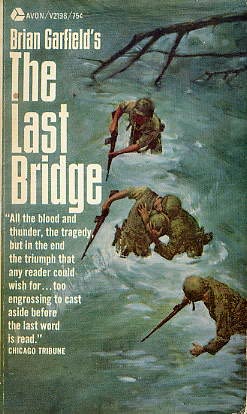
It would be also interesting to hear where he draws the line. His first novel under his own name was one of the first stories about the Vietnam war: The Last Bridge, in 1966. Could that be reprinted?

PS. Scroll down to see a link-infested list of American paperback writers translated in a short story form. There was something wrong with some of the links first, but I fixed that - hopefully.

Stalin dreams

Here's some eye candy: architectural dreams from Soviet Union, the year is 1938.

http://englishrussia.com/?p=600

Monday, January 22, 2007

Only short story translations


Here's a list of important, mainly American, crime authors who've had only short story translations in Finland:

William Campbell Gault
Norbert Davis (see also this)
H. Bedford-Jones
Lawrence Blochman
William G. Bogart (the WikiPedia link doesn't say that Bogart's hero Johnny Saxon was an ex-pulp writer himself)
Hugh B. Cave (see also this)
George C. Chesbro (two Mongo stories, if I remember correctly)
George Harmon Coxe (okay, he had some serials published in magazines)
Charles Einstein
Hal Ellson
Steve Fisher (I've been forgetting to link to this excellent post at Woody Haut's blog)
William Lindsay Gresham (you've all seen the film about his wife, haven't you?)
Robert Martin
Harold Q. Masur (see also this and this)
Bob McKnight
Sam Merwin, Jr.
Frederick Nebel (see also this)
Francis M. Nevins, Jr.
William Nolan (see also this)
Lawrence Treat (see also this)
Robert Turner (see also this)
Richard Wormser
Leslie T. White

Does William Barrett count? Many of his Needle-Mike stories from Dime Detective were published in Finnish in the fourties, but none of his adventure and religious novels ever appeared here.

I also noticed that I was wrong about William Ard when I said that he has nothing translated in Finnish. He has a short story in a men's mag in the fifties, called "The Only Piece of Evidence" (or something to that effect).

By the way, Bart Spicer has been published in Finland only in Swedish!

Megan Abbott blogging


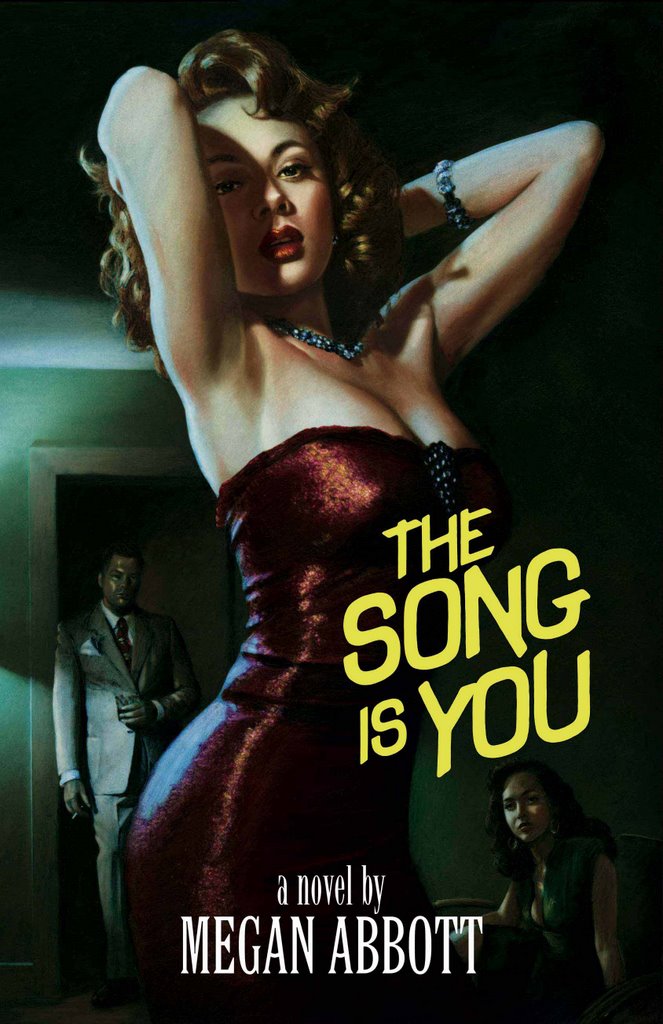
I haven't read either of Megan Abbott's two crime novels that have been highly praised, but if her blog posts at The Rap Sheet are any indication of their quality, I'll be reading them pretty soon. Here, for example, is, to me at least, a very thought-provoking post about film noir - and maybe noir fiction in particular.

The cover for her novel is quite striking, don't you think?

Friday, January 19, 2007

African psychedelia and heavy metal

I wrote here once that as a teenager (an eccentric one, let me tell you that) I dreamed of a new music genre: African garage rock and rock'n'roll. I wrote my own hypothetical reviews of garage punk bands coming out of Nigeria and Senegal. A year ago, I found a song that fits my scheme: Vum Vum's "Muzangola". I wrote about it here.

Now I've been listening to a collection of Nigerian funk from the seventies. It's great stuff throughout, but the most interesting thing is that there are two pieces that also fit my dream about the new genre: Tunji Oleyana and the Blenders's "Ifa" is a moody piece of weird psychedelia and Ofo The Black Company's "Allah Wakbarr" (sounds like a religious piece) is quite heavy and rollicking rock'n'roll tune, almost without any African elements. The guy - whoever he is - plays his electric guitar like Jimi Hendrix on speed.

Here's a review of the album. It says pretty much the same thing about Ofo The Black Company.

It would be interesting, though, to hear real garage punk bands from Africa. There must've been at least some in countries like South Africa and Rhodesia. But I don't think they had any African influence.

Scroll down


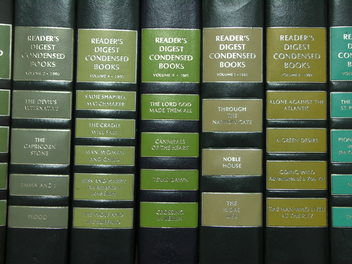
Scroll down to see a post about thriller/crime writers that have been published here in Finland only in the Readers' Digest Condensed Books. I had been saving it as draft, but you'd think it would come up as the first post, but no.

I may do yet another post of important and interesting crime writers who have been published in Finnish only in short story form. (Not very sexy, you say. Yup. Not sexy at all. I like to be sexy only when I'm not blogging. When I cuddle up next to Paris H... umm, my wife.)

Thursday, January 18, 2007

Ed Gorman

I totally forgot one of the most important paperback writers who's worked for a long time in the industry and hasn't been translated: Ed Gorman. There's not a word from him in Finnish. (I haven't even interviewed him, but I'll take care of that.) Ed Gorman blogs here.

Blogs sexy?

There seems to be some kind of contest in the midst of Finnish blogs as to which blog is the sexiest. (Or actually the word is "the most fuckable", but I wouldn't dare use it here. This is a family blog, after all.)

But, hey, c'mon, blogs sexy? Yeah, right. Maybe three or four years ago, maybe not even then. It's just nerds and introverts pointing to other nerds and introverts. Check this out (sorry, it's in Finnish), someone writes about how to make a popular blog. If I understood correctly, Juha Seppälä, the Finnish author, was heavily accused of racism (or some such) when he wrote in a newspaper column two or three years back that bloggers are narcissistic. Point proven. (Except that Seppälä has his own blog now. (He gets paid for it, though.))

I may have to post more of Ottilia's bunny drawings here, if not for anything else but to keep these people from coming here.

Wednesday, January 17, 2007

Stephen Crane

(It's about a coming collection of Stephen Crane's Western short stories that have never before been translated.)

Turkulaiselta kulttuurikustantamolta Farokselta tulee kevään aikana kokoelma Stephen Cranen lännentarinoita, joita ei ole aiemmin suomeksi käännetty (paitsi "Sininen hotelli", joka ilmestyi puolitoista vuotta sitten Länkkäriseuran tilaajalahjana). Anssi Hynysen kokoama ja kääntämä kirja on sen verran hieno kulttuuriteko, että pistän tähän kirjan sisällön:

"Morsian saapuu kaupunkiin ja muita lännentarinoita" (työnimi) sisältää seuraavat tarinat:

Takaa-ajo (”Horses – One Dash!”, Philadelphia Press, tammikuu 1896)
Mies ja muutama muu (”A Man and Some Others”, Century, helmikuu 1897)
Morsian saapuu kaupunkiin (”The Bride Comes to Yellow Sky”, McClure’s Magazine, helmikuu 1898)
Viisi valkoista hiirtä (”The Five White Mice”, New York World, huhtikuu 1898)
Sininen hotelli (”The Blue Hotel”, Collier’s Weekly, marraskuu 1898)
Kello kaksitoista (”Twelve O’Clock”, Pall Mall Gazette, joulukuu 1899)

Authors translated only in Readers' Digest Condensed books

As I mentioned the Readers' Digest books below, I thought I'd make a list of, mostly American, crime and thriller writers who have been translated only in those abridged collections.

F. Paul Wilson (apart from short stories in SF/horror fanzines and collections; the medical thriller, The Select, in 1995)
Stephen Hunter (Point of Impact, in 1997; there seems to be a movie coming up on this)
Barry Eisler (Rain Fall, in 2003)
Stephen Leather
James Thayer (several translations in Condensed Books)
Greg Iles
Susan Geason
Brian Haig
C.J. Box
David Lavallee
S.K. Wolf (just who is this? gotta be a pseudonym)
Sam Llewellyn
Robert Byrne
Ken McClure

Doing the research I noticed that there's a novel The Long Kill by Reginald Hill in 1991 in one of the Condensed books under the pseudonym Patrick Ruell. I don't think this is mentioned anywhere else (in Finnish sources, that is).

Ridley Pearson in Finland

As a part of my on-going series on crime and thriller writers' reception by the Finnish publishers, here's something on Ridley Pearson (whose The Angel Maker I didn't like a bit, as evidenced below). I'd thought he would've been bigger in Finland than he apparently is.

He's had only four books published in Finland by a big house, Gummerus. These include The Angel Maker, No Witnesses, Beyond Recognition and Chain of Evidence. Two of his books, Hard Fall and The Seizing of Yankee Green Mall, were published by Kauppiaitten Kustannus which is a publishing house not specialized in translated fiction. These precede the ones by Gummerus. There are two books done abridged in the Readers' Digest collections, but they were already published by others.

1997's Chain of Evidence (Todistusketju in Finnish) was the last Pearson to be translated. While I might be able to say that this speaks for the Finnish readership's good taste, it's still a puzzle to me. The Angel Maker had two printings in 1994 and while the first one may have been a small one, it's still an evidence pointing out there could be a market for Pearson in Finland. It is no service to Finnish readers - and to the reading culture - to drop authors like this.

Tuesday, January 16, 2007

Ridley Pearson sucks!


(I had difficulty writing the last word on the title: "susck", "sucsk", "suksc", "sukcs". It sets the tone for this diatribe.)

I finished my first Ridley Pearson last night. It was The Angel Maker from 1993, second offering in the series recounting the adventures of Boldt and Matthews, the cop couple almost in love with each other. It was such a boring book that I had difficulties to get through with it. I almost fell asleep reading it... And this is a friggin' bestselling crime thriller! C'mon! What's with you people, getting this kind of bull to the bestselling level?! Read something good for a change!

Okay, let's calm down. I'll give you that there was some inventiveness in the ways the serial killer did his stuff, but beyond that there were no redeeming elements. The characters are clearly meant to be paradoxical and deep human beings, with inner contradictions and ever-going self-doubt, but Pearson cannot give them but some extra points - i.e., Boldt takes his little baby with him to interview possible leads (but the baby really doesn't act like a baby; if I were to take my little boy (0kay, he's two) to my job gigs, it would only break all hell loose) - that really don't add much to anything. The same with the baddie, a heart surgeon/vet who's supposed to be this monumental genius seeing himself above all the others - I didn't believe in him for a minute.

Pearson says this at his website: "Being a fiction writer is really like being an actor, because if you're going to write convincingly it has to sound right and play right." Okay, the guy's right. But why then does he write books that don't sound and play right? It was like watching some puppets do overlong scenes. (Or then too short. This guy switches the point of view every two pages, when he's not doing scenes that take 300 pages. Especially the scene at the pawn shop had me bite my nails - but not with excitement. And don't ask me about the action scenes. My mother would write better action scenes.)

Someone might say that it was the Finnish translation. No way translators are not that bad in here. It might be the case, though, that Ilkka Rekiaro was so bored with the book that he did a purposefully bad job. But then he wouldn't be so prolific a translator as he is. He'd get canned.

I remember when my book on crime paperback fiction, Pulpografia, came out in 2001 and I was on television. The interviewer asked me if there were any well-written books in the selection. I was mildly put off by the question, but didn't let it show. I could say now that each and every one was written better than The Angel Maker. What's worrying is that this is what people buy and read and think it's the state of the art.

Monday, January 15, 2007

I must be a bit slow

I just should've payed more attention. The shutting down of Flashing In The Gutters got good coverage here.

Untranslated paperbackers


After writing down how the Finnish publishers have treated Block, Leonard and Brian Garfield, I decided it might be interesting to see which prominent (and not so prominent) paperback writers have been neglected in Finland. The list focuses mainly on crime fiction writers and is in random order.

Charles Willeford: no translations before Miami Blues in the late eighties (I don't really consider this surprising, since Willeford wrote mostly for quite obscure publishers)
William Ard: no translations, unless one wants to count a pseudonymous effort that was really written by John Jakes (Give Me This Woman, Monarch 1963, which is great and sleazy in the best paperback tradition)
Frank McAuliffe: no translations
Malcolm Braly: no translations
Glenn Canary: no translations
James O. Causey: no translations
Jay Flynn: no translations
Al Fray: no translations
Charles Runyon: no translations
William Fuller: no translations
Donald Goines: no translations
Iceberg Slim: no translations
David Karp: no translations
Herbert D. Kastle: no translations
Robert Donald Locke: no translations (or actually "no translation", since A Taste of Brass (1957) seems to be his only work, apart from science fiction stories in mags)
David Markson: no translations (the link says that there should've been a reprint of his early crime novels, but has anyone seen them?)
Vin Packer: no translations
James Reasoner: no translations (with the exception of two stories, one in Isku, one in Ruudinsavu, that have been conducted by me in the recent years)

Robert Randisi has got only four or five of his adult Westerns translated and having read those, I find it hard to believe they represent him at his best. He has also some Destroyers, written with Warren Murphy, and Nick Carters (that are quite good within the series). Nothing under his own name and not even his Gunsmiths or other series he's deservedly famous for.

There are no Ed Noons by Michael Avallone translated. He's "known" here only through his pseudonymous work in the U.N.C.L.E. series and Nick Carters.

One of the most peculiar cases is Jim Thompson. The Getaway was translated as a hardback after the Peckinpah movie came out, but we had to wait until the late eighties to see Killer Inside Me in Finnish by a very small press. After that there was still a long gap before Like started translating his books in the nineties.

In the Western field, the most prominent example must be H.A. DeRosso, but there's four or five of his short stories published in Finnish fictionmags, so he won't quite qualify. Other important Western paperbackers not translated in Finnish include authors like Matt Braun, Dan Cushman, Vernon Fluharty, Paul Durst, Lee Hoffman, William C. Johnstone, Nelson Nye, T.V. Olsen and Giles Tippette.

Most of the above-mentioned writers wrote paperbacks. Here are some earlier pulpsters and hardbackers who never made it to Finland:

Cleve F. Adams
Dwight V. Babcock
Leigh Brackett (see also this)
Charles G. Booth
Paul Cain
Lester Dent

Kenneth Fearing
Richard Hallas (unless one wants to count his Lassie, Come Home and a war novel, This Above All, as by Eric Knight)
Roy Huggins (I mean his three early crime novels)
Robert Reeves
Eric Taylor
Roger Torrey
Raoul Whitfield
P.J. Wolfson
Benjamin Appel
A.I. Bezzerides (just recently deceased)
Jay J. Dratler

There's of course the possibility that some of the pulpsters above may have had some stories translated, since the prominent Finnish pulp, Seikkailujen Maailma, didn't always print the writers' names on translated stories.

I may have and must have forgotten lots of authors, but I'll keep you posted if I come up with other names. I couldn't find a link to all the authors, sorry.

Flashing In The Gutters gone

I haven't seen anyone post about Flashing In The Gutters having gone and been shut down. Man, that's huge. I would've hoped he'd've at least saved the archives, there was lot of excellent stuff there.

Richard S. Prather talks about Shell Scott and channeling


Here's a lengthy interview with Richard S. Prather who penned many entertaining and funny PI spoofs with Shell Scott as his hero. The interview focuses sometimes on other things than Prather's career, but it's interesting to see that Prather is a devout in new age religions (or something like that, I'm not exactly sure what his beliefs should be called).

But the most interesting thing to see is that he's very critical of the Bush administration and talks in length about the 9/11 lies (or "lies"). The Shell Scott books are very anti-Red and anti-Left, so I would've thought that Prather is a right-winger himself. Clearly this is not the case. (Or then he shouldn't be discussed in these terms at all.)

Also don't mind the fact that the interviewer is Don Pendleton's widow. It only explain why she's so enthusiastic about Don Pendleton's Mack Bolans. Having read some ten of them I can tell you that Pendleton wasn't the one to ask questions about plotting and style.

Thanks to Steve Lewis for the tip! On top there's Shell Scott as drawn by Robert McGinnis.

Sunday, January 14, 2007

Hard Case Crime update

I should really post more often this kind of news items. I'm lazy, though, and I suspect that those who follow this blog also follow those blogs that do post interesting pieces of crime fiction related news - such as Bill Crider's Pop Culture Magazine.

But as I've liked the Hard Case Crime line very much, I can't help but link to their latest list about coming books. It's impressive - two Robert Bloch crime novels as a Double edition! - and I'd like to start something similar here in Finland. (It's just that the Finnish crime fiction has been pretty lame and there's not so much to reprint even from the seventies and eighties.)

Here's also a list of Stark House coming releases. Elizabeth Sanxay Holding comes very highly recommended by me: nice touch on female noir. Dan J. Marlowe's The Vengeance Man is also very, very good.

I also want to congratulate James Reasoner for writing his 200th novel. Amazing!

PS. I seem to have left out that the Spunk magazine mentioned earlier will be one of those mags I edit and publish with my own money (like Isku), so the publication isn't much of a merit to me. But there are other writers, too, with very funny takes on the so called true stories of the sixties' and seventies' men mags. And there's also some vintage stuff: a story from a Finnish porn mag from 1974.

Thursday, January 11, 2007

Spunky story

I'm again writing a new story about my private eye hero, Joe Novak. It's set in a PI conference in the early sixties (Novak is already thinking about getting married and settling down) and Novak is only an innocent bystander when a Texas private eye with cowboy boots comes to him and starts spinning his tall tale about a gig gone hugely wrong. It's meant to be a pastiche of the wild stories that sixties' men's adventure mags printed, but as yet I don't exactly know what will happen. Something wild about biker gangs and their blood-lusty cult leader and his horde of rapist baboons (that are results of a Nazi experiment conducted in Madagascar).

This will come out in Mälli: Tosi Miesten Toimintakertomuksia, which will translate as Spunk: True Men's Action Stories. (There's a spin in Finnish "toimintakertomuksia", but it won't translate.) The mag will come out in late Spring or early Summer.

The Texas private eye in the story is called Jack MacLane. His and Novak's mutual friend is mentioned in dialogue, his name is Jay Reasoner. You know who you are.

Brian Garfield


I'll mention briefly one other author for whom I have high respect and who has had a rather nonchalant response from Finnish publishers: Brian Garfield. He's had four different publishers (one being a paperback house in the mid-seventies) and none of the big houses that have translated his work has done more than two books. The latest ones seem to be two reprints from the early nineties.

The weirdest thing is that Garfield's best-selling Death Wish came from a big house (Karisto, which has always been second rank among the big houses in Finland) in 1975 and its sequel, Death Sentence (1975), came out in paperback from a totally different publisher in 1979, without any blurbs or other stuff pointing out that it was the sequel of the famous book whose film version had spawned a bunch of sequels of its own. (And, by the way, Garfield's own sequel is excellent and very reflective of the vigilante idiocy of the Charles Bronson films.)

Wednesday, January 10, 2007

Crime fiction careers in Finland


I was writing earlier about John Gardner's following in Finland, which has been sporadic at best. First, three Boysie Oakes books, then nothing, then some half dozen of his James Bonds. A one-off during the interval. At least, the publisher has remained the same.

I got to thinking about other examples. Two of the most frustrating ones have been Elmore Leonard and Lawrence Block, both very professional and widely-read authors working in the crime and mystery field. Leonard has had at least four different publishers, even though there's been some 15 translations in all. Some of the translations are wildly wrong about Leonard's style.

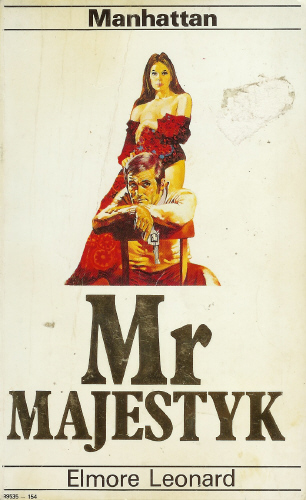
The first Leonard novel to come out in Finnish was, to me, one of his best, Mr. Majestyk. It came out as a cheap paperback in 1979 and it was followed by 52 Pickup from the same paperback house the next year. I think it's a small wonder none of his Western novels came out as paperbacks, even though there were lots of those by writers like Lewis B. Patten and Gordon Shirreffs.

Then the turn was shifted to Tammi who did some pretty bad translations in the late eighties - this was a phase when I was wondering what was so great about this Leonard (I'd been reading some magazines that had articles about hardboiled crime fiction that praised Leonard). Then came Book Studio, a smallish independent publisher, who did lots of Leonard's later efforts from Rum Punch to Out Of Sight. And then another big house steps in with Pagan Babies and Tishomingo Blues - I hear with good results regards to translation. These are the only Leonard translations in the 2000's. No one has ever touched his earlier books, save for the paperback house who did Mr. Majestyk and 52 Pickup.

Lawrence Block has been served more ill than Leonard. He's had only two publishers in Finland, first Vaasa Oy, newspaper publisher and printing house, who had several paperback lines from early sixties to the eighties. In the Manhattan series (which was actually of Swedish origin) Block's thriller Deadly Honeymoon (1967) came out in 1974. I think it's a small wonder that not even Block's paperback originals came to be translated, when there were at least two or three new titles every month from the Finnish paperback houses. I'd love to see a Tanner novel by Block to have come out from Vaasa Oy in their Manhattan series.

Then there was a long break, after which Book Studio made several of Block's Matt Scudder and Bernie Rhodenbarr novels, starting from the mid-eighties. Then Book Studio was bought by a bigger house, which ultimately caused the main editor and original publisher to leave the business and the Book Studio line was dropped with all of its crime fiction. Without Book Studio, Block has no Finnish publisher. (The Book Studio head honcho Kari Lindgren has a new publishing firm with him, but last I heard he had dropped the plans to publish more Block - I think it was meant to be a collection of Block's short stories. I'd hope someone grabbed Block's early novels, the ones that have been dug out by the good folks at Hard Case Crime.)

Alongside Deadly Honeymoon, there were half dozen short stories in several magazines in the 70's and 80's and an early porn paperback Block is reported having written as by Sheldon Lord (Kept, I think, is the title; Maksettu rakastaja in Finnish). I don't think Block ever received any money from the translation...

The similar thing has occurred also with Donald Westlake. And I bet there are dozens of other good, respectable authors who should've deserved better.

Tuesday, January 09, 2007

Cranky heirs

Some of you may remember that I've compiled a book of Finnish pulp fiction. It should come out soon, but there are now problems. I wanted to reprint a total unknown who had a rather good private eye story in the late fifties. I didn't even know if the name was a pseudonym or not, but the surname was rare. The phone numbers for the possible relatives were restricted, but I was able to find one with Google: a young guy, playing hockey in a junior team.

I wrote to the coach of the team and asked him to deliver the message. Then one day the father of the hockey player phoned me. He was the grandson of the said writer. He hadn't read any of his granddad's stories,which seemed pretty weird to me.

The phone numbers were restricted because his father's ex-wife (father had died a while back) made harrassment calls. It turned out that this son felt pretty much okay if there were a reprint, but there's an evil and greedybrother. The son I talked to said that he fears that his brother - with whom he doesn't communicate at all - gets ideas that there's lots of money in this. I said that there would be some sort of a payment for the reprint rights, but nothing fancy. The man said he'll talk with his sister - who obviously is a sane person - and will get back to me. (Nothing has happened so far, though.)

I asked around some people who have done similar collections of old stuff and found out that it's not actually a simple issue: heirs don't necessarily represent the rights of a writer. A writer may have donated his rights to charity or something like that.

I don't think, though, that was the case with a Finnish guy who penned two dozen short stories just to make some quick money and abandoned writing soon after that. I don't think he ever dreamed about getting his stuff back to print, even in fifty years' time. I hope that the thing resolves and I'll manage to make justice for a forgotten author.

Monday, January 08, 2007

Back to work

Will be busy for couple of days, but there are some things to blog about, so stay tuned.

Reading Fear Is The Key by Alistair MacLean. It's pretty good and the opening is catchy. If this were written by an American author, it would be even better - MacLean is strictly British in his choice of words and sentence structures. I seem to have first hardback edition by Collins from 1961 - am I a millionaire? Will post the cover scan later on. And the Finnish cover, too, by the great Eino Tepponen.

Thursday, January 04, 2007

Ottilia's bunnies


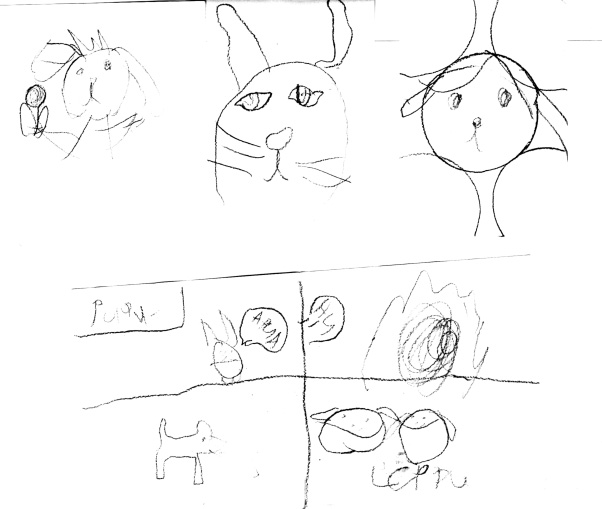
I've been posting lots of Ottilia's and my drawings and comics in Pulpetti. Here are some ad hoc drawings about bunnies Ottilia made on receipts during a train trip not long ago. There's also a comic strip, but I don't know what's going on in there. It says "The End" in the end.

Evil Buddhists and lame superheroes

Couple of links I stumbled upon:

The Lamest Superheroes (I don't know much about superhero comics, but these dudes sure sound lame!)

The Attack of the Evil Buddhist Monks (it's about real history, not pulps of any kind, even though there were some Eastern monk heroes in pulps, most notably in Arthur J. Burks's The Great Mirror (1942/1952), in which the Buddhist monks fight the Martians)

Still on Gardner

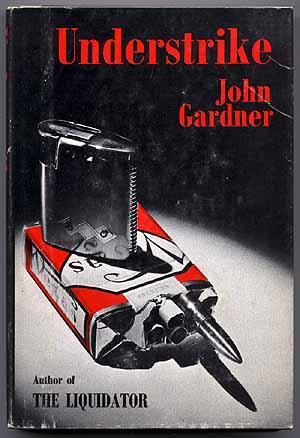
I forgot to note that Understrike was published in Finnish in 1967 under the title Isku vyön alle. The publisher was Gummerus. Gardner hasn't had a good luck with Finnish publishers: out of his whole output, there has been only three Boysie Oakes books and some of his James Bonds published in Finnish. And a one-off novel called Flamingo from 1983. From a quick look, I'd say there was almost a fifteen-year gap between the third Oakes book, Amber Nine, up to Icebreaker which was translated as Tehtävä Suomessa, James Bond/Mission In Finland, James Bond in the early eighties. This is typical of Finnish publishers who don't care to follow anauthor's career, unless he/she is big or very respected. And John Gardner isn't either, even though he seems very capable (though I had my reservations about Understrike and his James Bonds).

Here's his bibliography.

Wednesday, January 03, 2007

John Gardner's Understrike


As I promised, I'd say something about Understrike, a comic spy thriller by the English writer John Gardner. He's nowadays best known as a writer of James Bond sequels (one of which didn't impress me a bit), but earlier he was known first as the creator of the Boysie Oakes series which are spoofs, and then complex and serious spy novels. It seems to me, based on an conversation on an e-mail list I'm on, that Gardner's reputation was pretty much marred by the Bond books and his new books - which I've been told are quite good - don't gather much readers.

Understrike, from 1965, is the second of the Boysie Oakes books ("Poju" in Finnish) and, to me, it's a bit dated. There's too much interplay with beautiful women and not enough action. When there's action, in the climax, there's not much of it, even though it's expertly written. The parody and spoof elements don't seem as funny as they could be - someone like Richard S. Prather did this sort of thing much better. It never seems very convincing to me how a self-pitying coward like Boysie Oakes gets to be a spy, and I think Stephen Frances, of the Hank Janson fame, did more convincing job with his John Gail thrillers he wrote after abandoning Janson in the mid-sixties. John Gail, besides being a self-pitying coward, is also a Leftist and a pacifist...

If this were not my job, I'd give up, but as I'll have to write an entry for Gardner for the upcoming reference book on thriller writers, I'll have to read some more of his work.

Right now, I'm reading Ice Station Zebra by Alistair MacLean. The opening has so many catches for the reader that it almost makes me want to say that MacLean is the master of the genre! ("I've seen the future of the thriller genre and his name is..." Well, not that.)

Tuesday, January 02, 2007

Victorian snakes?

A new article by a friend of mine, Jussi Parikka (and also another writer), about the cultural history of mobile games. May contain some tough-to-crack terms and words.