Friday, September 28, 2007

Another piece of ephemera

Another freebie find from the university library remainder shelf. This isn't actually ephemera - it's a real magazine, but it seems ephemeral at first sight. The year is 1926, and the subtitle says it all: "A periodical to the point on matters of health, wealth and life". The publisher was The C.W. Daniel Company working in London. It seems to be up and running still. Here's some background. Delsarte mentioned in the cover is one Francois Delsarte, a Frenchman who was born in 1811 and taught acting and drama.

There are some ads in the back pages. "P.R." Olnut Biscuits are advertised this way:

"It is generally admitted that most of us eat too much bread. Bread, if it is made from the whole wheat, is a good thing in itself, but eaten to the customary excess it becomes dangerous. It sets up an internal clogging that is well-known to be a principal root of most serious diseases."

Other advertisers include Nutona Rissola Powder and Eltekon Orthopaedic Institute.

Thursday, September 27, 2007

The Harry Etelä book out

The collection of Finnish pulp writer and lyricist Harry Etelä's horror stories is out. The Secret Chamber of Horrors/Kauhujen salakammio that I edited features seven stories from the Finnish pulp magazines Seikkailujen Maailma and Isku (The World of Adventures and Punch), from the years 1937-1940. The stories are quite rough and contain lots of erotic sadism which begs the question: how on earth did these stories get published in the thirties' Finland? They are the best (perhaps only) equivalent of the American shudder pulps written in Finland. Some of the stuff is even rougher than anything written in the wake of splatterpunk in the eighties and early nineties. The titular story is about a man who takes young boys into his chamber, roasts them over fire and eats them. Palms first. You can order the book from the publisher by sending an e-mail to lounaisranta@pelipeitto.fi.
Here's the cover that's been made using one of the illustrations Harry Etelä's brother, Pentti Viherluoto, made for one of his notebooks. (Pentti was a composer and Harry wrote the lyrics.) (Earlier I forgot to mention that I'd posted my foreword here.)

Another book was also published at the same time. It's Harri Kumpulainen's aka Harri Erkki's collection of his weird and horrific science fiction stories he's been writing for fourty years now, starting in 1967 from a slick broadsheet magazine called Koti-Posti (Home-Post) and ending up in the present-day fanzines, like Portti. Pitkä jauntti/The Long Jaunt is highly recommendable if you're into this sort of thing. The both books are part of the M series that was started with Viides testamentti I edited. (The next book will be a collection Boris Hurtta's horror stories.)

Here's also a photo taken at the announcement party on Wednesday. From the left: me, Markku Soikkeli (whose book, Marsin ikävä/Mars Spleen in the M series is one of the contestants in the Helsingin Sanomat first book contest) and Tapani Maskula who wrote the afterword for the Harry Etelä book. He's a film critic, but also an aficionado of old Finnish popular music.
PS. You might notice the new layout. Pulpetti is closing in its 1000th post, so I thought I should spice up things a bit. Maybe I'll even do a link list.

Wednesday, September 26, 2007

Denny Lien's review of a British hardboiled novel


SF expert and librarian Denny Lien posted this review on the FictionMags e-mail list and I asked his permission to publish it for a wider audience.
Acting on a random whim, I recently read my copy of ASSIGNMENT: NEW YORK, a hardboiled detective novel written by E.C. Tubb as by "Mike Lantry" (which is also the name of the protagonist of the novel).
Philip Harbottle provides the introduction to the Gryphon reprint (the original edition was a 1956 UK Badger pb). As usual, he talks up the work as a wondrous lost classic, though he doesn't quite get to the level of fulsome praise typical ofhis commentaries on John Russell Fearn reprints.
Tubb apparently applied his usual method of the time of making it up as he went along without much clue of how anything would end, and found near the end that he'd written himself into a corner and lacked a solution to the murders, so he had to go back and heavily rewrite and reclue, an experience which soured him on doing more mystery novels (this apparently being his only one).
I had a bad moment when I found a typo in the second line on the first page, but really I should have begun worrying at the title itself. The private eye does in fact solve a case in New York city, but since he lives there and has his office there, that's not too surprising. Harbottle muses approvingly on how Tubb used all of the standard conventions of the genre to stunning effect -- the cynical, tough but fair, down-on-his-luck private eye in a crummy office with a bottle of Scotch in his desk, the stern patriach who hires him, the drunken son and sexy daughter and conservative lawyer and ex-showgirl wife and punch drunk pub and perky female newspaper reporter and the one honest cop the P.I. can trust to help him and so on. I'd say he uses all of the conventions to very conventional effect, to the point where I was mentally checking off each character and each bit of repartee as encountered -- "yup, he didn't miss that cliche either" sort of thing.
There was one brief scene that seemed to me to have a bit of life in it, though it had nothing to do with the mystery plot (which is probably why). After a narrow escape from thugs, Lantry has lost his wallet in the melee; when he gets word that someone has found it and wants to return it to his office, he assumes it's a trap and manages to insult the poor-but-honest citizen who really had no ulterior motive. A moment of almost-reality.
On the other side of reality, Lantry is attacked outside a NYC nightclub by a tommy-gunner in a speeding car. He fires back, kills the tommy-gunner and wounds the driver, who crashes into a lamp post, sending the car up in flames. Nobody else seems to be around, as Lantry saunters off to continue his investigations at his leisure.
I don't know if Tubb has visited the U.S. by the time he'd written this book, but he gets a number of things slightly wrong (and yes, I realize American authors setting books inthe UK or elsewhere are notorious for doing the same thing). He has his tough P.I. speaking of making "his morning toilet", which I can't imagine any 1950s Yank doing with a straight face (he'd more likely just say that "I washed up and shaved"or the like). Both Lantry and others buy their cigarettes in "packets" rather than in "packs." Etc. But my favorite was the jeer of the psychopathic tommy-gunner Lefty, who, when prodded by Lantry as to where he'd gotten his gun, replied that he found it in a Christmas cracker (the custom of pulling which is unknown in the US -- and most Americans seeing that line would probably have a puzzled mental image of a really big red and green Saltine).
I like a lot of Tubb's science fiction, but I don't think the mystery field lost anything when he decided to stop his career here at one book.

Tuesday, September 25, 2007

Robert Martin

A good and lengthy article on Robert Martin, a nearly forgotten PI writer from the fifties. I've read only two stories by Martin and both were good.

Books read: Charlie Huston, Arthur Maling, Emerson Dodge (almost)

Some capsule reviews of some books I've read recently, after completing the book on forgotten writers:

Charlie Huston: Already Dead. One of Huston's Vampyre novels, with Joe Pitt as the vampire private eye. I'm not sure whether I'll read more of these, but this was entertaining enough, with Huston's ultrahardboiled style that moves in present tense. A bit too long, perhaps, and not enough plot for my taste. Huston's received lots of praise from the hardboiled aficionado, but the Vampyre mythology pretty much wore me out. Couple of real Ross Macdonaldish moments in the bunch, however, which makes me want to read more of his non-Vampyre work.

Arthur Maling: From Thunder Bay (1981, translated in Finnish as Veljensä vartija, WSOY/SAPO 1988 or so). Seems pretty obscure these days, but Maling has published quite many books. This one is a Dortmunderish story, without Westlake's humour, about a two-bit loser who accidentally kills a cop after a raid on a plane he's been flying without knowing he's smuggling guns into the US. I had mixed feelings about this - it's touching and warm in its depiction of its anti-hero, but also pretty long, and as I said, there's not much humour in it. But I did finish the book and should say that read it if you can find it cheap. There are elements you don't easily find in an American crime novel - one of the heroes (or anti-heroes, actually) is an Ojibwa Indian who belongs to the Canadian Marxist-Stalinist Party.

I've been also reading Emerson Dodge's Australian paperback novel that was published in Finnish as Lyijypuuroa aamiaiseksi (translates back as Lead Porridge for Breakfast), without mentioning the original title. I've carried this along with me to buses and banks and such, so I'm pretty much in the middle. It's pretty okay so far, traditional Western with raggedly handsome Buck Fallon as the hero. Dodge is Paul Wheelahan, one of the most prolific Australian paperbackers.

Now I'm reading Laura Lippman's Charm City from 1998, but really have to get on again with my work.

Thursday, September 20, 2007

Another one ready to go

Just finished the book on forgotten writers. There are one or two minor things I'll have to check still, but I consider the book now ready. Celebration will have to wait till tomorrow and Friday night! Friday, Friday, come on Friday...

Tuesday, September 18, 2007

New Commonwealth


I have a friend whose hobby is collecting narrow gauge railways. I don't know the current number - he had to sell one of his most precious German locomotives -, but at one time he had at least four locomotives. Besides that he has an old GMC truck and he at least used to have an old tractor - forgot the brand of that, sorry!

I had him in mind, when I picked up a copy of New Commonwealth from the early sixties from the remainder shelf at the university library. Nice rollers in the cover! There's also a full-page, four-colour commercial for an industrial locomotive in the mag. (If anyone wants to see that, just holler.)

Review of Matheson's I Am Legend

My friend pHinn reviews I Am Legend, the legendary horror/SF novel by Richard Matheson.

Monday, September 17, 2007

Kevin Wignall's masterpiece on European crisis


An epic title, isn't it? But I think it's true: Kevin Wignall's Who Is Conrad Hirst? is a masterpiece of new crime writing and it's about European crisis.

I got the advanced reader's copy from Kevin who wanted to know whether there are any Finnish publishers who might be interested in this sort of thing. I said sure and gave him some names. It would be criminal to leave this unpublished in Finnish. The publisher - Simon & Schuster - advertises the book as new Jason Bourne or something to that effect. Kevin himself wrote in his e-mail that he thinks the book is more like Graham Greene. He's right: Who is Conrad Hirst? is This Gun for Hire for the 21st century. Wignall's book has also the same international feel that is so prevalent in the thrillers of the thirties.
Conrad Hirst is both a sociopath and a killer for hire, just like Greene's Raven. He has no feelings, but his last job made him want to get out of the business. So he decides to hunt down and kill all the four people who know him and his doings. It turns out pretty rapidly he's got it all wrong and several dead people, including his former boss, are found killed or missing.

The book deals on many things and does it satisfactorily despite the fact it's only about 200 pages. Conrad started his killing business in Yugoslavia where he thought he could be the new Robert Capa, but he saw pretty soon there was no way one could be a hero in Yugoslavia. It's obvious that the whole new generation went to Yugoslavia only to get kicks, not for any cause or ideas about better world. (This was seen also in Finland in the figure of Marco Casagrande, who fought in Yugoslavia and wrote a book called Mostarin tien liftarit/The Hitchers at the Mostar Road in 1997 about his experiecens in the war.)

I had some minor quibbles in the end, when Conrad finally meets someone in charge, but there was also a very nice twist that gave the book a whole new purpose. It was pretty hard to notice, but it's there.
Check the book out. It's out in November. There will also be a film based on the book - at least I sincerely hope so.

Urdu pulp

Someone's selling a vintage Urdu crime mag in eBay.

Sunday, September 16, 2007

Fascinating ephemera


I've been using the label "ephemera" when I've written about my own life or about family matters or stuff like that. The word is also used when one talks about little publications that don't fall into category of books or magazines. I have some fascination for this kind of publications and you can only wonder what I felt when I noticed that at the university library here in Turku there was a remainder shelf with very obscure ephemera (and to be sure, some books and periodicals also). And everything was free: take away! For four days, I spent my leisure time, away from reading my forgotten Finnish writers in the reading-room, digging the shelves and taking up everything that seemed even remotely interesting. ("Even remotely interesting": that sums up my life pretty much.)

I'll be posting some of my finds in coming days. At first we have a Hungarian cultural magazine from the thirties with a very nice Modernist Functionalist cover. I don't really know what the magazine is about, but who cares? (I'll be writing about Kevin Wignall's Who Is Conrad Hirst? as I promised, but that will have to wait, maybe till tomorrow. It was just as excellent as I first said.)

Thursday, September 13, 2007

The true origins of noir?

There's been a lot of heated discussions on what's noir fiction on the Rara-Avis mailing list. I really don't know why the topic raises so much hot blood - you'd think everyone could live with each others' definitions, wrong though they might seem to be. (Well, it is true that the word is getting out of hand, given, for example, Akashic's city noir anthologies - the stories really don't seem to me to be noir which should at least imply some sort of grimness.)

Now, a guy called William Ahearn, has dipped into this and written a pretty fascinating account of how noir came to be. It's been said that French critic Nino Frank coined the term in the years after WWII when he saw some American films for the first time. Ahearn has found out that this wasn't so - he used the term "noir" in reference to some other films. Ahearn has also taken a look into A Panorama of American Film Noir, a French reference work that was first published in 1955 and that has been regarded a key work in the noir discussion. Ahearn says it's one of the worst books he's ever seen, with totally incoherent argumentation and illogical deductions on what's noir and what's not. (Someone might say: "It's French. What do you expect?")

I have some quibbles with Ahearn's essay. He quotes James M. Cain and Billy Wilder who have been reported saying sarcastic things about the origins and definition of noir. I wouldn't put much weight on those guys, since they were known bull-shitters, and Cain seems to have spoken whatever came to his mind. (And I don't really see the point in asking artists about genres and other classifications.)

Ahearn's point is however right: noir has been used to detect films (and books and comics and TV shows) that aren't really noir. Laura is not noir, The Big Sleep is not noir, etc. - at least that's what he says. Ahearn refutes the incoherent definition of noir that's offered in A Panorama of American Film Noir and seems to be saying that we should really look really hard when we use the term. But I don't see why he then chooses to imply that the original French definition of noir is the right one. The first one is always the right one, is that what he's saying? I don't see why that should be. Theories are always corrected and commented on and so forth. Should we only look at, say, Marx and not what's written about him?

And we might also say that there really are lots of different definitions of noir: there's the one emphasizing the nihilist side of noir, then there's the political definition of films noirs being a Leftist genre, rising from the thirties' political movements, then there's the aesthetic definition (which furthermore includes two subdefinitions: the one emphasizing the distorted view to look at the world and the one emphasizing fedoras and raincoats and rainy streets and saxophones), then there's the psychological definition (in which case Laura is noir: it's about a man who falls in love with a dead woman). Etc., etc.

Ahearn (and every other noir fan) should really look into James Naremore's More Than Night which is the best book on the subject, at least of those I've read. In his book - which is a pretty thorough collection of linked essays - Naremore takes a look at all the definitions of noir and concludes that they are all discursive, i.e. the term, whenever it's used, defines what critics and viewers want it to define. (One should always tackle Rick Altman's useful book on film genres.) Hence there's no point in trying to define the "real" noir, since there have been so many theories of what it is. The original French one is no more adequate than the ones that have followed.

Monday, September 10, 2007

Kevin Wignall

During the weekend I took some time off my current book and started to read Kevin Wignall's Who Is Conrad Hirst? I'll write later about this, but let me tell you now that it is a truly magnificent book and you should grab it a minute it's out. (Which should be in November.)

Friday, September 07, 2007

Holy cow, sis!

I heard yesterday that my kid sister found work. And what work! She's going to work with this guy! (And in England and will live with the man and his wife for free and will still get paid!) I can't believe this... I asked Essi how far up she's going to go in movie business, will she one day walk up to the Oscar stand and receive the statue for the best make-up? She said that she doesn't really know, she just can't believe her luck. Nothing in the job announcement gave out what the job really was about and that must've cut some of the wanna-bes out, which is great, since Essi can really show now to the world what's she's capable of! Way to go, sis! Hope you'll get us invited to the Oscar gala!

We are soon leaving for the cabin for the weekend. I've been pretty much swamped with work and also will be for the next week.

Thursday, August 30, 2007

Joe L. Hensley dead and my grief about it

I read today that American author and jurist Joe L. Hensley died recently. I've never read anything by Hensley (unless a short story in an anthology), but I know the rough outline of his career and am pretty sure he was a good writer and a good man. Regardless of my pretty small knowledge of him, there's a sense of loss for me.

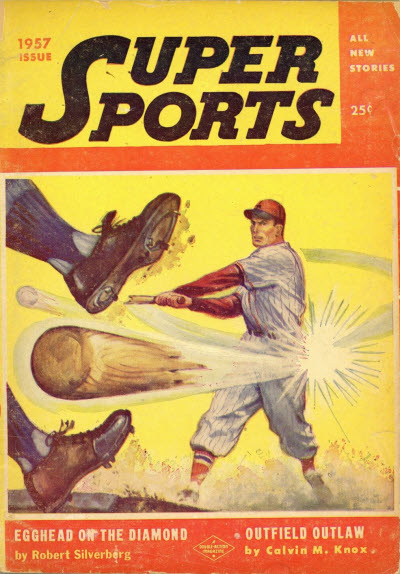
You see, I've been planning a one-off fiction zine to go along with Isku and my other fanzines. This one would be a sport story zine. Sport stories were a major genre in the original pulps and there were still some sport novels in the paperbacks of the fifties and sixties (and even in the seventies). Lots of writers known better from some other genres wrote for the sports pulps: Lester del Rey, Evan Hunter, James Blish, George O. Smith, William R. Cox... And these were intended for adult readers, not for kids, like sports literature in Europe and Finland quite easily is. Some of the stories were hardboiled in tone, some had crime and even murder in them. And I would've liked to try do a fiction fanzine with only sports stories in it. Maybe three or four Finnish ones, with one maybe a reprint, and of course a story from the vintage pulps themselves. Not a huge seller (as if my mags were huge sellers anywhere), but perhaps fun to do.

And Joe L. Hensley was one of the few writers alive who did stories for the sports pulps. I'd been thinking that I'd try to contact him - I believe I could've got his address or even e-mail quite easily. Then I would've written to him and asked him a permission. Then I'd have had to hunt for a suitable story. I know lots of pulp collectors and some collect sports mags, even though they don't seem to be very collectible in the US.

But no. With Joe Hensley gone, there's no one to ask.

(Well, on second thought, there's Robert Silverberg and then there's Milton Lesser, who's better known as Stephen Marlowe. And Robert Madle, who's also written some science fiction.)

Monday, August 27, 2007

The list: forgotten writers

It occurred to me that I should post the list of the forgotten writers I'm including in my forth-coming book (not that these names should mean much, especially to a foreign reader - and most of them are totally unlinkable):

L.A. Salava
Ville Paakonmaa
Erkki Wessman
Paavo Fossi/Paul Hamari
Arto Merenheimo
Pentti Lahti
Lea Leksi
Yrjö Koivukari
Eino Ruutsalo
Elisabet Laurila

Dead and forgotten

I've been busy lately writing a sequel to my earlier book about forgotten (Finnish) writers. The sequel concentrates mainly on fiction writers, as the earlier volume was about poets. Jess Nevins, who's done marvellous job before about even more forgotten authors, seems to have felt what I'm doing and shares the pain. But who the heck is T. Arthur Plummer..?

NMKY = YMCA

Just in case, you haven't seen this, here goes: YMCA by Village People, rendered into NMKY by Gregorius. I don't know who the hell this guy is and I sure don't remember this from the Hepskukkuu show, but it's hilarious anyway. (And it was intended as a parody in the beginning - so don't get any wrong ideas about Finns being totally without any wit.)

Friday, August 24, 2007

TVOD by The Normal

I've been listening to England Dreaming, a collection of pre-punk, punk and post-punk compiled by Jon Savage. One of my favourites in there is "TVOD" by The Normal, a very funny and catchy cheap synth piece. Check it out here - someone's made a nice rock video of his/her own.

Still on John Gardner

My dismissal of John Gardner (based mostly on his lesser novels) got me into a state of shame, so I'll link to this fine obituary of Gardner by Jim Doherty.

Thursday, August 23, 2007

Hans Jürgen Syberberg - kuvainraastaja Saksasta

(A seminar on a German director, Hans Jürgen Syberberg. Very much non-pulp.)

SYBERBERG-SEMINAARI maanantaina 27.8. kello 16-20 elokuvateatteri Orionissa (Eerikinkatu 15).

"Syberberg on ensimmäinen varteenotettava elokuvaohjaaja Godardin jälkeen" (Susan Sontag)

"Uuden saksalaisen elokuvan" omaleimaisin tekijä, elokuvaohjaaja ja multimediataiteilija Hans Jürgen Syberberg syntyi Saksan Nossendorfissa vuonna 1935. Syberberg on yhdistänyt esseemäisissä jättiläisteoksissaan Wagnerin ja Brechtin esteettiset näkemykset. Saksassa Syberberg on herättänyt voimakasta polemiikkia; muualla hänen lähestymistapaansa saksalaiseen historiaan on ylistetty. Yhdysvaltalainen kulttuurintutkija Susan Sontag totesi, että ohjaajan seitsemäntuntinen Hitler, elokuva Saksasta kuuluu 1900-luvun upeimpien taideteosten joukkoon.

Tabujen rikkojana kunnostautuneen ohjaajan retrospektiivi nähdään Helsingin juhlaviikoilla elokuvateatteri Orionissa 24.8.-1.9. (& 8.9.). Elokuvaretrospektiivin yhteydessä järjestetään maanantaina 27.8. kello 16-20 seminaari "Hans Jürgen Syberberg - kuvainraastaja Saksasta".

Hollantilainen mediatutkija Petrus Nouwens saapuu Suomeen kertomaan Syberbergistä Saksan historian poleemisena tulkkina, joka on teoksissaan yhdistänyt Theodor W. Adornon ja Martin Heideggerin esteettisen filosofian. Nouwens viimeistelee parhaillaan väitöskirjaansa Syberbergin tuotannosta.

Seminaarin muina puhujina kuullaan suomalaisia Syberberg-tuntijoita. Taiteentutkija Martti-Tapio Kuuskoski tarkastelee Syberbergin tuotannon kehitystä kokonaisuudessaan ja Wagner-spesialisti Pekka Asikainen analysoi Syberbergin versiota Richard Wagnerin musiikkidraamasta Parsifal.

Orion, maanantai 27.8.2007:
16-17 Martti-Tapio Kuuskoski: Wagner/Brecht/Cyberberg - elokuvasta multimediaan
17-18 Pekka Asikainen: Syvää unta todellisuudesta - Syberbergin Parsifal
18-20 Petrus Nouwens: The representation of German history in the films of Syberberg as a synthesis of the philosophy of Adorno and Heidegger
Taukoja ja keskustelua yleisön toiveiden mukaan. Seminaarin järjestää AVEKin tuella Kulttuuriosuuskunta Kronoptikon. Lisätiedot: Martti-Tapio Kuuskoski, p. 040-00 124 24; martti.kuuskoski@helsinki.fi

HUOM! Helsingin juhlaviikkojen Syberberg-tapahtuman yhteydessä julkaistaan myös kirja"Syberberg - kuvainraastaja Saksasta"Kirjan tekstien kirjoittajat: Hans Jürgen Syberberg, Susan Sontag, Gilles Deleuze,Petrus Nouwens, Pekka Asikainen, Martti-Tapio Kuuskoski, Laura Lindstedt.
Kustantaja: Kronoptikon.
KIRJA JULKAISTAAN TAITEIDEN YÖN DIE NACHT -ESITYKSESSÄ PE 24.8. klo 17

Wednesday, August 22, 2007

Perustulosta

(About Finnish politics.)

Monet vastustavat perustulon ajatusta, koska kaikille jaettava perustulo, esimerkiksi 400 euroa, maksaisi enemmän kuin mitä Suomen valtion budjettiin tällä hetkellä mahtuu. Kansalaistulon pitäisikin olla vapaaehtoinen: yritysjohtajat ja muut, jotka hiukankin kokevat, etteivät tarvitse valtion auttavaa kättä, voisivat luopua siitä erillisellä ilmoituksella. Nyt tuntuu lähinnä siltä, että tällä perusteella ajatusta vastustavat juuri ne, jotka eivät perustuloa tarvitsisi.

Birth and The Deep End

Peter Rozovsky over at Detectives Beyond Borders said in a comment on my comment on his comment that he really doesn't know my taste in movies. Well, some of my favourite movies are pretty obvious (do I need to point out I'm a film noir buff?). I watch movies pretty regularly, even though Kauto usually goes to sleep so late there's really no time. (And he's not old enough to watch nothing but Bob the Builder and similar stuff. Ottilia's frustrated at this - she's already digging deep into Hayao Miyazaki and they are way too heavy for Kauto.) I'd really like to write more about movies here, but I don't seem find the time to say anything substantial. (And here's a guy who's written an introduction to the history of cinema...)

Recently I watched two films that bear resemblance to each other and have also somewhat noirish tone: The Deep End, based on The Blank Wall, Elizabeth Sanxay Holding's excellent and underrated novel, and Jonathan Glazer's Birth from 2004 that has Nicole Kidman experiencing a rebirth of his dead lover in the form of a ten-year old boy. I didn't see all of it, but the rest seemed intriguing enough to hold my interest (and for me to tape the last 45 minutes). The pace is deliberately slow and nothing is really explained, but I was left wondering what the makers of the movie wanted to say. The film really didn't seem to have much beneath its surface, but I seem to have grown a liking to Nicole Kidman and her frail, yet determinate figure. However, I thought this was a much better film than The Sixth Sense by M. Night Shyamalan it resembles.

The Deep End however struck a chord. Holding's novel - which you all really should read - is a clever female noir text, in which Holding handles the theme of a lonely housewife at mercy of a weird and scary world very well. Her prose is so simple that it may fool you to think there's nothing in the book, but there's also hypnotic feel to it. Raymond Chandler held Holding in high regard, and so does Ed Gorman who took care of getting some titles into print recently - the book was first published in 1947.

It was filmed pretty soon, but I haven't seen that film. The one I saw was the new version from 2001, written and directed by Scott McGehee and David Siegel who also made Suture (1993) which I haven't seen. Unfortunately, since The Deep End captures Holding's theme and mood very well and the modernization had been made with style. Everything seems implausible at first, just like in the original book, but then you realize there's nothing these people really can do. The housewife is falling in love with a petty crook, but that's not because of his good looks - it's a matter of intricate play of identities and identification. There's no one else she can cling herself to, her husband is always away (we never hear him even speak). The housewife, played marvellously by Tilda Swinton, seems very powerful and very weak at the same time - which is pretty much true of almost everyone I know. There's only point in the movie I didn't like: Tilda Swinton is great in the lead, but her looks - her feel - are definitely British.

Tuesday, August 21, 2007

Guess who's writing?

kkkkkkkkkkkkkkkkkkkkkkkkkkkkkkkkkkkkkkkkkkkkkkkkkkkkkkkkkkkkkk
oOOOOOOOOOOOOOOOOOOOOOOOOOOOOOOOOOOOOOOOOOOOOOOOOOOOOOOOOOOOOOOOOOOOOOOOOOOOOOOOOOOOOOOOOOOOOOOOOOOOOOO
KKKKKKKKKKKKKKKKKKKKKK
AAAAAA
UUUUUUUUUUUUUUUUUUUUUUUUUUUUUUUUUUUUUUUUUUUUUUUUUUUUUUUUUUUUUUUUUUUUUUUUUUU
TTTTTTTTTTTTTTTTTTTTTTTTTTTTTTTTTTTTTTTTTTTTTTTTTTTTTTTT
OOOOOOOOOOOOOOOOOOOOOOOOOOOOOOOOOOOOOOOOOOOOOOOOOOOOOOOOOOOOOOOOOOOOOOOOOOOOOOOOOOOOOOO

Tähtifantasia-palkinto VanderMeerille

(This is about a Finnish fantasy award.)

TÄHTIFANTASIA-PALKINTO

LEHDISTÖTIEDOTE - JULKAISUVAPAA TIISTAI 21.8. klo 11.00

Helsingin SF Seuran Tähtifantasia-palkinto
parhaasta vuonna 2006 suomeksi ilmestyneestä
käännösfantasiakirjasta annetaan Loki-Kirjojen
julkaisemalle JEFF VANDERMEERIN romaanille
PYHIMYSTEN JA MIELIPUOLTEN KAUPUNKI.
Teoksen on suomentanut Johanna Vainikainen-Uusitalo.

Pyhimysten ja mielipuolten kaupunki on huikea sukellus fantastisen
Ambergris-kaupungin pimeään puoleen, sen painajaisiin, unohdettuihin
salaisuuksiin ja outoihin elämänkohtaloihin. Jeff VanderMeer on
onnistunut luomaan teoksessaan mosaiikkimaisen runsaan
rinnakkaistodellisuuden. Lumoavan maailman, joka kohoaa eeppisiin
mittoihin kiitos rikkaasti kuvaillun historian, mielenkiintoisten
detaljien sekä moniulotteisten henkilöhahmojen. Leikkisää huumoriakaan
unohtamatta. Pyhimysten ja mielipuolten kaupunki on kaunokirjallisesti
merkittävä, fantasiaa lajityyppinä uudistava teos.

Kun ihmiset ensi kertaa saapuivat Moth-joen rannalla sijaitsevaan
Ambergrisin kaupunkiin, paikalla asui jo salaperäisiä, sienimäisiä
harmaalakkeja. Kohtaaminen päättyi verilöylyyn, jonka vaikutukset
säteilevät pitkälle kaupungin tulevaisuuteen. Maailmassa on tummia
piirteitä, jotka on rapsuteltavissa sivistyksen pintakerroksen alta esille.

Pyhimysten ja mielipuolten kaupunki koostuu kolmesta toisiinsa
kytkeytyvästä tarinasta, joissa VanderMeer pelaa erilaisilla
kirjallisilla tyylilajeilla. ”Martin Laken muodonmuutos” kertoo
palvotusta taiteilijasta, jonka tuotanto heijastelee Ambergrisia ja sen
synkeitä ominaispiirteitä. VanderMeer kuvaa tarinassaan satiirisesti
taiteen perusluonnetta ja taideteosten tulkintaa. ”Hoegbottonin opas
Ambergrisin varhaishistoriaan” on itseironialla höystetty, monin osin
alaviitteiden kautta etenevä herkullinen kertomus historioitsija Duncan
Shriekin epäluotettavasta menneisyyden tulkinnasta. ”X:n outo tapaus”
ottaa puolestaan kaiken irti todellisuuden perimmäiseen olemukseen
liittyvistä kysymyksistä. Tarinan kertoja on suljettu mielisairaalaan,
koska hän väittää Ambergrisin olevan tarun sijasta totta. Mutta kuinka
sitten käykään?

VanderMeer leikittelee jatkuvasti kirjallisella ilmaisulla ja siihen
liittyvillä ulottuvuuksilla. Epätäydellisyys ja yksiselitteisen
todellisuuden puuttuminen ovat osa kirjailijan rakentamaa kokonaisuutta.
Totuuden etsiminen ja sen muuntuminen erilaisiksi vaihtoehtoisiksi
tarinoiksi on Ambergrisin ja sen asukkaiden ominaisluonne. Teoksen
päähenkilöksi nouseekin itse asiassa juuri tarunhohtoinen Ambergrisin
kaupunki. Se on kuin elävä persoona: hengittävä, sykkivä, juonia ja
kiehtovia salaisuuksia sisällään hautova olento, jolla on sielu.

Pyhimysten ja mielipuolten kaupunki on elämää suurempien tarinoiden
aarreaitta. Fantastinen, älyllinen ja mieleenpainuva mutta samalla
helposti lähestyttävä teos, jonka runollisiin ja pilke silmäkulmassa
kirjoitettuihin teksteihin on vaikea olla rakastumatta.

Suomalainen Pyhimysten ja mielipuolten kaupunki sisältää valikoiman City
of Saints and Madmen -teoksen tarinoista. Kirjasta on julkaistu
englanniksikin lukuisia sisältönsä laajuuden puolesta toisistaan
poikkeavia versioita.

Tähtifantasia-palkinnon myöntää Helsingin SF Seura ry, joka on jakanut
jo yli kahdenkymmenen vuoden ajan arvostettua Tähtivaeltaja-palkintoa
parhaalle Suomessa julkaistulle tieteiskirjalle. Tähtifantasia-palkinto
jaetaan nyt ensimmäistä kertaa.

Tähtifantasia-palkinnon asiantuntijaraatiin kuuluvat
kriitikko Toni Jerrman, kirjailija Anne Leinonen, kriitikko Elli Leppä
ja toimittaja Vesa Sisättö.

Monday, August 20, 2007

My architectural text

I posted some pictures from my hometown, Pori, on my other blog here. The article is about the Functionalist (= funkis in Finnish) buildings in Pori, mainly from the 1930's and 1940's. I really don't know whether the architectural movement is really known in the US. There are some Functionalist buildings in the UK, but the movement was never big there. It may have been known under some other name, I'm not sure. (The Scandinavian Style, perhaps?)

More MySpace

I put two new movies on my MySpace account. They are what all my nine viewers have to come expect from me: short one-shot movies. They are not for everyone's taste. And have nothing to do with pulp or anything like that (even though one of the theories I cherish and sometimes will elaborate on is that the most commercial and the most experimental have something in common, I just don't know what it would be; it was Woody Haut who once said that pulp and poetry both begin from scratch).

Once more, with a feeling


The Bald Brothers on stage, for the last time. I'm having quite a fierce expression on my face. Believe it or not, but I did a day's work on Friday after this.

The Bald Brothers: At the Night of the Arts


More like "farts"... My friend Vesa sent me some photos he took last Thursday night when the book stores of Turku - and other venues - had the Night of the Arts. Here I am on backstage with comic artist Vesa Saarinen and writer and journalist Roope Lipasti. I'm on the right in case you won't recognize me - the same hairdo, you see...

Friday, August 17, 2007

Harri Virtasen pölinät

(About Finnish TV.)

Ylen ohjelmapäällikkö Harri Virtanen kirjoitti uudessa Journalisti-lehdessä aliokirjoituksessa Manne- eli Romano-tv:n aiheuttamasta kiihtyneestä keskustelusta ja puolusteli Yleä, joka oli ottanut Manne-tv:n kesäohjelmistoonsa 30 tarjokkaan seasta. (Kuinkahan huonoja nuo 29 hylättyä ehdokasta muuten oikein olivat?)

Ihan nyt puuttumatta ollenkaan siihen, mitä Manne-tv:stä on sanottu tai mitä siitä itse ajattelen (olen katsonut sitä yhteensä kolme minuuttia enkä usko, että ikinä viitsin vaivautua enempään), niin en voi olla kysymättä, mitä Virtanen tarkoitti sanomalla:

"Jos laatua määritellään sisällön kustannuksella, päädytään väistämättä tylsiin ratkaisuihin."

Käsitykseni Ylestä ja sen johtajista ei ole ollut pariin viimeiseen vuoteen kovin korkea, mutta enpä tiedä, nouseeko sen tämän johdosta montakaan pykälää.

Wednesday, August 15, 2007

Lending libraries

Lending libraries are a phenomenon that's not generally known in Finland. I don't know for sure, but there may have been some in the 19th century and in the beginning of the 20th. Lending libraries flourished in the US and the UK in the 1930's and 1940's and some lasted into the sixties. You had to pay a small fee to lend the books. (At least that's how I gathered the thing worked.) There were also some publishers who put out only books targeted for the lending libraries. In the UK, Robert Hale started out doing these and they still do books mostly for libraries.

Here's a very nice site about American lending library publishers, especially the ones that did crime and mystery novels.

John Gardner

British spy novelist John Gardner passed away recently. Elsewhere I promised to say something about him, but as I don't have time at the moment, I'll just make a link to some posts I've written about Gardner. I didn't like the Oakes books and his James Bonds, but this doesn't mean that I wouldn't like his other, more serious novels. I just haven't tried them.

From Hard Case Crime

Folks,

We've put our next new title up on our Web site: THE MURDERER VINE by Shepard Rifkin. It's a powerful book that fictionalizes the same historical events that inspired the movie "Mississippi Burning," with the addition of a really stunning crime fiction twist. The author has an interesting history himself: now 89, Rifkin served on the S. S. Ben Hecht in 1947 and was imprisoned by the British in Acre Prison (a fortress on the northern coast of what is now Israel) after a failed attempt to run the British blockade of Palestine while transporting hundreds of refugees from the Holocaust. Rifkin and his crewmates were released -- but not before smuggling a camera into the prison, enabling what has been called "one of the most spectacular prison breaks in history." None of which has anything to do with THE MURDERER VINE -- but what a great story!

The cover for THE MURDERER VINE is by an artist new to Hard Case Crime, Ken Laager, and it's a doozy. You can see it and find a sample chapter from the book at www.hardcasecrime.com.

In other news, we have reached an agreement with best-selling suspense and horror author John Farris to bring out a new edition -- for the first time in 50 years, and the first time ever under his real name -- of one of his earliest novels, a tight, tough crime story called BABY MOLL. John wrote the book under the pen name "Steve Brackeen" when he was just 21 (two decades before he won fame and fortune as the author of THE FURY), and the book holds up beautifully after all these years. Robert McGinnis is hard at work on the cover.

And after four years of trying -- tracking down leads, exploring dead ends, putting out feelers, wearing out shoe leather -- we have finally succeeded in tracking down the estate of Steve Fisher. Fisher was a popular pulp writer, best known as the author of I WAKE UP SCREAMING. He also wrote countless hours of film and television, including two films for Humphrey Bogart (he and Bogie were friends). In 1958 he published what I think may be his best book, a novel of Las Vegas titled NO HOUSE LIMIT. And we'll be bringing out a new edition of that book next year.

What else is in the cards? Lots of good stuff, none of which I can tell you about yet -- but as soon as I can, I will. In the meantime, you can find SONGS OF INNOCENCE by Richard Aleas and FRIGHT by Cornell Woolrich in stores now, and in just a few weeks you'll be able to get your hands on the very smart and funny KILL NOW, PAY LATER by Robert Terrall, featuring a mouth-watering McGinnis cover. (Why is the girl on the cover undoing her bikini bottom? I couldn't tell you. But far be it for me to tell her not to.)

Then in October it's time for Ken Bruen and Jason Starr's SLIDE, sequel to their very popular first collaboration, BUST...followed a month later by the first new Mickey Spillane novel in years, DEAD STREET. It's going to be a busy fall.But for now, I hope you enjoy the last days of summer. And remember: Nothing goes better with a tall glass of lemonade than a cool, dark crime novel.

I didn't win, but never mind

You may remember that I sent two manuscripts to a small press publisher that was having a crime novel contest. It took so long that I'd almost forgotten about the whole thing, but today I remembered to check their website. It turned out that they had picked the winners. I wasn't included. (The winner, Heikki-Antero Laurila, quite recently sent me stories to use in Isku. Congrats to Heikki, you'll be hearing from me soon!)

It also turned out that it was a good thing that I didn't make it. I heard from a reliable source that the contract they are offering is a vanity press contract. There will be a print run of 200 (which is very small, even in Finland) and the writer has to buy half of the books for himself! (And in cash!) I've pretty much suspected this, since the publisher puts out so many titles a year, but there's no mention of it anywhere on their site. I hope The Union of Finnish Writers (Kirjailijaliitto) makes a case out of this.

I'd also make out a plea that if you really want to pay to become a writer, do it yourself! Haven't made any calculations, but I'm pretty sure that a good old self-published book is cheaper to do than the ones vanity presses do. (And you don't pay anyone else - beside the printers, which is okay.) And it's not difficult, let me tell you that. (Well, okay, it requires a computer and an internet connection and some software.)

It's worrying that vanity presses are really coming to Finland. There are lots of writers who want to have their books published, but the results are so poor or mediocre they never make it. There are of course those who say that the publishers are stupid and that they - the writers - are great. You know, Vincent van Gogh didn't make it either. (I just read someone calling this the Van Gogh Fallacy: because van Gogh didn't make it and I can't make it, it means I'm a great artist too.) The vanity presses are making money on these writers and what's more important, they really don't promote their books. Do you see them in book stores? I don't. Do you ever see any reviews of them in magazines? But they get all the money.

Tuesday, August 14, 2007

Tähtifantasia-palkinto

(This is an announcement of a new Finnish award given to the best translated fantasy novel.)

*Tähtifantasia-palkinnon jakotilaisuus 21.8.*

Meillä on ilo ja kunnia kutsua teidät ensimmäisen Tähtifantasia-palkinnon jakotilaisuuteen*tiistaina 21.8. klo 11.00 Kolmen sepän kirjakauppaan*.
(Mannerheimintie 5 C, Hansakuja, Kaivopiha, Helsinki - http://www.kolmensepankirjakauppa.fi/)

Nyt ensimmäistä kertaa jaettava Tähtifantasia-palkinto luovutetaan parhaalle vuonna 2006 Suomessa ilmestyneelle käännösfantasiakirjalle.

Palkintoa ovat vastaanottamassa kustantajan edustaja sekä kirjan suomentaja.

Fantasiakirjallisuuden suomennosten kirjo on viime vuosina ottanut aimo harppauksia eteenpäin.Enää tarjolla ei ole vain *J. R. R. Tolkien* ja *Harry Potter *-klooneja, vaan Suomessakin julkaistaan yhä enemmän kirjallisesti ja älyllisesti korkeatasoista, aikuislukijoille suunnattua fantasiakirjallisuutta.

Tule nyt kuulemaan fantasian monimuotoisista ja omintakeisista ilmenemismuodoista, jotka ovat nostaneet genren yhdeksi nykykirjallisuuden kiinnostavimmista ilmiöistä.

Tähtifantasia-palkinnon myöntää Helsingin SF Seura ry, joka on jakanut jo yli kahdenkymmenen vuoden ajan arvostettua Tähtivaeltaja-palkintoa parhaalle Suomessa julkaistulle tieteiskirjalle.

[allekirjoittajina toimivat Sisätön Vesa ja Toni Jerrman - jn.]

Cranky heirs, pt. 2

I received a letter this morning from a widow of a Finnish author whose old story from the late sixties I wanted to reprint in Isku. She said, politely, no, I can't do that. No explanation, just a short note.

The lady must be in her eighties and I was beginning to wonder that maybe she didn't really realize what kind of business I'm running. In short: it's no business. The print runs are somewhere close to 100 and there's no huge publicity. But maybe she declined because there's no money involved for her - I've heard stories of writers' widows who say "no" to reprints, because they wouldn't get enough money out of the contracts. (I think Ed Gorman wrote in one of his late blogs that he tried to get a widow to allow reprint one of Geoffrey Homes's crime novels, but the widow refused saying: "He got better money writing for movies!" Hence, no Homes reprints.)

Or maybe she knew that her late husband wouldn't accept it, maybe thinking that it was something out of his youth and shouldn't see the light of day anymore. But then again, he wrote it with his real name, not under a pseudonym. (And then again, there would be only hundred people reading it, all aficionados and willing to forget that this was written only for the quick money. And then again, they might notice that the piece was really worth the effort, as would've been the case with this particular author.)

Oh well. There's nothing I can do about this. (Except wait for the widow to die and hope that the sons or daughters think different. Which is a bit morbid.)

The title refers to this. As for that case, everything turned out fine. The "evil and greedy brother" phoned me in the end and turned out not to be greedy and evil at all. The two brothers and their sister had made a deal about reprinting and everything was okay. It's just that the book isn't out and it's been delayed for over 1½ years now, and it seems like the publisher wants to cut the curiosities out. If that happens, I'll deal with the heirs again and ask for the reprint rights for Isku. That's at least something.

Monday, August 13, 2007

John Wayne -seminaari Oulussa

JOHN WAYNE -seminaari

Oulussa järjestetään elokuvateatteri Studiossa 28.9.2007 näyttelijä John Waynen elämänvaiheita ja uraa hahmottava seminaari. Sen luennoitsijoina toimivat tutkijat Pekka Tuliara ja Markku Varjola.

John Waynen (1907-1979) syntymästä tulee kuluneeksi 100 vuotta 2007. Yli 140 elokuvassa vuosina 1926-76 näytellyt Wayne kuuluu yhä lännen- ja seikkailuelokuvien tunnetuimpiin tähtiin - käytännössä voi puhua ikonin asemasta.Waynen ura lähti varsinaiseen nousuun vuonna 1939 valmistuneesta lännenelokuvasta Hyökkäys erämaassa jälkeen, vaikka hän oli jo ennen tuota esiintynyt yli 70 työssä. Waynen edustama sankarikuva kehittyi erityisesti 1940-50 -lukujen kuluessa: se säilyi maskuliinisena, mutta sai myös ristiriitaisia, neuroottisia piirteitä.

Muistetuimmat elokuvansa John Wayne teki yhteistyössä sellaisten ohjaajien kuten John Ford ja Howard Hawks kanssa. Välillisesti hänen töissään heijastuvat Yhdysvaltain poliittinen ja kulttuurinen muutos aina 1930-luvulta 1970-luvulle asti. Waynen tähtikuvaa hahmotettaessa päällimmäisenä nousee esiin sen amerikkalaisuus, joka liittyi myös näyttelijän valkokankaan ulkopuoliseen persoonaan.

Seminaari pyrkii luomaan kokonaiskuvan niin Waynestä henkilönä kuin hänen urastaan. Luentojen aiheina ovat "John Wayne: tähtinäyttelijän ura", "Wayne kuumassa ja kylmässä sodassa" sekä "John Waynen lännenelokuvat". Tapahtuman yhteydessä esitetään luentojen lisäksi hänen testamenttityönsä, Don Siegelin 1976 ohjaama western Revolverimies. Seminaariin ja elokuvaesitykseen on vapaa pääsy.

Tuesday, August 07, 2007

J.D. Rhoades feeling mighty proud

J.D. Rhoades felt so proud of getting the cover story for the Ässä/Ace flash fiction magazine that he posted the cover on his own blog. You're welcome, J.D.! (A cool title for your post!)

Friday, August 03, 2007

Covers like each other?


Do you think there's a resemblance to these two covers, the other being an older book by Wade Miller and the other being a rather recent collection of crime short stories by a Finnish writer, Harri Nykänen? Well, when I first saw the Miller cover, I was reminded of the Nykänen cover and I thought first that a case of plagiarism could be made, but now that I look at them side by side, my reaction seems pretty far-fetched.

Oops!

Here I go bragging about a story by Christa Faust and not linking to it, even though it was first published in the Muzzle Flash's flash site. (I understood it's going to be included in the Out of the Gutter print zine.) Here it is.

Uusi kirjakauppa Turussa

Zum Teufel - underground-ullakko avattu Turussa tänään!

(Just helming the opening of a new indie book store in Turku, Finland.)

Vuoden 2007 suuri vaalikusetus

(This is about Finnish politics.)

En ole aivan varma, olenko ymmärtänyt kaiken enkä pysty keskustelemaan politiikasta ja taloudesta kovinkaan syvällisesti, mutta miten on mahdollista, että kaksi keskeisintä vaaliasetta, hoitohenkilökunnan palkkojen nosto ja ruoan arvolisäveron laskeminen, unohdetaan tuosta noin valtion budjetissa? Eikö tämän tyyppisistä asioista pitäisi jo nousta kansanliike, mielenosoituksia, barrikaadeja?

Stephen Greenleaf

As I mentioned earlier, I read two novels by Stephen Greenleaf recently. Greenleaf was never big in Finland (he may have never been big in the US, either) and the publisher really didn't promote the books enough and he has dropped pretty much out of sight and I don't think anyone here really remembers him. Except for some aficionados of the private eye genre, people like me.
I remember really liking Greenleaf's books even when I was a teenager. Reading the books again now, I realized that in my own writing during that time I tried to write like Greenleaf. (You can only try to realize just how close I got. What do you expect from a fifteen-year-old?) Greenleaf is very close to Ross Macdonald, another favourite writer of mine, but while Macdonald is more psychological and Freudian, Greenleaf is more openly sociological, even though there are the same psychological themes as with Macdonald. Both even overuse the similes every now and then.
Greenleaf writes with great verve and insight about small towns and their petty political games and the losers who try to hang on to their dignity. His hero, John Marshall Tanner, is a very sympathetic man, even though he tries very hard not to show it.
There are no annoying private eye cliches here, and if done like Greenleaf I really couldn't think of anything that should make the genre obsolete, as some people have been saying (even though there is lots of evidence that the genre is coming to a renaissance, or is actually living it now). Even the opening, with a client coming to a detective's office, is still very intriguing, to me, at least, and it should work for years to come. (I'm referring to a post that Steve Lewis over at his great Mystery*File blog posted a week back.)
The books I read were Greenleaf's first, The Grave Error, and State's Evidence. Between the two, I can't really make any valuation, but maybe The Grave Error was better of the two. Ed Lynskey here, in his very good article and interview with Greenleaf, claims it's one of the best detective novels ever. I might agree with Ed.
In Finnish, there were eight translations (which is quite a good number, but given Greenleaf's total anonymity in Finland now this is quite striking), one of which being his mainstream novel, The Ditto List (Erolista in Finnish).


Thursday, August 02, 2007

I published a winner!

As you well remember, I publish a small bunch of fiction fanzines. One of them, perhaps a one-off magazine, was called Ässä/Ace with thirteen flash fiction crime stories in it. One of the authors translated therein was Christa Faust, whose fame is on the rise, since she'll become early next year the first woman writer to have a book in the Hard Case Crime line. Today I realized that she won one of the media tie-in writers' association's Scribe awards, namely the best adapted screenplay (with Snakes on a Plane!). As I said to someone today: don't say I don't know what I'm doing! Faust's story in Ässä is "Hit Me" and it's about the same, hm, cultural institutions as her forth-coming Hard Case novel: porn industry and prostitution. The story hits really hard. (I should also thank my ever-reliable translator and a personal friend, Lotta, who did good job with Faust's story. Thanks, mate!)

PS. Check out also the other contesters.

Wednesday, August 01, 2007

A Killer Can Die by Brad Cordell; My disappointment in Daniel Woodrell

In the last day of my holiday, I read another Australian western paperback, A Killer Can Die by Brad Cordell (published in 1980 in Finnish with a misleading title Preerian painajainen). Brad Cordell was actually Gordon Clive Bleeck, who was one of the most prominent Australian paperbackers and pulpsters. It shows here: the story moves on swiftly and economically, even though there are no big surprises. Some of the plot points seemed a bit arbitrary, though. Still a pretty enjoyable and unpretentious yarn. Bleeck died already in 1971 and had given up writing in the fifties, so this must be from that era. It seems, though, from the Australian National Library's website, that some of Bleeck's stuff under the Bard Cordell byline was reprinted as late as 1984.

I almost forgot to mention that I tried to read Daniel Woodrell's Give Us a Kiss. Emphasis on "tried": I dropped the book somewhere in the middle. Woodrell's been one of the best reviewed new (or newish) American crime writers and he seemed just like my man. But no. The book was very well written, but there wasn't much plot to attach to and I didn't believe in the main character, a macho prison guy who's written four novels and who reads Carson McCullers and John McGahern. Woodrell's other books have seemed very interesting, but I don't think I'll be trying them very soon.

Tuesday, July 31, 2007

The autobiography of Dale Cooper


As I mentioned almost a month back, I was going to read another Twin Peaks tie-in novel (well, not exactly a novel), The Autobiography of FBI Special Agent Dale Cooper: My Life, My Tapes, originally published in 1991. I read it and was glad I did, since it did fill in some questions the original TV series left - even though it also made me want to know more (which means I'm a fan, and I am, even though now that I checked the Wikipedia entry for the series, I learned more than I already knew in just a couple of minutes).
As with Laura Palmer's diary, you get nothing out of this if you haven't seen the series and during the first fifty or so pages you begin to wonder why you're reading this, but then again you have to have some pre-reading information always when you start reading a biography or an autobiography. The book gets more fascinating when Windom Earle makes his first appearance and there are some truly chilling moments regarding the mysterious kidnapping of Earle's wife and her killing. It seems also evident that David Lynch picked something up from this book, since the rip-off movie, Fire Walk With Me, uses some scenes from the book, such as FBI agents disappearing mysteriously. (I was also wondering whether Winston Groom used bits from this book in his Forrest Gump, especially how Dale Cooper moves through the American post-WWII history, but I didn't know at the time (I do now, since I checked) that Groom wrote his novel five years before the Dale Cooper book.)
The writer, Scott Frost, is the Twin Peaks creator Mark Frost's brother and wrote some of the episodes of the series. He seems to have written two thrillers in recent years.
(Okay, this will have to do for my blogging for several days. You have just evidenced me in my maniac mood.)

Finnish used book stores and their demise

The Finnish newspaper, Helsingin Sanomat, recently published an article about how the Finnish used book trade is going through a crisis. There's no new generation coming along to keep the stores up and running and the costumers aren't buying their books from the used book stores ("divarit" or "antikvariaatit", as they are known in Finland). It was said in the article that people especially don't want to buy their bestsellers used and that the stores won't even take them in.

While there's some truth in this - several used book stores have ceased during the last ten years - you might want to note that it's really been a fault of their own. During the last fifteen or twenty years the used book stores have tried to maintain a level of cultural dignity and have kept a very high-brow attitude and been neglecting the costumers who just want to read something light or popular. Hence there is no generation at the moment who would know to seek latest door-stoppers at the used book stores. It's no wonder no one comes asking for them, because they are used to the fact that there are only some obscure collectibles and dusty piles of books no one's ever heard of.

(Now that I mentioned obscure collectibles and dusty piles of books no one's ever heard of it makes want to to go out to do some book-hunting. Luckily all the shops are closed - it's over nine p.m.)

One might also want to note that there are whole new venues for buying old books: the web (especially Huuto.net, the Finnish equivalent of eBay) and the flea markets where there are usually several traders shopping used books (usually with ridiculously high prices, higher than the used book stores). It's been said that people are getting bored to shopping on-line, but I don't think that's the case with used books.

More power to Esko Hamilo

A man called Esko Hamilo has just been appointed a special assistant to the Prime Minister of Finland. A name struck a memory chord and I had to check: yes, he was the man who translated a good chunk of crime and mystery novels in the sixties, seventies and eighties. He did the Finnish translations of Ross Macdonald's The Galton Case (as Rouva Galtonin perillinen, 1981) and The Chill (as Tappotuomio, 1985). He also did several Mickey Spillanes and The Friends of Eddie Coyle by George Higgins and John Godey's Taking of Pelham One-Two-Three, as well as The Other by Thomas Tryon and a Shell Scott paperback by Richard Prather. All American crime classics.

The best-known of the books Hamilo translated is Bury My Heart in Wounded Knee by Dee Brown. Here's hoping he recommends some of those books to the Prime Minister.

Getting back to work

The holiday seems to be over. It's Kauto's last day home before the kindergarten opens again. It's only appropriate that it's raining like hell. Well, we got to swim last Thursday when it was still beautiful and warm, and Kauto liked it so much that it was hard to get him out of the pool.

But it's not very nice to try to start working when you get criticized for the quality of your work. I shouldn't be so hard on myself, since the piece of text I'm referring to was written for another venue and not for the book itself, but still I got angry and frustrated. This has happened before. I remember very well when I got the first referee reviews from the manuscript that was later to become The White Heat. I was angry for three days and couldn't do much. (Now that I look at the book, I think the response from the referees should've been much harder - or better structured and argumented so that I would've better known what to fix.)

Ah well. This goes by. It's always gone. What I'd really like to know is that is there a writer, non-fiction or fiction, who likes to be criticized? Is there someone who really likes the editing process, with someone trying to get in and change the text that is so dear to the writer? Of course the text usually (and I believe that in this case this will happen) gets better, but the actual process?

Since I haven't been blogging for weeks, there are lots of books that I've read and should be blogging about (and over on Mystery*File's blog I made a promise to write about the two John Marshall Tanner books by Stephen Greenleaf I recently read), but we'll see what I'm really going to do about that. I'll be having a hell of Fall ahead of me, with too many deadlines, and I'm afraid I'll have to cut down my blogging. Or at least something needs to be done in order to get the jobs finished.

Ah well. Now I'm gonna go and have the rest of my holiday.

PS. I heard a rumour someone's circulating my interview from a small newspaper in e-mail. Is this true? Please, let me see myself!

Tuesday, July 24, 2007

Travelling is no excuse for not blogging

At least it shouldn't be. Even grandmothers have laptops now and an unlimited access to the net. However I haven't been writing exactly because of we've been travelling. We were at a christening (is that the right word here?) of a friend's newborn baby and then we were at the museum railroad in Humppila (highly recommended if you're into narrow gauge railways; for Kauto it was a bit of a too exhilarating experience and we'll have to come back for more in two or three years) and then we came to visit Elina's parents in Hämeenlinna.

Been doing some digging at local driftstores and charity shops, but nothing much has come out of, except a nice pair of vintage Finnish football shoes from the sixties. They are not very good to walk with, but they sure are nice. (I've found that old sneakers and sports shoes appeal to me and I was already drooling over a pair of the new Adidas Pelé shoes at a sports shop. Since I can't really afford a new pair of sneakers every time I see a nice one, I've been shopping around for used vintage ones.)

I managed to blog a great deal at my other blog: it's an entry for Gil Brewer from my first book, Pulpografia, with a foreword and corrections. Here.

Saturday, July 14, 2007

The Clay Anthony book


In an earlier post I mentioned an Australian paperback western by Clay Anthony, also known as Don Haring. Here's the quite garish Finnish cover. The original title for the book is The Good and the Evil and the publishing year is 1977.
I've been thinking about compiling a reference work about Australian pulp fiction, but there are tons of Australian westerns in the market... Everytime I take a look at these Colt and other Finnish western series, I'm exhausted by the idea of having to read hundred stories by Cord McCabe, two hundred by Emerson Dodge, three hundred by Brad Cordell... Maybe dozen by each would just about cut it. Later, later. I'd just have to get my Pulpografia Britannica ready. Do you think the book on Australian pulp could be called "Pulpografia Australiensis"?

Friday, July 13, 2007

Pistol Valve

From Todd Mason comes this suggestion to check out Pistol Valve, a Japanese hard-rocking band with full brass section.

They remind me of Dino Lee who was a special favourite in the late eighties. I still have two of his LP's on vinyl. Here's he on YouTube. (Bill and James may remember him, too, him being a Texan.)

Better reading

I had a chance to read some other books as well during our cabin trip. They were all better than Paul Malmont's Chinatown book.

I had two short Australian paperback westerns with me. I don't have Clay Anthony's book with me right now and I already forgot the original title, but the Finnish title for it was Oman köyden oikeus (meaning Rope Justice). Clay Anthony was really Don Haring whom someone might recognize as the writer of the Larry Kent series and even though there seems to be a consensus that Larry Kent was bottom of the barrel, I actually enjoyed Don Haring's western quite a bit. It's a fast-moving story of two young men who end up in the both sides of the law and have to duel to death in the end.

The other I read only when we got back from the trip - Cord McCabe's Kostajan ase ei kylmene/Trail to Eternity (the Finnish year is 1974; I don't know when the original was published, but it must've been by Cleveland). It wasn't as good as Anthony's - the plotline was too thin and the narrative too loose. Cord McCabe is (was?) really an Australian writer called R.J. Fittock who also wrote as Walt Beaumont and Lou Donovan. The Finnish title means The Revenger's Gun Won't Get Cold. The McCabe book was published in the Arizona series, Anthony's book in the Colt series. Both were long-lived digest-sized paperback series.


I started Paul Hamill's The Deadly Piece (1979) and finished it when we got back to Turku. Hamill's hero is Sam Briscoe, a tough newspaperman who seems to get into trouble and resolves them with his fists and wit. There's a melancholy feel to the book even though it's strictly hardboiled. I liked this quite a bit and could read more of Hamill's Sam Briscoe novels. Hard Case Crime reprinted recently one of Hamill's other Briscoes, The Guns of Heaven. I haven't really seen any reports on the book, but I remember stepping upon a negative comment. Wouldn't really be so harsh based on The Deadly Piece.

I also read Jennifer Lynch's Twin Peaks tie-in, The Secret Diary of Laura Palmer. You may remember (I mentioned this only in passing, though) that I watched the reruns of Twin Peaks on the Finnish television couple months back and was captivated once again. I remembered that I'd never read the two Twin Peaks novelizations (well, they are not really novelizations). Lynch's book on Laura Palmer's life doesn't really work as an independent work of art (I find it difficult to fathom what a reader who hasn't seen any episode of Twin Peaks would get out of the book), but I enjoyed it nevertheless. I forgot to bring the biography of Dale Cooper with me, but I intend to read it nevertheless in the near future.

Thursday, July 12, 2007

It's Kauto again

ukki
äeeee
EKJUI
KAUTOKOIUKVIUKJJJJJJ
VYUIIIIIIIIIIIIIIIIIIIIIIIIIIIITKJJJJJJJJJJJJJJJJJJJJJJJJJ
JJJJJJJJJJJJJJJJJJJJJJJJJJJJJJJJJJJJJJJJJJJJJJJJJJJJJJJ
UJJJJJJJJJJJJJJJJJJJJJJJJJJJJJJJJJJJJJJJJJJJJJJJJJJJJK
IJJJJJJJJJJJJJJJJJJJJJJJJJJJJJJJJJJJJJJJJJJJO
JJJJJJJJJJJJJJJJJJJJJJJJJJJJJJJJJJJJJJJJJJJJJJJJJJJJJJJJ
JJJJJJJJJJJJJJJJJJJJJJJJJJJJJJJJJJJJJJJJJJJJJJJJJJJJJJJJJJJJJJJJJJJJJ
JJJJJJJJJJJJJJJJJJJJJJJJJJJJJJJJJJJJJJJJJJJJJJJJJJJJ
JKKKKKKKKKKKKKKKKKKKKKKKKKKKKKKKKKKKKKKKKKKKKKKKKKKKKKKKKKKKKKKKKKKKKKKKKKKKKKK
KKKKKKKKKKKKKKKKKKKKKKKKKKKKKKTE
Veutyrivklllllllllllllllllllllliutrewqqklöäå

A major disappointment

I've given out misleading information. I thought Paul Malmont's The Chinatown Death Cloud Peril would be great, just what I wanted to read - but no. Hell, not indeed! I had to drop it even though I'd managed to make over the first half. The idea of writing a book about a couple of thirties' pulp writers (namely Walter Gibson, the creator of The Shadow, Lester Dent, the creator Doc Savage, and L. Ron Hubbard, the creator of, well, Dianetics; if you didn't know, he was a very prolific pulp writer in the thirties) is thrilling and intriguing, but Malmont can't get much out of it.

The book would've been better if Malmont would've written a mainstream novel about these authors and dropped the pulpish action bits which he couldn't handle interestingly enough. He has to resort to subplots and such which make the book slow down. Even the beginning, which should set the tone and put forth the mystery, didn't really grab my attention. The best scenes are with L. Ron Hubbard, who is clearly a liar and an opportunist, but it seems that Malmont holds the man in high regard based on what he says in his afterword.

What troubled me most is that Malmont felt necessary to drop authors' names and histories of publishing houses, such as Street & Smith. Some of these are absolutely unnecessary, such as mentioning Norman A. Daniels in one paragraph. And Malmont has a very annoying habit to make people talk about these matters in length in dialogue (one of the most boring scenes is the one in which L. Ron Hubbard talks about writing science fiction to a guy called Robert Heinlein who, in the book, hasn't as yet started his career as a novelist). It reminded me of goddamned The Da Vinci Code!

Tuesday, July 10, 2007


Isku and Ässä out

Two of my fiction fanzines are out. Ässä came out just before we headed off to the cabin (more about that later) and Isku is, well, not actually out, but just leaving off to the printers. Ässä (= Ace) contains thirteen flash stories by such authors as CJ Henderson, Duane Swierczynski and Sean Chercover. Stephen Rogers wrote one especially for Ässä (so if there are any Stephen Rogers completists, they'd better ask me for a copy). I have a Joe Novak story in (well, naturally, since I'm the publisher) and there are also two archive finds: a story by Otso Kantokorpi from the Like Uutiset magazine in 1994 (published under the pseudonym Sam Tanner) and a story by Jussi Kylätasku from the Koti-Posti magazine in 1968. Apart from that, there's only one Finnish story, by Petri Laine. If there will be another issue of Ässä, I'll try to get more original Finnish stories.

Isku, the hardboiled crime mag, contains a translation of a story by Bill Crider (to whom warmest greetings) and two flash stories by James Reasoner and David Terrenoire (thanks, guys!) and several Finnish stories one of which is a reprint of the first crime short story the Tampere-based Seppo Jokinen wrote in 1990 (written at that time, but published only in 1994 in a small press magazine) . It's never been reprinted before. There are also new stories by other Finnish writers, such as Tapani Bagge and myself. I have also two lady debutantes, Laura Apell and Elina Mäenpää who both delivered great stories. Elina's story is more a horror story than hardboiled crime, but I don't really care for rigid genre rules.

The cover illos are by Henri Joela (Ässä) and Timo Ronkainen (Isku). They really delivered, too! The Ässä cover is for the story by J.D. Rhoades called "Hundred".
(For some reason I can't seem to make proper headlines. The problem seems to be with Blogger.)

Sunday, July 01, 2007

Kauto wanted to blog, too

sx xxx
xxxxxxxxxxxxxxxxxxxxxxxxxxxxxxxxxxxxxxxxxx xxxx
x++++++++++++++++++++++++++++7eea
ÄEIÖUT
ISÄ
ZA
kEUIIIMU+NHJhttp://newimprovedgorman.blogspot.com/
C

Neo-noir or neo-nah...?

Kevin Burton Smith puts quite a load on new neo-noir lit here. An interesting point and I can agree with some of what Kevin says, but I'd really like to hear some names.

Because I'll have to start packing (we'll be leaving in four hours' time and I'll have to go pick up Ottilia before that), I won't be talking about this more. Maybe when we'll get back. Before that: Happy Week to y'all!

Please note: Ed Gorman talks sense too about neo-noir.

Friday, June 29, 2007

Off for a week

Our Summer holiday just begun. I'll be at the Vammala Book Fair tomorrow (that's Saturday) and then we'll be leaving for the cabin in the Turku peninsula (actually Dragsfjärd, but I don't know what peninsula that belongs to) and I'll be off for a week. Don't post any comments while I'm away, I'm not sure I'll be able to reply to them. (It's not as this blog would demand a lot of comments from the readers.) I'm really waiting for the week off: I'll be finally reading Paul Malmont's The Chinatown Death Cloud Peril!

Thursday, June 28, 2007

Please note

A shortish text on my career as a non-fiction writer here. (In Finnish.)

Almost finished a short story

I've been writing a pulpish short story for a contest. It should be there by tomorrow and I'm still coming up with new ideas and revising and rewriting! Argh! I'd give anything to be able to be a real pulp writer and come up with a publishable story with just one draft! Just how did they do that??

(Well, Louis L'Amour did that and from what I've read by him I've decided that his books are poorly plotted and his characters are pretty flat and unsuccesfully contradictory. His battle and fight scenes are quite well-written though.)

Wednesday, June 27, 2007

Peter Winston was...

I was finally able to check Pat Hawk's pseudonyms catalogue (a valuable tool, if you ask me) for Peter Winston. It seems that Peter Winston was a house pseudonym that was used by Paul Eiden and James/Jim Bowser. Eiden wrote also some war paperbacks as by Delano Stagg (two of which have been translated in Finnish) and some crime novels under various house names. According to Hawk's, Eiden wrote The ABC Affair and Assignment to Bahrain. Bowser wrote The Glass Cipher and Doomsday Vendetta. (And, then, two years after the last book in the series Jack Laflin was called in to write yet another one.) It also seems that Bowser wrote a hardback mystery novel for St. Martin's in 1987, called No Sanctuary. In the mean time, he did two Nick Carters (Death of the Falcon, 1974; A High Yield in Death, 1976).

If Kauto weren't demanding we go out, I'd check further. I can only advise you to go to Google and Amazon and Abebooks.

Finished a book

Just sent a book to the publisher. I finished typing Harry Etelä's horror short stories and also wrote the introduction. We'll be asking a longer foreword from someone (mainly Tapani Maskula) who knows Etelä's song-writing career better than I do.

I'll put my foreword here. Check it out. I may yet write more about Etelä here.

Tuesday, June 26, 2007

Ki-Gor in Finland


Boy oh boy, was I lucky today! I was on the flea market at the Turku open marketplace where people sell their own stuff during Summers and spotted couple old Viikonloppu/Weekend fiction magazines from the late fifties. Normally they hold no interest for me, as there usually are no authors' names and the stuff that was published in the mag was almost exclusively women's romance. But then I thought, what the heck, you never know, there might be something. I asked what they cost and an old lady said "fifty cents a piece" (which is, if I remember my currencies correctly, 40 American cents).

The first one I flipped through yielded nothing, but then - then, in the issue 28/1958, I noticed a familiar name in a story: Ki-Gor. The story was called "The Gods of Atlantis/Atlantiksen jumalat".

Then I noticed the writer's name: John Peter Drummond. Then I realized that I'd found something I didn't earlier know to have been published in Finnish: a translation of a Ki-Gor story from the Jungle Stories pulp magazine. I'd written about the Ki-Gor stories in Pulp, my fanzine that deals with all things pulp, as part of my longer article of Tarzan copycats. But I sure didn't know that the Finnish audience had been in access to read the genuine article themselves!

Now, for those who don't know: Ki-Gor appeared in a pulp magazine called Jungle Stories from 1939 to 1954. It was one of the most popular Tarzan copycats that was seen also in comic books, only with his name changed into Kaanga. (Don't really know why this was.) The first of the stories was written by John M. Reynolds, but the rest of the adventures were written by John Peter Drummond that was a house pseudonym. Ki-Gor is Robert Kilgour who's orphaned when his parents die - they are missionaries working in Africa. Ki-Gor is rescued by a bunch of animals and he develops into an athlete. He finds a young lady called Helene Vaughn whose plane is wrecked and they fall in love. Ki-Gor's best friends are Timbu George, who's a black African, and N'Geeso, a pygmy chief. Ki-Gor has a pet ape and an elephant on which he rides. So, basically he's Tarzan with another name.

Some of the Ki-Gor stories have been recently reprinted (details here). Here's also some stuff on Ki-Gor, and it reveals that the Finnish translation was originally called "The Beast Gods of Atlantis" and it was originally published in the Winter 1949 issue of Jungle Stories (and reprinted in High Adventure, #71, 2003). On the left you can see the cover of the issue of Pulp that has my article on the Tarzan copycats; the cover boasts a Ki-Gor issue of Jungle Stories. (I think I still have some copies left of the issue if you're interested.)

MonoJunk: Finnish electro act

I've really liked the tracks the Finnish electro band MonoJunk has put up on their MySpace site. Check them out - if you're into electronica. My favourite track is "Fantasy".

A "spam" poem

Here's a experimental poem I just made up from a post that I read on an e-mail list I'm on (so it's not really spam). I won't mention the actual author and I sure won't tell what it's about, it just struck me as pure genius. I edited the thing a bit and inserted couple line breaks.

Yes, I see the one
between "my posts." and "Gremlins."?
I do not see one
following the period
after "Gremlins."

The line below
that is 1 2 4 C 4 1 +.?
Do I need
a new prescription
for my glasses?

Origins of Batman and Manly Wade Wellman

No, they don't have anything to do with each other, I just thought I'd put them together. Here's a bunch of articles and stuff on Manly Wade Wellman that Jeremiah Rickert edited for the Oregon Literature Review, and here's an article about the origins of Batman and The Shadow's influence on the character. Both interesting stuff.

It's also interesting that both of these, Wellman and The Shadow, are relatively little known in Finland. I know only of couple short story translations from Wellman and I've never seen any Shadow story translated in Finnish, even though both are quite big cult figures in the USA. Yes, we saw the horrendous film with Alec Baldwin and in the backpages of the Thriller magazine there were some Shadow stories in the early nineties, but that's about it.

Kari Valkama ja Veikko Viima

(This is about a pseudonymous crime novel that was published in Finland 20 years back.)

Lueskelin eilen uusinta Sarjainfoa ja huomasin P.A. Mannisen hauskasta Pajatso-lehteä käsittelevästä jutusta, että minulle entuudestaan täysin tuntemattomassa lehdessä seikkaili Veikko Viima -niminen sankari. Nimi resonoi välittömästi ja Simo Sjöblomin dekkaribibliografian tarkistaminen vahvisti muistikuvan: Veikko Viima -nimellä ilmestyi kirja vuonna 1987, nimeltään Psykoanalyytikon psalmi. Kustantaja oli uskonnollinen Herättäjä-Yhdistys; kirjoittajan oikeaa henkilöllisyyttä ei Sjöblom tiedä. (Kansallisbibliografia Fennica on remontissa enkä pysty tarkistamaan, onko siellä mitään mainintaa Viiman oikeasta nimestä tai hakusanaa Valkamalle.)

Kuinka todennäköistä on, että kyseessä olisivat täysin eri henkilöt, varsinkin kun Viima on aika harvinainen sukunimi? Itse väittäisin, että Kari Valkama on laajentanut repertuaarinsa myös dekkarin puolelle. Tietääkö joku jotain Kari Valkamasta, enempää kuin että hän kustansi yhden numeron Pajatso-lehteä (ja ilmeisesti teki ainakin osan lehden sarjakuvista)?

Tässä sivu, jossa joku arvioi romaanin ja spekuloi kirjoittajan henkilöllisyydellä: http://www.netlife.fi/users/msiivola/krit/kristillista_homeopatiaa.html

Edit: Kvaak.fissä Timo Ronkainen tiesi kertoa, että Kari Valkama -niminen taiteilija asuu Teuvalla. Herättäjä-Yhdistys taas toimii Lapualla, joten samoilla suunnilla ollaan. (En olekaan ennen ratkaissut salanimikirjoittajan henkilöllisyyttä! Jippijaijee!)

Edit no. 2: Väärillä jäljillä ollaan. Timo Kokkila löysi guuglaamalla ihmisen, joka vapaaehtoisesti ilmoittautui teoksen kirjoittajaksi.