Tuesday, December 22, 2020
Anyone recognize these two sleaze paperbacks by Ralph Hayes?
This summary is not available. Please
click here to view the post.

Monday, November 16, 2020
Sixties' sleaze twofer: Mark Clements's The Boss's Daughter & Ken Kane's Racket Babe

Mark Clements's The Boss's Daughter (Midwood, 1965) is about Brad Kirby, a well-to-do newspaper man, whose wife is beautiful, but frigid at times. The wife also happens to be Kirby's employer, a wealthy and influential business tycoon. Kirby finds out his wife might possibly have an affair, and in a jealous rage he has sex with the neighbor's wife. After this his wife's good-looking bombshell of a little sister is coming to visit. She is a nymphomaniac and has decided to have sex with as many men as possible, so he starts immediately to hit on Kirby. The kid sister's own escapades are also described. The climax should be a thrilling foursome, but for some reason it all boils down to a short ending chapter, where it's just stated some of the folks were arrested. Brad Kirby's marriage also didn't cease. It's all somewhat interesting, but not very intriguing. The crime element of many other sleaze novels is missing completely. The description of class differences between Brad Kirby and his wife and father-in-law are dealt with, but not in detail. The scene between Kirby and his employer seems to be missing, so the book leaves much to be desired.
Ken Kane's Racket Babe (Bell-Ringer 1965) is a less interesting book, though it has some merit as a lesbian prison novel. The episode which is mentioned in the original cover (see below) is very short, though. Racket Babe is like two different authors wrote it: the beginning and the ending are intolerably sweet and romantic, while the middle part is dark and relentless, with all its violent depictions of swindles, the chaste system of the women's prison and the difficulties to get work while in parole.

One other thing that bothered me: there's a mention of the Korean war like it happened just some years ago. And yet this

One thing that keeps me from blogging is how lousy Blogger's photo editor is nowadays! It was perfectly okay, but then they messed it up this Fall. I've uploaded some of the photos in this post for four or five times already, and now I just can't do it anymore, so let the chips fall where they may.
Tuesday, January 21, 2020
Sex writer Peter Keyes's real name solved?
 |
| Collins in the cover of a pulp mag |
I have an entry for Peter Keyes, who wrote erotica mainly for Brandon House, titles like The Love Odds (1967), Soft Savage Cat (1967), Love Formula (1967) ja Between Two Women (1968). He has three translations in Finnish, all from Brandon House.
I started digging out who he might have been. I had a note of him being really one A. V. Connors (don't know where this came from, possibly from Pat Hawk's pseudonyms catalog), but then I noticed the Catalog of Copyright Entries listed one of the sleaze novels by Peter Keyes for one Andrew J. Collins. I decided to check further and opened up the Fictionmags Index. And bingo, there he was, having written a dozen crime stories for some pulp and early digest magazines in 1949-1950 and then one in 1960 for the Mike Shayne Mystery Magazine. No info on Collins, though. In WorldCat I noticed that a book (possibly a Western) called The Land Grabbers (Major 1975) was also released as by Peter Keyes. I couldn't find even a cover for the book, sadly. I googled once more with the book's and the writer's name, and came upon another copyright entry saying that the writer of The Land Grabbers was indeed Andrew J. Collins.

I should say it's safe to assume that sex writer Peter Keyes was pulp writer Andrew J. Collins. Any info on him would be of interest, alongside with the cover scan of The Land Grabbers.
I put a bibliographic entry for Collins up in my bibliography blog here.
PS. Here's an interesting article about Brandon House in New York Times in 1970.
PS2. I updated the bibliography of Collins, see here.
Wednesday, January 15, 2020
Dorothy M. Johnson: The Man Who Shot Liberty Valance, and A Man Called Horse
 I've been going through some American Western classics that have never been translated in Finnish, for some reason or another (someone might remember I read Thomas Berger's Little Big Man over a year ago; this has to do with the same project). First I tackled Michael Ondaatje's pretty cryptic The Collected Works of Billy the Kid. I can't say I understood all of it, but nevertheless managed through (and even wrote an essay on it!).
Secondly, I read two short stories by Dorothy M. Johnson, in the collection called Indian Country. Now, she seems to be a bona fide American classic, but she's never been translated in Finnish, and I can't see why not. She's a very good writer, with a somewhat hardboiled and even modernist understated style to her writing ("less is more", one might say), and her stories are actually closer to the later cycle of revisionist Westerns than the classic Westerns.
"The Man Who Shot Liberty Valance", possibly her best known short story, differs greatly from John Ford's film, and to its advantage, I might say. I for one am more interested in the seedy characters of Johnson than the pleasantries of James Stewart or the macho posturing of John Wayne. Johnson's Ranse Foster (Stoddard in the film) is an unpleasant and uppity young man who almost deserves to get whipped by Liberty Valance, and Bert Barricune - the film's Tom Doniphon (I don't know why they changed the names) - isn't the brave and courageous man of Ford's film. He even ends up in jail in Johnson's story. The ending is also different, and better than in the film, in my mind, but you'll have to read the story to find out.
John Ford's film is deservedly a classic, though it has its setbacks, but "A Man Called Horse" is definitely better than the sensational film. Here Johnson produces a dignified narrative of a man captured by the Crows (in the film they are Sioux). Johnson's story doesn't have the exploitative self-torture scenes of the film, and it's more mundane, which makes it seem more realistic. The ending is touching.

Tuesday, October 29, 2019
Tuesday's Overlooked Film: Dennis Hopper: Out of the Blue
 Dennis Hopper made only a few films as a director. His third directorial effort was Out of the Blue (1980) that has largely almost duplicated his earlier film's, The Last Movie's fate: the film hasn't really been available to audiences for many years. I've heard there has been a dismal DVD release, but I hadn't seen the film myself before this week's Monday when I had a chance to see it on big screen, on 35 mm film. The film was made in Canada and shot in British Columbia and Vancouver. Hopper clearly couldn't have made this in Hollywood.
Out of the Blue is a restless film about a young girl called Cebe who lives in a dysfunctional family (well, he has Dennis Hopper as her father, right?) and is interested only in Elvis and punk rock. She keeps saying things like "subvert normality" and "disco sucks" and "kill all hippies!" Her father is released from jail, and the family pretends everything's normal. There's even some criminal stuff, but the story doesn't focus on it.
The film is very non-dramatic. Nothing much happens, and seems like Hopper has allowed his actors to improvise. This could be fatal, but it works here, since the acting reflects the free-flowing narration. The film has quite an experimental soundtrack, since there are scenes with two different pieces of music playing at the same time, and the actors also speak over each other almost all the time. This all makes the film a bit jarring, but it's also quite effective and even funny at times, with Hopper pouring liquor all over his face and shouting and stuff like that. The shots are quite long and there are elaborate camera drives and pans, which makes clear the film wasn't made sloppily and on a whim.
Out of the Blue is a very depressing film and it ends with a very tragic climax. Hopper refuses to give an explanation to the tragedy, which makes it even more depressing. There are some scenes with punk bands of the era, mainly the Canadian Pointed Sticks playing two songs, and they are great, energetic powerpop anthems! Check them out!
Here's a pretty good essay on the film. There's a Kickstarter project to restore the film and release it in 4K Blu-ray.
More Overlooked Films at Todd Mason's blog (later, it seems).
Tuesday, September 17, 2019
Once Upon a Time in... Hollywood (spoilers!)
Lots has been said about Tarantino's newest film, and I don't pretend I have something entirely new to say about it. I enjoyed the film, but two weeks after seeing it I notice I don't really remember much about it. This is a totally different reaction from Reservoir Dogs (which, admittedly, I saw three times in a row) or Pulp Fiction or even Django, which I enjoyed a great deal, though I had given up on Tarantino after being bored watching Kill Bill (which I haven't rewatched).
But I keep thinking about the new film. There's something I can't quite put my finger on. The narrative is very loose, there really is no plot (I think this is something people who didn't like the film are complaining about) and there are scenes that don't usher the story on. The ending has also been criticized, a friend of mine said it was an adolescent fantasy. To me it was possibly the point of the whole film. As everyone probably knows already, the Sharon Tate murders don't take place in the world of Tarantino's film. This is because Brad Pitt kills Charles Manson's cronies in a frenzied battle after they've gone to a wrong house! Shortly before we've witnessed Sharon Tate watching her film (the Matt Helm vehicle The Wrecking Crew) in a state of happiness and joy. The magic of cinema is so strong that it can even give you the world where Sharon Tate was not killed! This is pure poetry to me, and a proof that Tarantino really loves cinema and is not simply a movie buff showing off.
Or then the ending scene could be fiction, imagination. Just before Manson's killers enter the house, Pitt drops some acid. I think it's entirely plausible to say that Pitt just imagined the whole thing. It might also explain the weird scene with Bruce Lee.
I was also thinking about the films that are being watched or are visible in other ways, i.e. as posters on the wall. Almost none of them seem to be very good (for example, The Wrecking Crew), but it seems to me Tarantino has affinity towards all of them. See these links: Ten films you need to see to appreciate Once Upon a Time in... Hollywood and Tarantino's curated list of the films to go with OUATIH. This is a work of true love.
But I keep thinking about the new film. There's something I can't quite put my finger on. The narrative is very loose, there really is no plot (I think this is something people who didn't like the film are complaining about) and there are scenes that don't usher the story on. The ending has also been criticized, a friend of mine said it was an adolescent fantasy. To me it was possibly the point of the whole film. As everyone probably knows already, the Sharon Tate murders don't take place in the world of Tarantino's film. This is because Brad Pitt kills Charles Manson's cronies in a frenzied battle after they've gone to a wrong house! Shortly before we've witnessed Sharon Tate watching her film (the Matt Helm vehicle The Wrecking Crew) in a state of happiness and joy. The magic of cinema is so strong that it can even give you the world where Sharon Tate was not killed! This is pure poetry to me, and a proof that Tarantino really loves cinema and is not simply a movie buff showing off.
Or then the ending scene could be fiction, imagination. Just before Manson's killers enter the house, Pitt drops some acid. I think it's entirely plausible to say that Pitt just imagined the whole thing. It might also explain the weird scene with Bruce Lee.
I was also thinking about the films that are being watched or are visible in other ways, i.e. as posters on the wall. Almost none of them seem to be very good (for example, The Wrecking Crew), but it seems to me Tarantino has affinity towards all of them. See these links: Ten films you need to see to appreciate Once Upon a Time in... Hollywood and Tarantino's curated list of the films to go with OUATIH. This is a work of true love.
Wednesday, August 14, 2019
Tana French: The Witch Elm
 As almost everyone who's ever read my blog (that sadly seems defunct most of the time nowadays) knows I love American crime fiction. But when I read this interview with Irish writer (okay, she was born in the US) Tana French, I knew immediately I'd have to read something by her. I settled on her newest novel and read it during the holidays.
The Witch Elm is a devilishly brilliant novel, with a unreliable narrator who has a reason for his unreliability: he has been knocked out and beaten by some burglars, and due to the concussion he can't remember everything he's said or done. He's not your everyday sociopath that now people almost every crime novel, and he's not a devious criminal. He's just a guy with bad luck - or is he..?
The Witch Elm is pitch-perfect satire on art world, and furthermore it's full of true notions of the middle-aged lives and the interactions between brothers and sisters. Violence is very scarce, but this is no cozy.
It took me almost a week to read The Witch Elm, but it was very rewarding. It's not usual to read a crime novel that is so well executed, even though the book is quite long (over 600 pages). Yet there's nothing in it in vain. I wouldn't take anything out of the book. It hooks you almost like nothing else. There aren't any of your usual narrative tricks, but the book still grabs you and holds you down. It's truly a wonder Tana French hasn't been translated in Finnish, though seems like they are publishing only books that are sure to sell, namely Scandinavian serial killer thrillers. Blah, say I!
Thursday, August 08, 2019
Friday's Forgotten Book: Donald E. Westlake: Brothers Keepers
 I've always been more interested in Donald Westlake's darker and more hardboiled stories than his humorous crime fiction, but I was still delighted to read the rather recent reprint from Hard Case Crime, Brothers Keepers. There's originality to the plot and the characters (it's about monks trying to protect their obscure monastery from the developers), and the prose flows smoothly. Still I would've liked some more fist fights.
Hard Case Crime say on their website that the book has been out of print for 30 years. It was originally published by Lippincott in 1975, but there was a Mysterious Press reprint in 1993, so technically it hasn't been out of print for 30 years.
This was one of the few books I managed to read during my Summer holiday that wasn't work-related. I'll try to get something said about the other books as well. Sorry to keep this so short, but I think it might be fun to get back to blogging (once again!).
 |
| The first edition from 1975 |
Wednesday, April 03, 2019
Ed Wood's sex stories coming your way!?

I never got around to reading Wood's earlier horror and crime collection Blood Spatters Quickly, though I was tempted, but this intrigues me even more.
EDIT: deleting spam comments I managed to delete also Todd Mason's comment which, for some reason or another, I hadn't noticed before.
Wednesday, February 06, 2019
Jordan Harper: She Rides Shotgun

She Rides Shotgun has been compared to Charles Portis's True Grit, a marvellous anti-Western Western from the late 1960's. True, Portis's novel is narrated by the 14-year female lead herself, and She Rides Shotgun is divided between chapters in which the main focalizer (and not the narrator) is either 11-year old Polly McClusky or his ex-con father Park, who is out to save her ass from the neo-nazis that already killed her mother.
The premise is already intriguing. Add to that Harper's narrative skills and his lines of occasional poetry, and you have a winner. Add to that a copious amount of shuddering violence, and you have a double-winner. And mind you, there's never a hint of sexual abuse toward Polly, though lesser writers might have veered into that direction. I didn't know if the prelude with the bad sheriff of a Hicksville was necessary, but it got the fear of him into my heart.
You've all probably read about Dan Mallory already. I have his Woman in the Window as by A. J. Finn sitting on a shelf, but I can forget it and read She Rides Shotgun again instead. (But really, the New Yorker piece on Mallory is amazing.)
Tuesday, January 22, 2019
Jason Starr: Fugitive Red
 I bought three new crime novels for Christmas presents for myself, and I managed to read two of them during the holidays (Tana French's The Witch Elm will have to wait, as I had to get back to work). Both were very good.
Jason Starr's Fugitive Red I read in a day. I started it late at night, but couldn't wait to get back to it the next day, and then I stayed up till two. This is vintage Starr, up there with some of his best work, trimmed, exciting, bursting with suspense and despair, with an ambivalent ending.
Fugitive Red is about a real estate broker who starts to flirt with a woman he meets online on a dating site. This leads to a nightmare he couldn't imagine and one he can't get out of. Starr writes about relatable characters - at least I felt I could relate to this guy, who keeps telling himself he can lose some weight if he wants to and who thinks there's a reward for him, if he just keeps on doing his thing. Wouldn't want to be in his shoes, though. Starr is the perfect embodiment of the noir sensibility of the fourties and fifties, but he doesn't retort to old clichés of hardboiled school, and the use of online social media is very believably mixed into the narrative. (Which is something you don't often see - not long ago I read a newish Finnish horror novel, and I thought it was set in the past, possibly in the early-to-mid-nineties, since no one used a smartphone!)
There's a bit of a news about Jason Starr I want to share, but you'll have to wait. (Someone might remember what I'm talking about, if he's been reading my blog for long enough. )
Tuesday, January 15, 2019
Sam Hawken: Missing
 I really liked Hawken's earlier novel, Juaréz Dance, in all its minimalism. During the last Christmas holiday, I read his later novel, Missing, which is also set in Texan-Mexican milieu. I have heard that his critical view of Mexico is not necessarily true or honest, but it makes for a gripping read. Missing is about a former Marine, who leads a pretty quiet life in Laredo, Texas. Things get sour, when his half-Mexican daughter and her Mexican friend disappear after a concert. The book starts slowly, develops slowly and builds into a violent, shattering climax that leaves you gasping for air. What's more important is that the book is also believable, with relatable characters.
A lengthier post to follow, on Jason Starr and Jordan Harper - or two posts.
Tuesday, December 11, 2018
Tuesday's Overlooked Film: Time of the Heathen (1962)
Okay, this is not an overlooked film, it's forgotten to the point of being almost non-existent. I saw the movie on 35 mm film in the screening of the Finnish Film Archive, and I bet my money it's one of the very few remaining prints of the film in all the world, since there are no signs of the film having been shown anywhere in decades. Yet it's a very interesting and occasionally a very good movie.
Time of the Heathen (Ruoho nousee jälleen in Finnish, meaning "Grass Will Rise Again") is the sole film directed by Peter Kass. The film had its premiere in 1962. Kass wasn't a nobody: he was already a director in Broadway, and later on he became known as a trainer of actors. But his film is a total obscurity. To this day, I would know nothing about the film unless it were for the Finnish film critic Tapani Maskula who has mentioned the film to me from time to time. He said he was the only critic in Finland in the mid-sixties who wrote a review of the film.
The film was shown for some 40 people on Monday night here in Turku, where I live, and the film proved to be very exciting and intriguing. It's a very short film, some 75 minutes long, shot probably on 16 mm and widened to 35 mm for distribution. It's black and white, same sort of high-contrast and stark material that Night of the Living Dead and other indie films of the sixties were shot on. (Didn't Romero also shoot on 16 mm?) Time of the Heathen was probably a university project, since the music, composed by Lejaren Hiller, was performed by the Illinois University students' orchestra. Most of the actors are amateur and they don't have any other films to their credit, except for John Heffernan who's in the lead, and Ethel Ayler who has a small but significant role as a African-American servant. Then again she didn't perform in cinema again for ten years (then she was seen in Come Back Charleston Blue).
Heffernan plays a lone man called Gaunt, who's walking somewhere on the countryside, looking and acting strange and citing the Bible, when the sheriff stops him (hence the title, from the Book of Hezekiel). Gaunt comes across an African-American boy, and together they witness a rape attempt by a young white man that leads to the death of the servant. The racist and violent father of the rapist is going to accuse Gaunt of killing the woman, but Gaunt and the young boy flee to the woods.
The story is very simple, but there are enough twists to keep this interesting for the first 30 or 40 minutes. Then the story takes a turn and becomes even more simpler, reducing the story to a minimalist level, and then comes a flashback scene that's almost a complete experimental movie inside the film! It's in colour and at times very striking. It reveals Gaunt's traumatic past during the World War II (won't give it away, though) and broadens the film's thematic scope to greater levels. This is no mere man-on-the-run story.
The experimental scene was done by Ed Emshwiller, who also produced, shot and edited the movie. Emshwiller or Emsh is better known as a science fiction illustrator, but he also did lots of experimental shorts and other films (and a friend of mine recognized artist George Dumpson in a small role - Emshwiller has made a documentary on Sampson's art!). The experimental colour scene comes accompanied by computer-generated (or electronic, it as yet unclear*) music composed and performed by Lejaren Hiller, who's probably best known for his collaboration with John Cage. This is quite an early film to use electronic music. The scene works very well inside the film, because it's made clearly for Time of the Heathen and not as a separate piece of art that's just attached to the film.
Hope this is enough to convince you Time of the Heathen is an interesting film. It has neo-noir touches here and there, and as my friend pointed out, it's actually one long chase scene, so there's also action if you're into that sort of thing. There are some clumsy scenes from time to time, and I thought the script had some inconsistencies, but I'm willing to forget them. Amateur actors perform quite well, which is no miracle, given that Kass was a director on Broadway. The harsh country milieu (the film was probably shot in Illinois, though I'm not sure - it was said in the ending credits, but I forgot already) adds very refreshing scenery to the film, and this almost feels like a precursor to movies like Winter's Bone. Tapani Maskula who hadn't seen the film over 50 years was there in the screening, and he said after the film that it could be shot even today. The themes are still there: war, racism, hatred.
The problem is only that you can't see this film. It has never been released on VHS, DVD or Blu-Ray. It was shown on Finnish TV in 1968, but I don't know of any other screenings. If you know a film or video print exists, keep noise about it. Demand it be shown and eventually digitized. Ask John Heffernan (who's still alive and active) to be guest at your film festival. (Sadly, Peter Kass and Emsh are dead. The film was mentioned in Kass's obituaries, but it was clear not one of the writers had seen it.) Here's hoping this blog post starts the Time of the Heathen renaissance!
* There's indeed unclarity as to what kind of music was used in the film. I think the opening credits say Hiller did "computer-generated music" (or sounds) for this, but when another friend of mine got interested in this and wrote the University of Illinois about it, he received this answer:
"Hiller, like many early Electronic Music composers, was rather practical. He used sounds in compositions that were originally written for inclusion in other pieces. He composed a tape loop of percussive concrete sounds for the film, "Time of the Heathen." These sounds were never used in the film, though Hiller did include them as an optional third cue in the suite from "Time of the Heathen." (...) First, I believe the music created for the film "Time of the Heathen" was created by Hiller in 1961 within the Experimental Music Studio at Stiven House, and was realized with electronic sounds (from analog waveform generators) and possibly some musique concrète sources (of which Hiller was fond of using), not computer generated."
Time of the Heathen (Ruoho nousee jälleen in Finnish, meaning "Grass Will Rise Again") is the sole film directed by Peter Kass. The film had its premiere in 1962. Kass wasn't a nobody: he was already a director in Broadway, and later on he became known as a trainer of actors. But his film is a total obscurity. To this day, I would know nothing about the film unless it were for the Finnish film critic Tapani Maskula who has mentioned the film to me from time to time. He said he was the only critic in Finland in the mid-sixties who wrote a review of the film.
The film was shown for some 40 people on Monday night here in Turku, where I live, and the film proved to be very exciting and intriguing. It's a very short film, some 75 minutes long, shot probably on 16 mm and widened to 35 mm for distribution. It's black and white, same sort of high-contrast and stark material that Night of the Living Dead and other indie films of the sixties were shot on. (Didn't Romero also shoot on 16 mm?) Time of the Heathen was probably a university project, since the music, composed by Lejaren Hiller, was performed by the Illinois University students' orchestra. Most of the actors are amateur and they don't have any other films to their credit, except for John Heffernan who's in the lead, and Ethel Ayler who has a small but significant role as a African-American servant. Then again she didn't perform in cinema again for ten years (then she was seen in Come Back Charleston Blue).
Heffernan plays a lone man called Gaunt, who's walking somewhere on the countryside, looking and acting strange and citing the Bible, when the sheriff stops him (hence the title, from the Book of Hezekiel). Gaunt comes across an African-American boy, and together they witness a rape attempt by a young white man that leads to the death of the servant. The racist and violent father of the rapist is going to accuse Gaunt of killing the woman, but Gaunt and the young boy flee to the woods.
The story is very simple, but there are enough twists to keep this interesting for the first 30 or 40 minutes. Then the story takes a turn and becomes even more simpler, reducing the story to a minimalist level, and then comes a flashback scene that's almost a complete experimental movie inside the film! It's in colour and at times very striking. It reveals Gaunt's traumatic past during the World War II (won't give it away, though) and broadens the film's thematic scope to greater levels. This is no mere man-on-the-run story.
The experimental scene was done by Ed Emshwiller, who also produced, shot and edited the movie. Emshwiller or Emsh is better known as a science fiction illustrator, but he also did lots of experimental shorts and other films (and a friend of mine recognized artist George Dumpson in a small role - Emshwiller has made a documentary on Sampson's art!). The experimental colour scene comes accompanied by computer-generated (or electronic, it as yet unclear*) music composed and performed by Lejaren Hiller, who's probably best known for his collaboration with John Cage. This is quite an early film to use electronic music. The scene works very well inside the film, because it's made clearly for Time of the Heathen and not as a separate piece of art that's just attached to the film.
Hope this is enough to convince you Time of the Heathen is an interesting film. It has neo-noir touches here and there, and as my friend pointed out, it's actually one long chase scene, so there's also action if you're into that sort of thing. There are some clumsy scenes from time to time, and I thought the script had some inconsistencies, but I'm willing to forget them. Amateur actors perform quite well, which is no miracle, given that Kass was a director on Broadway. The harsh country milieu (the film was probably shot in Illinois, though I'm not sure - it was said in the ending credits, but I forgot already) adds very refreshing scenery to the film, and this almost feels like a precursor to movies like Winter's Bone. Tapani Maskula who hadn't seen the film over 50 years was there in the screening, and he said after the film that it could be shot even today. The themes are still there: war, racism, hatred.
The problem is only that you can't see this film. It has never been released on VHS, DVD or Blu-Ray. It was shown on Finnish TV in 1968, but I don't know of any other screenings. If you know a film or video print exists, keep noise about it. Demand it be shown and eventually digitized. Ask John Heffernan (who's still alive and active) to be guest at your film festival. (Sadly, Peter Kass and Emsh are dead. The film was mentioned in Kass's obituaries, but it was clear not one of the writers had seen it.) Here's hoping this blog post starts the Time of the Heathen renaissance!
* There's indeed unclarity as to what kind of music was used in the film. I think the opening credits say Hiller did "computer-generated music" (or sounds) for this, but when another friend of mine got interested in this and wrote the University of Illinois about it, he received this answer:
"Hiller, like many early Electronic Music composers, was rather practical. He used sounds in compositions that were originally written for inclusion in other pieces. He composed a tape loop of percussive concrete sounds for the film, "Time of the Heathen." These sounds were never used in the film, though Hiller did include them as an optional third cue in the suite from "Time of the Heathen." (...) First, I believe the music created for the film "Time of the Heathen" was created by Hiller in 1961 within the Experimental Music Studio at Stiven House, and was realized with electronic sounds (from analog waveform generators) and possibly some musique concrète sources (of which Hiller was fond of using), not computer generated."
Tuesday, November 20, 2018
Thomas Berger: Little Big Man
 |
| The cover shows an Apache man, though the book famously depicts the Cheyenne. Photo is by Edward Curtis. |
This was a great novel, epic in scope, hilarious in execution, though it's actually never laugh-out funny, though I remember the film being very funny. Maybe I didn't catch every meaning or phrase. As everyone knows, I'm sure, what happens in the course of the book, I won't go into there, so here are instead some observations.
Little Big Man should be included in the canon of postmodern novels. Berger uses a framing device in which a young scholar named Ralph Fielding Snell who studies American Indian culture gets to meet 121-year old Jack Crabb, whom he interviews in length. I think that's basically a postmodern narrative device, and actually a bit reminiscent of Vladimir Nabokov, especially when Fielding Snell's voice is a bit stuffy.
Jack Crabb then again is a different animal. He narrates his own story in a vernacular language that's all the time slightly off, he uses "says" and "said" in a same paragraph, and words like "knowed". With this, Berger gives him a particular voice, he's intelligent, though not educated. Crabb is also an unreliable narrator. There are moments when the reader begins to suspect this, though Crabb always comes off sincere. Fielding Snell then adds a short epilogue in which he says he thinks Crabb may not have told him a true story. Really? This is interesting, since it also gives the novel a postmodern aura. Maybe nothing in the book ever took place. It's still a great story, worth telling. (Jack Crabb's voice also makes me think this book has affected Joe Lansdale a great deal, especially Paradise Sky reminds me of Little Big Man.)
Jack Crabb is played by Dustin Hoffman in the film. It's been a while since I saw the movie, but I seem to remember he's very affable in it. In the book, Crabb is more unpleasant and more opportunist, possibly uncapable of really loving anyone, so Hoffman is possibly miscast. Am I right in this regard or did I just misinterpret everything I read?
PS. I'm not sure whether I'll ever get back to regular blogging. Seems like time is running out, and there are fewer and fewer books I read that I don't already write about, be it for a book of my own or a review, so it feels a bit weird to write about them both in English and in Finnish. Beside the essay I mentioned, I'm working on a book on Finnish horror literature, which is taking my time. Should be out next year or maybe in 2020, so don't expect too many reviews of American noir or hardboiled here soon. I hear already someone saying I should write about Finnish horror in here...
Friday, August 24, 2018
Jason Pinter: Fury
 I read earlier (eight years ago!) a pleasant paperback novel by Jason Pinter, The Mark, and wanting to read something lightweight I picked up his later novel, Fury (Raivo in Finnish translation). I thought it was better book than The Mark, but I also have some reservations about it.
Fury reads a bit like a private eye novel, since the lead character, Henry Parker, is a newspaper reporter who narrates the story in first person. He meets a stranger, who looks like a homeless person. The stranger says he wants to speak about something important. Parker won't hear the man, but finds out next morning that the man is killed. Then the police come to him and tell him the dead man was his brother. Parker starts to dig into the story, feeling guilt and frustration, since he believes he could've saved his brother's life if he had just stopped and listened to him. And then his father is believed to be the killer and is taken into custody...
Fury is a fast-paced thriller with hardboiled overtones and with sensible amounts of grimness. It's an old-fashioned book, reminiscent of early wrong man novels and films and some classic newspaper stories, though Pinter has tried to bring his heroes into modern day, sometimes with a bit forced results. There are some implausibilities in the book (why won't the stranger say he's Parker's brother in the first place?), and some characters are a bit lifeless. There are some very talkative scenes, but still this is an entertaining book.
This is no Forgotten Book, but here's nevertheless a link to the on-going series of blog posts.
Friday, August 03, 2018
Jonathan Ames: You Were Never Really Here
I had an opportunity to see Lynne Ramsay's latest film You Were Never Really Here on big screen, and though it's shot entirely digitally, it worked at times with great verve and grim beauty. Joaquin Phoenix was very good in the lead as an emotionally wounded man, called Joe, who rescues kidnapped girls who are sold as sex slaves. Something in the ending troubled me, it felt like not everything was resolved successfully, can't really say what it was.


Same goes for Jonathan Ames's tight novella that works as a basis for the film. The endings are different, Ramsay's is more ambivalent, while with Ames it's clear Joe is going to go on with his mission. Yet if felt a bit like a letdown. Maybe it had to do with the fact that plot-wise the book is not very original.
There are still lots of things to like in the book: the sparse, even minimalist prose and narration, the writer's resolution not to give any easy psychological explanations or even background, save for some brief moments. Ames clearly knew what he set out to do, even though the ending was somewhat anticlimactic. And man, do I like the fact that the paperback edition I bought had only 97 pages in it! This reminded me of James Sallis's Drive that's only slightly longer.
Wednesday, July 18, 2018
Laura Lippman: Sunburn

Sunburn is a very good crime novel, something Anne Tyler and James M. Cain would've written, if they had collaborated (Lippman cites both as influence in her epilogue): a woman, whom life hasn't treated fairly, suddenly (or so it seems) leaves her husband and three-year old child on the beach and moves to a Hicksville in Maryland and meets a tall dark stranger. I don't believe anyone can predict the twists and turns of the novel, especially the first half is very exciting and full of red herrings. The other half is totally different and moves along at a different pace, which some might think is a letdown, but I'm sure it's done on purpose.
There's lots of good and excellent in the book, but I'll mention only two things or themes. Food and making it gets lots of display, but for once this is elementary to the plot and thematics, and not just some sentimental paraphernalia of most new crime novels with food in them. What's especially great is that Lippman almost never describes what her characters look like, but still you get a very full image of them. This happens, because she writes about what kind of an effect her characters have on other people. Lippman is very skillful in this.
Highly recommended, also to Finnish (and Swedish and Greek and Italian etc.) publishers. Sunburn would make a fine addition to the other domestic suspense writers you've been translating and publishing for some years now. This is something entirely different from those dull Nordic noir serial killer doorstoppers: lean and mean and thoughtful, all this at the same time. Hardboiled with a feminist twist. You can't get more exciting than that.
Friday, June 15, 2018
Friday's Forgotten Book: Gardner F. Fox: Barbary Slave
 We did a week-long trip to Chania and Gerani in Crete, and I took, as usual with our trips, my Kindle along. I didn't get to read much (who can do that with a three-year old kid on a same trip?), but I managed to get through one novel. I think that's pretty good given the circumstances. And hey, I also wanted to the beach!
The book in question was Barbary Slave that I'd loaded free on my Kindle. It was written by Gardner F. Fox who's best known as one of the more prolific writers for DC Comics and the creator of the DC Multiverse, alongside with several DC characters. I'm not really into superheroes, but Fox interests me as a contributor to pulp magazines (westerns, sports, science fiction) and as a paperback writer. His reputation hasn't been very good, seems like he could be a sloppy writer with cardboard characters. I thought, though, I might be entertained for a short while reading Barbary Slave. I'd started earlier a new thriller with an interesting premise, but given up after some pages, since there was just too much disposition and not enough action. I'd also started one of Gardner Fox's science fiction novels, but that seemed only ridiculous.
But Barbary Slave proved to be pretty entertaining. Sure, it was racist and chauvinistic as all hell, but I still enjoyed the heck out of it. The action starts from page one and almost never slows down. Barbary Slave is a fast-moving swashbuckler set in the early 19th century Tunis, during First Barbary War (war I knew almost nothing about until now), and the hero is an American navy lieutenant called Fletcher. In the beginning of the book he's already been a slave for several months and been digging food from ditches. He manages to rise from the gutter only to find himself a guardian of a harem. The queen lusts for Fletcher and tries to conquer him with all her might. The book has all the plot twists of several Game of Thrones episodes, with all the violence depicted in an old-fashioned, at times almost ecliptic style, and without the rapes. I actually thought this could've been a Conan novel, set in a fantastic setting, instead of a historically accurate (or at least one pretending to be) setting. Many of the chapters end in a cliffhanger, which kept me turning the pages, though Fox's writing style is florid. This is strictly purple prose, but it's almost never too purple. I also know next to nothing about ships or fencing, but Fox seems to have known was he was writing about.
The racism, though... almost all the Arabs and Moslems in the book are either stupid or cruel and sadistic - or both. The only heroic Arab is an armless man who's been tortured wildly by rulers. There's also no way Fletcher could fall in love with the harem's queen or another Arab woman, there has to be a white American woman who he can fall in love with safely. But given the book's age, this all is somewhat understandable.
The book was originally published as by Kevin Matthews by Popular Library in 1955, but it's been reprinted as Gardner F. Fox for quite a few times now. I noticed the e-book was free through illustrator Kurt Brugel's newsletter (for a limited time, it's not free anymore); he's bringing all of Fox's novels out as e-books. There were some formatting errors throughout the book, but not too many. Here's another review if you don't believe me.
More Forgotten Books at Patricia Abbott's blog here.
Friday, June 08, 2018
Grover Brinkman
 When I was doing my ground-breaking first book, Pulpografia, the encyclopedia of over 300 American pulp and paperback crime writers published in Finland, I noticed that some of the books that came out here weren't always published in the US. The first one I could identify was Bruce Cassiday's The Heister (Vain viisi tuntia in Finnish), a solid cop novel that Cassiday and his agent couldn't sell to American publishers in the mid-sixties, so it landed only here (and other Nordic countries, if I remember correctly). It's not a bad book, someone like Gary Lovisi should reissue it.
Some other books that I had difficulties with were four PI novels by one Grover Brinkman. They featured a half-Indian private eye Colt Youngblood (dig that name, will you!), with broads and bullets. Nothing remarkable here, it's no wonder the books didn't sell in the US. But still interesting to know about them.
Going through some old files I spotted a Contemporary Authors entry for Brinkman I've received from someone (as usual, I believe it was Denny Lien). It mentions "a four-part detective novel series published in Scandinavia". Brinkman also had an erratic, but long career in pulps and other fictionmags. See here for more details. Attached are two covers of Brinkman's novels, the other two are Chubasco! (Hirmumyrsky in Finnish) and Thunderbird (Ukkoslinnut in Finnish).
Grover Brinkman
Personal Information: Family: Born February 27, 1903, in Illinois; died March 17, 1999, in Columbia, IL; son of John (a farmer) and Sarah Jane (Friend) Brinkman; married Leona May Stricker, July 21, 1925; children: Gene H., Shirley Jane Brinkman McDannold. Education: Attended
Belleville College of Business. Religion: Methodist. Memberships: Lions Club.
Education:
Career: Okawville Times, Okawville, IL, editor and publisher, 1925-47; free-lance writer and photographer, 1947--.
 WRITINGS BY THE AUTHOR:
* Night of the Blood Moon, Independence Press (Independence, Mo.), 1976.
Also editor of This Is Washington County, 1968, and Grover Brinkman's Southern Illinois, 1976. Also author of a four-part detective novel series published in Scandinavia. Contributor to more than two hundred magazines and newspapers, including Life. Editor of Back Home in Illinois, a regional magazine.
"Sidelights"
Brinkman comments: "I work with my wife as a writing-photographic team; I sold my first piece of fiction to Grit at the age of sixteen; since then have been selling on the regional, national, and international level. I have more than a hundred thousand photographic negatives on file, the work of forty years behind the camera. In other words, I'm a working freelance and we make a living at it. I write fiction `just for fun.' "
Tuesday, June 05, 2018
Otso Kantokorpi ja dekkarit
 |
| Dekkariseuran Ruumiin kulttuuri 80-luvulta, jolloin Otso lehteen kirjoitti |
Niin kuin monet - ehkä melkein kaikki blogiani lukevat - tietävät, kriitikko Otso Kantokorpi kuoli äkillisesti muutama viikko sitten. Se oli pysäyttävä uutinen. Hän oli muutamaa päivää aiemmin kysynyt minulta Facebook-viestillä, missä Turussa kannattaisi syödä, ja sitten saanut bussissa sairaskohtauksen palatessaan Turkuun suuntautuneelta taidemuseomatkalta.
En voi sanoa tunteneeni Otsoa kovin hyvin, mutta tiemme olivat muutamaan kertaan ristenneet. En ole lukenut hänen kirjoitettua tuotantoaan kovin laajasti, mutta sen verran kuitenkin, että osaan sanoa menetyksen olevan suuri. Ärhäkkäästi, mutta älykkäästi eikä millään lailla itsestäänselvästi vasemmistolaista kuvataidekriitikkoa kaivattaisiin jatkossakin, varsinkin kun julkisesti kantaaottavia kriitikoita on muutenkin niin vähän.
Oli miten oli, tiemme ristesivät epätodennäköisessä kohdassa: olen nimittäin julkaissut kolme Otson kirjoittamaa novellia, joista kaksi oli uudelleenjulkaisuja, yksi varta vasten kirjoitettu bagatelli. Otso oli nuorena miehenä lähettänyt Kolmiokirjalle Joni Skiftesvikin päätoimittamaan RikosPalat-lehteen muistaakseni viisi novellia, joista yksi, yksityisetsivän naissuhteita kuvaava "Lomalle", ilmestyi numerossa 1/1988. Neljästä muusta novellista yksi ilmestyi Like Uutisissa 4/1994 salanimellä Sam Tanner. "Kuolleet kalat" on ylilyövä yksityisetsiväparodia, paljon härskimpi kuin melankolinen "Lomalle".
Kolme RikosPaloihin lähetettyä novellia jäi siis ilmestymättä - ehkä ne ovat jossain Kolmiokirjan arkistoissa. Kummatkin mainitut novellit kaivoin esille ja julkaisin uudestaan: "Lomalle" ilmestyi Isku-lehden vuosikertatarinana (valitettavasti en muista vuotta, mutta todennäköisesti 2004-2006), Like Uutisten "Kuolleet kalat" taas ilmestyi vuonna 2007 ensimmäisessä Ässä-lehdessä, joka oli keskittynyt ultralyhyihin rikosjuttuihin. (Lehden käännösnovelleistahan on oma kirjansa, Ajokortti helvettiin.)
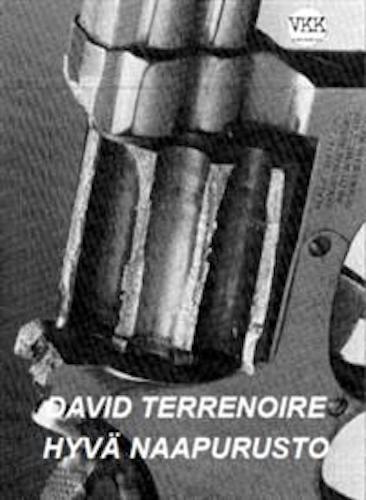 Vuosia myöhemmin Otso innostui, kun huutelin Facebookissa yhden sivun mittaista täytejuttua Länkkäriseuran Ruudinsavun novellinumeroon, jota olin kasaamassa. Otso kommentoi, että seuraavana aamuna minua odottaisi novelli sähköpostissa - niin kuin odottikin. Olin ilmoittanut hänelle hiukan liian pienen merkkimäärän, mutta ehdin saada novelliin myös kuvituksen mainiolta Aapo Kukolta. Intiaaniaiheinen novelli oli nimeltään "Petollinen helmikoriste"; se löytyy Otson blogista. Mietin ja varmaan jollain leikin varjolla heitinkin idean, että näistä kolmesta novellista saisi oman pienen kirjasensa - sellaisiahan olen tehnyt aiemminkin, Verikoirakirjojen nimellä, esimerkiksi amerikkalaisen David Terrenoiren Hyvässä naapurustossa on kolme mininovellia ja 16 sivua. Otso ei kuitenkaan tarttunut tarjoukseeni, mahtoiko ottaa tosissaankaan?
Olin ennen näitä novellejakin tiennyt Otson dekkarifanina ja -kriitikkona, jota kiinnosti sama lajityyppi kuin minuakin, amerikkalainen kovaksikeitetty kirjallisuus. Yhtenä kimmokkeena esikoisteokselleni Pulpografialle oli nimittäin hänen paneutunut artikkelinsa amerikkalaisen pulp-klassikon, dekkareita ja länkkäreitä useiden vuosikymmenien ajan kirjoittaneen Frank Gruberin suomennetuista kioskikirjoista. Se ilmestyi Dekkariseuran Ruumiin kulttuuri -lehdessä joskus 1980-luvulla. Sitä ei jostain syystä mainita Pulpografian lähdeluettelossa, mutta siteeraan Otsoa kuitenkin Gruberin kohdalla: hänen mukaansa kirjailijan humoristiset Fletcher ja Cragg -kirjat ovat kuin kadonnut linkki Cervantesin ja Chester Himesin välillä. Mikä ettei.
 Dekkariseurassa Otso oli myös aktiivi (hän ei ollut perustajajäsen, niin kuin tässä aiemmin väitin). Sittemmin hän oli Kaarle Ervastin ja kolmannen henkilön (jonka nimeä en tiedä) kanssa perustamassa Nostromo-nimistä kustantamoa, jonka dekkarilöytöihin kuuluu lyömätön klassikko, James Crumleyn Viimeinen kunnon suudelma (The Last Good Kiss, 1978; suom. Risto Raitio). Se on kirja, jonka luettuaan ei oleta mitään siitä, minkälaisia yksityisetsivädekkarien tulisi olla. Samana vuonna Nostromolta tuli myös uusi laitos Ray Bradburyn kauhuklassikosta Something Wicked This Way Comes (1963) - kirjassa käytettiin Jertta Roosin suomennosta, joka oli ilmestynyt nimellä Painajainen vuonna 1964, mutta uuden kirjan nimeksi tuli alkuperäistä lähellä oleva Paha saapuu portin taa. Muita rikosromaaneja Nostromo ei julkaissut eikä kustantamo kovin pitkäikäinen ollutkaan. Myöhemmin Otso perusti toisen kustantamon, taidekirjoihin ja Pieneen kävelykirjastoon keskittyneen Jack-in-the-boxin.
Otso sanoi usein Facebookissa käydyissä keskusteluissa, että vaikka hän oli pitkään innostunut dekkareista, hän luopui kokoelmastaan jossain vaiheessa eikä palannut lajityyppiin. Yllä olevat esimerkit ovat kuitenkin jättäneet lähtemättömiä jälkiä - ainakin minuun.
EDIT: Lisätty kuvailuja Otson novelleista ja korjattu RikosPalojen toimittajan nimi.
Subscribe to:
Posts (Atom)