Tuesday, November 29, 2011

Tuesday's Overlooked Film: The Sadist

I have a friend, a Finnish movie critic who started his writing career already in the late fifties, going on during all these years (he's now seventy, but he still occasionally contributes). He's an aficionado of old American B movies, and he's told many fascinating stories about films he's seen already when they were new. Surprisingly many films of this kind were brought to Finland in the sixties and seventies - many that are not on DVD even now!

One of these once rare films seems to have been available for some time now: James Landis's The Sadist from 1963. My critic friend once told me that he saw the film when it was banned in Finland (seems like this took place in 1967), but the distributor held a press viewing for those who were interested. The print was probably demolished after that. And my friend said he really liked the uncompromising little thriller, even though the Finnish censors had deemed it immoral. I was of course interested, and I was very pleased when another friend of mine lent me the pretty new DVD of the film. I was pleasantly surprised: the film still seems quite uncompromising, although made on a minuscule budget.

The Sadist is the first film that deals with Charlie Starkweather, who was made famous by Terrence Malick in Badlands. And he's played by Arch Hall, Jr. of all people! Hell, he even looks like Charlie Starkweather! Hall overacts, but manages still - or just because of that - to be scary as can be. He giggles, mumbles, grins - all the way down to hell. His girlfriend says almost nothing during the film - she whispers some lines into Hall's ear, but the rest of the time she just giggles. It's scary! The rest of the bunch - the normal folks - is not so good, but they are manageable.

The Sadist seems an important precursor to films like The Texas Chainsaw Massacre (and, Todd, I know you don't like the film!). There are only shrieks and screams on the soundtrack for the last ten or fifteen minutes - and the ending is very downbeat, foreshadowing what will happen in Tobe Hooper's film ten years later.

Crude, but effective, shot in black-and-white with verve by young Vilmos Zsigmond, ten years before Deliverance and The Long Goodbye (what a career the man had!), The Sadist is highly recommended if you like your thrillers gritty and dark.

More Tuesday films at Todd Mason's blog.

Friday, November 25, 2011

Friday's Forgotten Book: Carter Brown: The Flagellator

I thought this would be more fun, but at times it felt almost a serious PI novel, which is a pity, since this is not what we expect from a Carter Brown novel, is it? And as a serious PI novel The Flagellator just doesn't work. It's not very well plotted, the solution comes and goes a bit too quickly, and there's just too much talk here and there. And the point where Rick Holman seriously thinks about raping a woman who seems to be resisting his suggestions is just plain awful. (Wouldn't have necessarily to be, but hey, Holman is a clean-cut hero!) It's great, though, that Carter Brown has come up with a name Theo Altman for a well-known art film director! There's not much, if any, flagging in the book.

Great cover, though, as one would expect from Robert McGinnis. Even the post-expressionistic painting on the background is good! The cover was used in Finland in a Nick Carter book, here's a link to the Finnish translation of The Flagellator. Might be the original Australian cover, for all I know. The Finnish title: "The Queen of Sex".

Here's a site on Carter Brown, better than his Wikipedia entry. More Forgotten Books here.

Wednesday, November 23, 2011

Aino Kallas: The Wolf's Bride

I read this small classic of Finnish literature for the first time last week. It was originally published in 1928 and has been practically the only classic werewolf story written in Finnish language. Many friends of the book don't necessarily see it as horror. I should say it fits the genre bill, but I won't force my view down anyone's throat. The most important aspect of the story is that it's a love story, a story of a forester's wife, called Aalo, who can assume a wolf's shape and is killed in the end by her husband's silver bullet.

In Sudenmorsian/The Wolf's Bride Aino Kallas (the link is in English) uses archaic language of the 17th century and the story takes the form of a ballad, seen by an outsider, who shares his/her theological views on the side. The narrator seems to be well-educated, since he/she (most certainly "he") can talk about werewolves and the studies that's been made on them. Kallas's language and narration make a two-fold statement: while the narration and the use of old language could've been possible only in the modernist era, it also makes sure that The Wolf's Bride isn't easily dated. It still feels fresh and packs quite a punch. It's also a very beautiful story of an unfulfilled love.

The story was translated in English as early as 1930, by Alex Matson, a Finnish literary scholar and world-traveller, but the first (and only) edition from Jonathan Cape seems to be very rare: there's only one copy for measly 550 dollars on Abebooks. You can read the more current translation easily in The Dedalus Book of Finnish Fantasy where the whole story is contained in. Most highly recommended. (Especially since the Dedalus book contains Mika Waltari's great early sword-and-sorcery story "Island of the Setting Sun" from 1926 that could've easily been published in the pages of The Magic Carpet or The Weird Tales.)

The picture above is from a high-literary paperback series called Delfiini (Dolphin) in 1979. I believe the cover illo is by Kosti Antikainen, will correct if turns out I was wrong.

Tuesday, November 22, 2011

Tuesday's Overlooked Film: Romeo Is Bleeding

Let's make it a short one: a kinky, but too quirkily told and narrated neo-noir in which Lena Olin has never been sexier than when demanding Gary Oldman prepares her a death certificate. More details here.

As I've been having problems with my back, I also watched one other film and tried to watch yet another: Gorky Park (suffered greatly from, well, lots of things, mainly from the stiff direction from Michael Apted and the stiff script by Dennis Potter) and Deadfall by Christopher Coppola. The latter one suffered greatly from being amateurish-looking hogwash. Lasted about 15 minutes.

More films here.

Friday, November 18, 2011

New book out: Marton Taiga's two pulp serials

I'm sure you are all getting tired of this (and I don't even much like blogs that are all about advertising the bloggers' own books!), but here's the cover for my new book. Calling it "my book" might be a bit of a stretch, but here goes nevertheless: it's a collection of two novella-length serials (both somewhat under 30,000 words) by the Finnish pulp fiction great Marton Taiga, put together by me. The book has also my lengthy foreword, and as an appendix the book also contains the forewords Taiga wrote for the readers that started the stories from the middle.

The serials in the book are called "Osiriksen sormus/The Ring of Osiris" (1934) and "Viiden minuutin ikuisuus/The Five-Minute Eternity" (1936). Only the latter has previously been published in book form, in 1945. Both are about time-travel, in "Osiriksen sormus" the lead character is taken to the ancient Egypt.

The cover is by Anssi Rauhala who's done some great covers for Turbator. See for yourself: Sherlock Holmes, Tapani Bagge, Tapani Maskula.

Friday, November 11, 2011

Working my ass off

I did recently a post about books I've had a hand in and that have appeared within this Fall. I mentioned therein some of the books that are still going to be published before Christmas. I seem to have forgotten some, so here goes again:

A collection of early Finnish horror stories (for Faros). This includes some dozen horror stories, mainly from the 19th century, but also some from the early 20th century, from such writers as Aleksis Kivi, Jaakko Juteini, Zacharias Topelius, Larin-Kyösti and Kyösti Wilkuna (he has four stories in this!). This was a fun book to do, even though the process has been long - I talked about this with the publisher already two (or maybe even three) years ago. This will come out as a small paperback under the title Hallusinatsioneja (Hallucinations; the title of a story by Wilkuna).

A book that compiles two long serials by the all-time great Finnish pulp writer, Marton Taiga (real name: Martti Löfberg; the link is in English, so take a look). The both stories are from the thirties and they are about time-travelling and take place in the antique world. One of the stories, Viiden minuutin ikuisuus (The Five-Minute Eternity) was published as a book in 1945, but the other one, "Osiriksen sormus" ("The Ring of Osiris"), has never been published in a book form. This includes also my foreword; comes out from Turbator. This has a cover illo by the great Anssi Rauhala, but I haven't actually seen that one yet.

I also edited a collection of erotic stories, the theme being sadomasochistic sex. (See the picture.) The book's title translates as The Agony and the Ecstacy. I grabbed the idea, when the publisher (Turbator, once again) threw a joke in the air: "If the regular erotica doesn't sell, we have to do a book about sadomasochism!" From this joke I think I developed a pretty good line-up, with some startlingly erotic stories (especially one by Essi Tammimaa, who's a revered novelist in her own right) and even some pretty deep ones, like the historical one by Jukka Laajarinne, who's been gaining fame as a novelist who's not afraid to try something new. There's also a story by one Mikael X. Messi, but you'll have to dig deeper if you want to know who that is. (Insert smiley here.) The striking cover is done by Tendril, who also has a story in this. See this link for more pictures; not safe for work!

Tuesday, November 08, 2011

Tuesday's Overlooked Film: The Jericho Mile

Michael Mann is probably one of the most overrated directors working nowadays. Mind you, I've liked almost everyone of his films (of those I've seen), but I just can't see him as the visionary he's said to be. There are auteurist touches in his films, sure, but then again the films seem a bit empty to me. If there's a message or some such, I don't think it's very interesting.

So, what's the theme in Mann's first feature-length film, the prison film The Jericho Mile? Do what you want to do? Concentrate on what's best for you? Don't mind others? Be yourself? C'mon! There are interesting minor themes, like the political organizing of the prison inmates or the story of a black inmate who's been blackmailed to smuggle drugs into the prison, but the main story is thematically not so interesting.

It is touching, though, and I even wept a tear near the end. Peter Strauss is a bit autistic guy who just runs. He runs over the prison yard, over and over again, and he's very, very fast. The prison administration wants him to run officially, to run for olympics. There are two climactic running scenes, which are very exciting. Strauss has killed his dad years ago and he's sentenced for life. The film doesn't go much into that, but the scenes about it enforce the man's gotta what a man's gotta do ideology of Mann.

But don't get me wrong: for its low budget and the use of non-actors (many of them being inmates of the Folsom Prison), it's a very well-made and good-looking film. Mann has a very good feel for realism that looks good and goes beyond the mere recording, but won't evolve into a mere style, either.

The Jericho Mile was originally a TV film, but it was released theatrically in Europe and made its way into Finland as well. I saw it last night at the screening of the Finnish Film Archive. There are some scenes that have a different stock feel to them, maybe they are missing from the original TV print and added in only the European 35 mm print, who knows. The VHS and DVD releases seem to be rare, so this was a good occasion to see the film.

More Overlooked Films here.

Saturday, November 05, 2011

Margaret Millar back in print!

Hadn't realized Beast in View, one of Margaret Millar's fine crime novels, is back in print from Orion Books!

William Gibson on Chandler and Hammett

This quote from a recent interview was posted to the Rara-Avis e-mail list:

GIBSON
I was never much of a Raymond Chandler fan, either.

INTERVIEWER

Why not?

GIBSON
When science fiction finally got literary naturalism, it got it via the noir detective novel, which is an often decadent offspring of nineteenth-century naturalism. Noir is one of the places that the investigative, analytic, literary impulse went in America. The Goncourt brothers set out to investigate sex and money and power, and many years later, in America, you wind up with Chandler doing something very similar, though highly stylized and with a very different agenda. I always had a feeling that Chandler’s puritanism got in the way, and I was never quite as taken with the language as true Chandler fans seem to be. I distrusted Marlow as a narrator. He wasn’t someone I wanted to meet, and I didn’t find him sympathetic—in large part because Chandler, whom I didn’t trust either, evidently did find him sympathetic.

But I trusted Dashiell Hammett. It felt to me that Hammett was Chandler’s ancestor, even though they were really contemporaries. Chandler civilized it, but Hammett invented it. With Hammett I felt that the author was open to the world in a way Chandler never seems to me to be.

The whole interview here.

Sunday, October 30, 2011

Some news from the literary front

October is traditionally the month of book fairs in Finland. The first weekend has the book fair in Turku (where I live) and the last weekend has the Helsinki fair. I of course attended both and am now exhausted after the Helsinki experience. It was fun, though. I made a deal with a publisher about a collection of articles I've been working on and off for some years now, and I heard that there's been some foreign interest in Verenhimo (Blood Lust), the vampire anthology that came out early this year!

At the Turku fair two books saw the light of day that had some of my stuff in it. The first one was Åbsurdistiska berättelser, a small collection of absurdist short stories (which is the title translated) that take place in Turku (Åbo in Swedish, hence the name). The book was published by Turbator, one of my most important publishers, and it came out only in Swedish that's the second official language in Finland and an important minority language in Turku. My story is a bit fairytalish, but with a political bent. The second one was a massive collection of new Finnish experimental poetry called Vastakaanon (Anti-Canon). I have two poems in it that are of the found variety and they have actually something to do with this blog! I have a series of poems made with the same theme, I might do a small pamphlet with them later on.

Will the absurdist short story ever be published in Finnish? Time will tell, but I've been thinking I'll do a collection of absurdist short stories some day. I already have four published and one in the works, so it wouldn't be hard to complete the book. One of these days...

As for some other news: I just completed a small collection of early Finnish horror short stories. It should come out in November from Faros. The architectural guide to Turku that I've been working on for at least a year and a half (or at least it feels like it!) is now almost going to the printers, my colleague is working on the last corrections. I'm not sure whether it makes it before Christmas, which would be a pity. I'm not sure either whether my Actual First Novel ("actual" in the sense of being published by someone else than me) makes it before Christmas, but I'll keep you posted.

And oh, here's a nice review (in Finnish, of course) of the outdoors anthology I edited earlier this year.

What else? You think that's enough? This is again one of those instances where I think I should've been working harder. Oh, there's this, which I mentioned in passing.

Tuesday, October 25, 2011

Tuesday's Overlooked Film: Série noire

Alain Corneau is one of the most unsung and underrated French directors. He started his career in the early seventies with gritty crime films, like Police Python 357 (1976). Série noire (1979) is based on Jim Thompson's Hell of a Woman and I think it's a seminal film: it's the first in the new wave Jim Thompson film versions. (I think Burt Kennedy's The Killer Inside Me was still old wave. Though I have never seen it.) After Série noire came Coup de torchon in 1981 and then, some years later, The Kill-Off, After Dark, My Sweet and The Grifters, all in 1990.

Corneau's film is a quite slow-moving, but in the end an almost diabolically hysteric story of the downward spiral we so much love about Thompson's work. Patrick Dewaere jumps around like Woody Woodpecker on speed and gets sudden spurts of violence. This is the best part in Corneau's film - he handles arbitrary violence very well, with great verve. Violence is never portrayed as funny, but still the chaotic killings are the funniest parts in the film (especially when Dewaere places the gun in the wrong dead man's hand). The ending is very cruel, as befits a Jim Thompson filmatization.

The French title of course refers to the legendary book series Série noire that had almost all the important American and British hardboiled and noir writers. In English-speaking markets, the film was called... um, actually can't find that tidbit. Maybe it's never been shown in the English-speaking countries. That's impossible!

More overlooked films here.

Wednesday, October 19, 2011

And now for something completely different: a Swiss kids' comic book

I found this comic book aimed for children of say 5-10 years in a book shop in the small town of Savonlinna last summer. I'd never heard of it, so I bought it without a blink of an eye. When I got back home (okay, I did it already in the car with my phone), I checked from the web what this was all about. Jopi, globally known as Globi, was a creation of Swiss comic artist Robert Lips, for whom there's a Wikipedia article in German and an entry in Lambiek.net in English. There are three other Jopi books published in Finnish and I've never seen any of them (unless as a kid and completely forgotten them). This one, called "Globi Travels All Over the World", was published by the now defunct Weilin + Göös in 1982. There were three others: Eläköön Jopi, lasten ystävä! ("Long Live Globi, the Friend of Children!"), Jopi sirkuksessa ("Globi in Circus") and Jopi maanviljelijänä ("Globi the Farmer"). I showed this to a friend of mine, who's a writer and critic specializing in the comic book history, and he'd never seen any of these.


This is funny stuff, with naïve and heart-warming humour, with a touch of absurd on the side. Jopi reminds me a lot of my all-time favourite, Rasmus Nalle (aka Rasmus Klump, as he's known in his origin country, Denmark). Oh, here's another site about Rasmus in English.

Tuesday, October 18, 2011

Tuesday's Overlooked Film: The New York Ripper

I saw this classic nasty last night and I must say I was shocked. Some of the killing scenes are very gruesome, almost to the point of being unwatchable.

But then again Lucio Fulci's The New York Ripper (1982) is also a quite well-made thriller or a giallo, as they say in Italy. This one is about a serial killer who's specialized in pretty young women and who talks in a Donald Duck voice, quacking over the phone, yapping to the police. The police are as clueless as can be and get a psychiatric to help profile the killer. Some of the scenes with the cops and the psychiatric are a bit boring, feels almost like there's no real police work being done.

Fulci has a knack for diverting the viewer and also for some great-looking chasing and killing scenes, and he clearly knows what fetishes are all about: some of the scenes before the killings are actually quite erotic and even sexy. Then again, Fulci spoils everything by showing something like a woman's nipple sliced in half. (I think that's the worst scene in the film full of other scenes like it.) Is there some sort of repention going on in here? Fulci feels ashamed for wanting to show beautiful women enjoying sex, jerking off in public, giving fingers to middle-aged men, and then has them slowly and mercilessly butchered? You know, Fulci comes from a deeply Catholic country...

Whatever, this is an interesting and intriguing film, minus the stupid psychoanalytic babble solution in the end. In Finland this was banned from the start, but the print of the film has remained in the archives of the Finnish Film Archive - it was in a beautiful shape.

The original uncut trailer is not safe for work and certainly not for minors:

More Overlooked Films here.

Sunday, October 16, 2011

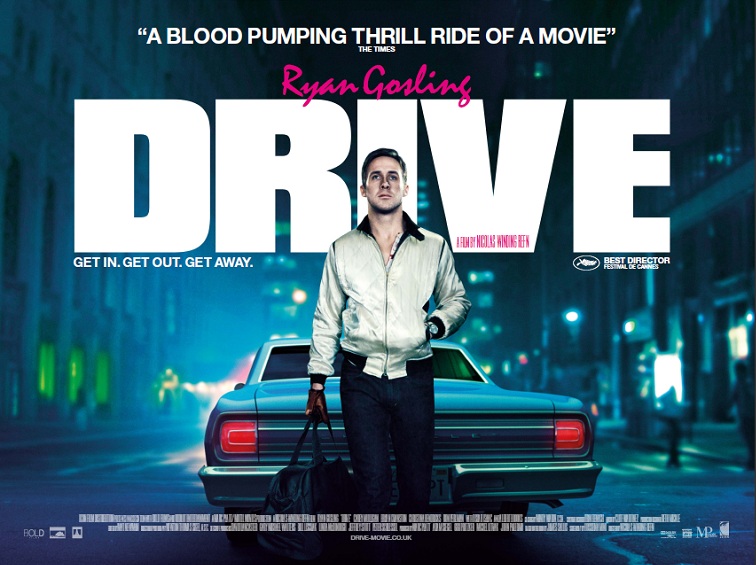
Drive, the film

James Sallis's Drive came out from a small publisher in 2005. It was picked by up for a reprint by a big publisher in 2006. I read it the same year and fell in love. Drive was translated in Finnish, due to my efforts, in 2009 under the title Kylmä kyyti. Already at that time, we knew there were plans of the movie based on the book (with Hugh Jackman starring), but we had to wait until this year to finally get the film.

And what a movie it is! Surely handled, with a very cool, detached style, directed by Nicolas Winding Refn, a Danish filmmaker whose Pusher trilogy is one of the great crime classics of the late 20th and early 21st century. This is his first Hollywood movie, and there's a sort of Nordic melancholy to it. The action scenes are great being somewhat elliptic, with something always left out. There are some very good actors in the film, with Albert Brooks and Ron Perlman rising above the others. Ryan Gosling who's replaced Jackman looks very neat in his scorpio jacket, well-fitting skinny jeans and driver's gloves. Visually the film's almost like the eighties blown to heaven, the feeling that's enhanced by the use of very cool eighties' kind of synth pop in the soundtrack. The driving scenes are really stylish, almost totally without a sound. 

Yet I was somewhat disappointed. Sallis's novel is a ballad of great beauty, love and sadness, yet Winding Refn really can't portray these feelings with quite the same verve as he does loneliness and compulsion. The results are too mild, too conventional. It's a serious drawback for the film. 

But I have to give credit to the screenwriter Hossein Amini making a clear narrative out of Sallis's non-chronological novel. I felt, though, the film lacked something when the story was made linear. I can't quite put my finger on it, but it might have something to do with the metafictional quality of Sallis's novel. The film also lacks what might be the most superficial aspect of Sallis's book, the dropping of the names of other writers, like Borges and Cervantes. They actually serve a purpose in the book that's more intellectual than the film (and is not ashamed to show it), but maybe luckily they were dropped out from the film. 

With those fell something else, though. I really love the novel's ending, the words with which it transforms into a ballad, a story of a heroic bandit who managed to right some wrongs and who, after that, rose to mythic heights, but still feels having a loss, missing something he once loved or cared for. Let me quote directly from Sallis himself (mind you, this is a spoiler, so if you haven't read the book or seen the film, beware!):

"Far from the end for Driver, this. In years to come, years before he went down at three a.m. on a clear, cool morning in a Tijuana bar, years before Manny Gilden turned his life into a movie, there'd be other killings, other bodies. 
Bernie Rose was the only one he ever mourned." 

(You know, Sallis is developing a sequel to Drive. Those are the words he can hang on to.) 

So maybe Winding Refn's film is the film Manny Gilden (a scriptwriter in the book, left out from the film) did? Then again, I was also a bit shocked to be reminded that there's a bond between Bernie Rose and Driver, the aspect that the film never mentions. Well, films based on books don't have to have the same things in them, but I thought this particular aspect is one of the things that makes Sallis's book so great.

Wednesday, October 12, 2011

Animated version of John Carter of Mars

Warner animator Bob Clampett and John Coleman Burroughs, Edgar Rice Burroughs's son, tried to develop a weekly animated series based on ERB's Mars novels. Nothing came of it, except for these short sequences, commented by Clampett himself.

Tuesday, October 11, 2011

Tuesday's Overlooked Film: The Sicilian

Already see the pattern? Again an interesting, but flawed film. This time it's Michael Cimino's The Sicilian, one of his last big films before a many years' hiatus. This is a very handsome, but pretty confusing film, with a too convoluted storyline about Salvatore Giuliano, a Sicilian rebel who fights the local aristocracy over the lands and steps on the toes of the Mafia.

Gore Vidal supposedly wrote the script for this, but Steve Shagan rewrote it either too heavily or too lightly. There's too much stuff that doesn't make much sense. The theme of an innocent man getting mixed in the web of politics and corruption and getting corrupted himself is always interesting, though. One would like to compare this to the earlier Italian version, Salvatore Giuliano, directed by Leftist Francesco Rosi, but I haven't seen that myself. The biggest drawback in Cimino's film is that it stars Christopher Lambert. The guy is very handsome, but can't act shit. Joss Ackland steals every scene he's in. I'd hoped John Turturro would've been given a better role as Giuliano's brother. Same goes for Terence Stamp, whose prince doesn't have a lot to do, even though I'd like to think Cimino would've liked to deal with him more. The larger social themes don't much show here.

I watched this (this too!) on VHS, but luckily the version I'd found was the director's version that lasts 2:11 or something like that. This supposedly makes more sense than the original version shown in cinema (I'd seen that and even written a review of it, but can't remember much of it). Cimino's original edit is said to have been 150 minutes. Seems like a pattern for Cimino.

More Overlooked Films at Todd Mason's blog.

Thursday, October 06, 2011

Scott Phillips: The Adjustment

Scott Phillips's The Ice Harvest has been one of my favourite books for a long time and I saw to it that it was translated in Finnish. Everyone who's read it (not that many people, gotta admit) has liked it. I was thrilled to read Phillips's latest, The Adjustment that's just out from . And it's a great book. It's probably not as catchy as The Ice Harvest, as it's not as plot-driven as the previous book, but it's still just as gripping.

Wayne Ogden, famous from The Ice Harvest's very peculiar prequel-cum-sequel, The Walkaway (a book I liked very much, but it was pretty tough for me to get into, I don't know why), is the very dubious hero of the new novel, an asshole who hates almost everyone and is very lovable for that. You cannot but share his cynic world view, since everyone else in the book is an asshole too, but they are also stupid or boring. Wayne works for a small-town big boss, an alcoholic old man whose only joy in life is fuck young women in a brothel. At the same time Wayne hates his good-looking wife who's pregnant (the fact that Wayne very much hates) and fucks other women. And at the same time he gets hassled by an unknown dude who seems to know something about his past in the war-time Europe when he was a supply surge (I happen to know that "Supply Sarge" was Phillips's original title for the book) pimping and smuggling and selling army stuff.

This is wonderful stuff, you know. Very curtly told, the dialogue is snappy and funny without being overtly so, the downward spiral with occasional bursts of random violence grabs you in a chilling way - all this makes The Adjustment very, very entertaining. Highly recommended.

Wednesday, September 28, 2011

How can someone write this beautifully?

"He is awake, with no idea what time it maybe, or whether, really, he has slept at all. He sleeps poorly these days. Strange, too, how time's become a blur. At first there's no reason to know the time of day, then days themselves give way, finally years. Till only the change of seasons marks another passage, another decline. To remember, he has to think back to where he lived, what rented room or cheap apartment in Gary, Gretna, Memphis, Seattle."

The first paragraph of James Sallis's A Killer Is Dying, not yet published.

Tuesday, September 27, 2011

Tuesday's Overlooked Film: Weeds

This is not the TV show, you know, this is the Nick Nolte film from 1987 that has never been released on DVD. Weeds is an interesting, if flawed film (for some reason or another, all my Tuesday picks are interesting, but not very good films) about Nolte who runs an absurdist theater show with his prison mates. Nolte lifts stuff heavily from Jean Genet and almost gets caught.

The major flaw in the film is that you never believe what's happening. The first book Nolte reads is shown to be War & Peace and soon he moves on to Nietzsche and Schopenhauer and the afore-mentioned Genet and the next thing he's an intellectual making theater that's straight out of Sartre and others. The inmates also happen to be great singers and musicians and write their own catchy songs. C'mon! The film is said to be based on reality, but there's no guarantee that this makes believable stories. And Weeds, while occasionally touching, just isn't believable.

How come was I able to see this even when it's not on DVD? I bought an old VHS cassette from a thrift store. I've also seen this on VHS, one of the early films by the director, John Hancock.

More Overlooked Films here.

Sunday, September 25, 2011

Charles Ardai talks about the lost Cain

Duane Swierczynski talks about the recently found James M. Cain novel with Charles Ardai. Take a look here.